
Thank you for your feedback!
We will contact you shortly

Free consultation
Enter your phone number and we will call you back for a consultation on any moving and storage services

Tennessee
Trusted Tennessee Moving Company - Local & Long Distance

Few states pull in newcomers the way Tennessee does. Between July 2024 and July 2025 the state netted 42,389 residents from domestic migration, the 4th highest figure in the nation, trailing only North Carolina (84,064), Texas (67,299), and South Carolina (66,622). Add net international arrivals and the total population gain came to 63,785, the 8th largest in the country. Star Van Lines is a USDOT-licensed interstate carrier (USDOT #4176875, MC #1607491) that runs local and long-distance moves across all of Tennessee, from Nashville and its booming Middle Tennessee suburbs to Memphis on the river and Knoxville in the eastern foothills. The Nashville metro has grown to 2,162,758 residents, up about 6.3 percent since 2021, and because the state charges no individual income tax, more families relocate here every year.
Our Tennessee moving services cover packing, loading, transport, delivery, and short-term storage at warehouse locations nationwide. A move from Nashville to Atlanta covers about 246 miles via I-24 and I-75. A move from Nashville to New York runs about 885 miles up the eastern corridor. We handle both with the same coordinator and the same written estimate, and in Tennessee the variable that bites is usually the humidity, since a July load-out with the air thick and the high near 91 asks more of a crew than the mileage ever does.
Need a number for your Tennessee move before you commit? Call (855) 822-2722 or use our online quote calculator. You'll get an estimate that breaks down every line item, so there aren't any surprises on moving day. We're rated 4.0 on Trustpilot, 4.5 on Google, and 4.75 on Facebook across 240+ reviews.

Dennis has 15+ years of experience in interstate moving and has coordinated over 1,000 relocations across the United States.









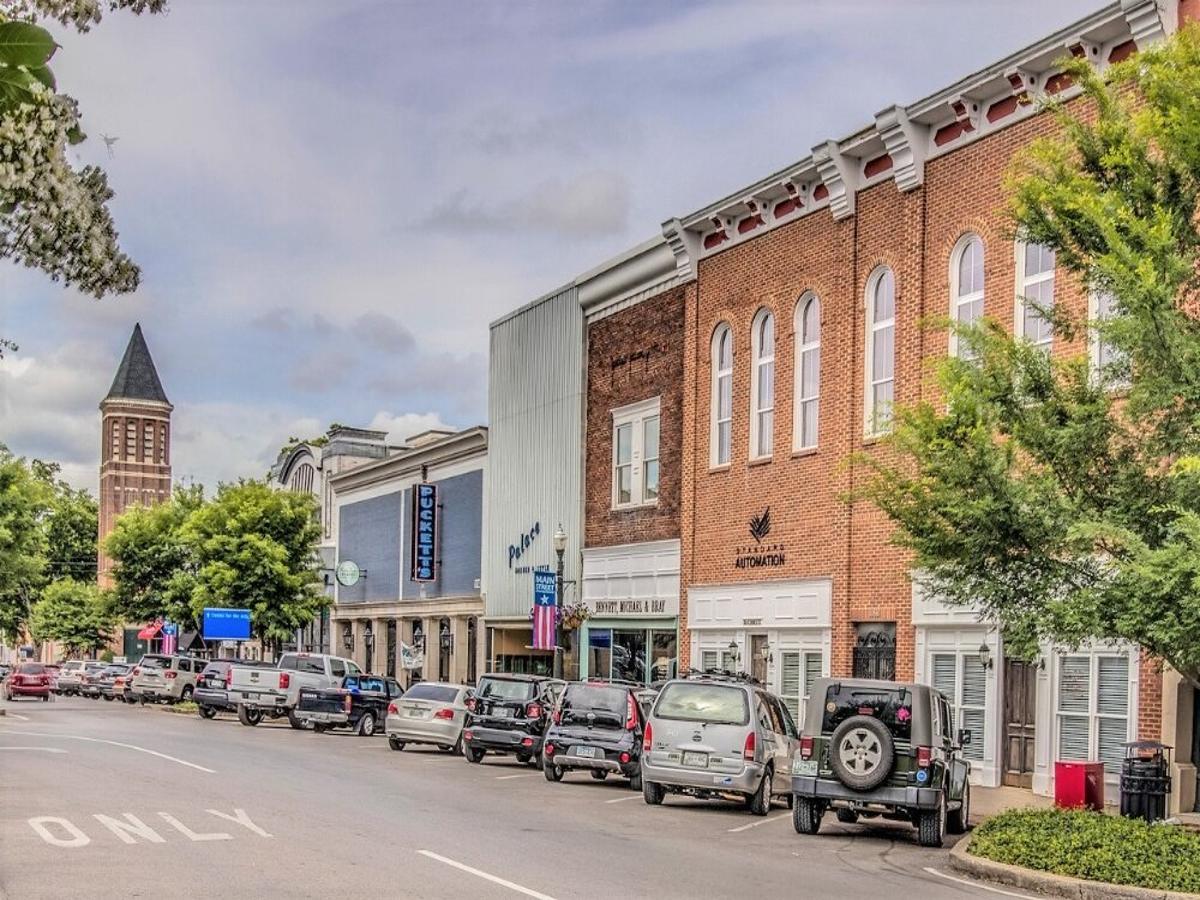

Moving services in Tennessee
Star Van Lines provides local, long-distance, and interstate moving services across Tennessee. We handle packing, loading, transport, and delivery for residential and commercial moves. Tennessee sets very different jobs in front of a crew, because the state runs across three grand divisions, and a move through the river-valley flatlands of West Tennessee shares almost nothing with a haul into the Appalachian foothills out east. Every move includes a single coordinator, a trained crew, and a written estimate.
Local moving in Tennessee
Local moves in Tennessee cluster on the four big metros and the fast-filling suburbs around them. A two-person crew runs $161-$207 per hour; three movers run $230-$299. High-demand local lanes run Nashville to Franklin, Murfreesboro, and Hendersonville, all under about 40 miles on short-haul rates, plus Memphis to Germantown and Collierville, and Knoxville to Maryville and Oak Ridge. But the metros and the collar counties work differently, because Nashville's growth in Williamson and Rutherford counties brings heavy traffic and new gated subdivisions with tight access, while a downtown move can mean a reserved elevator and a narrow street-loading window. And the humidity changes the plan all summer, since crews load early when the afternoon high sits near 91.
Long-distance moving from Tennessee
Long-distance demand out of Tennessee runs mostly from Nashville and Memphis. The busiest corridors head west to California (Nashville to Los Angeles is about 2,032 driving miles, the longest-haul band), south to Florida (Nashville to Tampa about 702 miles), and north to Illinois (Nashville to Chicago about 468 miles). And we run these on I-40, I-65, I-24, and I-75 as full interstate relocations. Because Tennessee spans three grand divisions, even an in-state leg from Memphis to Bristol can rival an out-of-state haul, so your coordinator stages long-haul equipment for the longest east-west jobs.
Packing and storage
We offer full-service packing, partial packing, and self-pack options. Full-service means our crew brings every box and material and packs each room; partial lets you choose which rooms we handle; self-pack is the lowest-cost option. We have 43 warehouse locations nationwide for short-term and long-term storage. But in Tennessee the humid-subtropical summers make climate-controlled storage the safer choice for wood furniture, antiques, upholstery, and electronics, since Nashville July highs near 91 and heavy humidity can warp wood and bring condensation damage to anything held in a standard unit between a move-out and a later move-in.
Auto transport and specialty items
We ship vehicles by open or enclosed carrier, and households relocating two or three cars on a long Tennessee lane often ship them rather than drive each one. We also move pianos, antiques, gun safes, and fine art with specialty crating, which matters in Music City where instruments and studio gear move often. New Tennessee residents must title and register a vehicle within 30 days of establishing residency, so we time door-to-door auto transport to a customer's arrival window. And open carriers suit standard cars, while enclosed transport is the better call for the classic and luxury vehicles common in growing Williamson County communities.
How much does moving in Tennessee cost?
Moving costs in Tennessee depend on whether you're crossing town or crossing the country. Local moves typically run $161-$207 per hour for a two-person crew with a truck. Long-distance moves start at $862 for a studio and reach $5,980 for a large four-plus-bedroom home, depending on distance, weight, and access at both ends.
Local moving rates
| Crew size | Hourly rate |
|---|---|
| 2 movers + truck | $161-$207 / hour |
| 3 movers + truck | $230-$299 / hour |
| 4 movers + truck | $299-$391 / hour |
Long-distance rates from Tennessee
| Move size | Estimated price range |
|---|---|
| Studio / 1 Bedroom | $862 - $1,495 |
| 2-3 Bedrooms | $1,552 - $3,277 |
| 4+ Bedrooms | $2,588 - $5,980 |
Popular routes and pricing from Tennessee
| Route | Distance | Avg cost (2-3 BR) |
|---|---|---|
| Nashville to Atlanta | 246 mi | $1,552 - $1,897 |
| Nashville to Chicago | 468 mi | $2,012 - $2,473 |
| Nashville to Dallas | 665 mi | $2,300 - $2,760 |
| Nashville to Tampa | 702 mi | $2,358 - $2,875 |
| Nashville to New York | 885 mi | $2,703 - $3,277 |
Pricing reflects market averages for moves in and from Tennessee as of June 2026. Your final price depends on inventory weight, packing level, access at pickup and delivery, and scheduling flexibility. Call (855) 822-2722 or use our free quote calculator for an exact estimate.
What affects your moving price
- Shipment weight and volume are the biggest factors on any long-distance move from Tennessee.
- Distance drives the base price. Nashville to Atlanta is 246 miles; Nashville to New York is 885.
- Access at both ends matters. Elevator windows in downtown Nashville and Memphis, gated-community and HOA truck rules in the Williamson County suburbs, or steep grades on a rural East Tennessee approach can all add time or call for a shuttle.
- How much packing you want us to do. Full-service runs more than partial, and self-pack is the lowest option.
- When you move. Summer is peak demand, and the spring severe-storm season can disrupt scheduling across Middle Tennessee.
- Add-on services like auto transport, climate-controlled storage, and specialty handling for pianos, gun safes, or artwork carry their own pricing.
Moving to Tennessee: what you should know
A move to Tennessee involves more than logistics. The state spans three grand divisions across a long east-west reach, so the same budget buys a downtown Nashville condo or a five-bedroom new build in a Rutherford County subdivision, and the drive between Memphis and the Tri-Cities can rival a haul to another state. Below is a quick guide covering cost of living, access and logistics, climate and timing, and the residency rules that affect your move.
What it costs to move to Tennessee
Tennessee's cost of living index is 91.9 (US average = 100, BEA RPP 2024), well below the national figure, which is part of the draw. Local moving labor runs $161-$207 per hour for a two-person crew, with the big metros at the higher end. Median home value is $286,700 (Census ACS 2020-2024) and median monthly rent is $1,189, while median household income is $69,595. But the line that surprises newcomers is the tax mix, because Tennessee charges no individual income tax and yet carries one of the highest combined sales-tax rates in the country at about 9.61 percent, the 2nd-highest in the US.
Access and logistics
Tennessee has a strong interstate spine built around I-40, which crosses the whole state east to west, linking Memphis, Nashville, and Knoxville. I-65 runs north and south through Nashville toward Kentucky and Alabama, I-24 connects Nashville to Chattanooga, I-75 carries East Tennessee traffic through Knoxville and Chattanooga, and I-81 serves the northeast. In downtown Nashville and Memphis, the hard part is the building, since tower moves need a reserved elevator and a tight street-loading window. But out in the collar counties and the eastern foothills, the challenge flips to grade and access, because crews plan for steep stretches on I-40 and I-75 in East Tennessee, and a new gated subdivision in Williamson or Rutherford County may restrict truck size.
Climate and timing
Tennessee summers are hot and humid, with Nashville July highs near 91, and winters are mild with January lows around 29. Nashville gets about 50.5 inches of rain and only 4.7 inches of snow a year, though rare ice storms can briefly affect I-40, I-24, and I-65. The headline risks are seasonal: severe thunderstorms, damaging winds, and tornadoes in spring, since Tennessee sits in a secondary tornado-prone zone, plus flooding, and a New Madrid earthquake risk in West Tennessee. The best window for a move is mid-September through October and again in April to early May, when the humid-subtropical heat eases. But avoid June through August, when the heat and humidity peak and demand is highest, and plan summer load-outs for early morning.
Residency and regulations
Tennessee splits driver licensing and vehicle registration between two agencies: the Department of Safety and Homeland Security issues driver licenses through its Driver Services Division, while the Department of Revenue handles vehicle title and registration through your local county clerk. New residents must obtain a Tennessee driver license within 30 days of establishing residency, and if the out-of-state license is valid, usually only the vision test is required. You must title and register your vehicle within 30 days as well (Tenn. Code Ann. 55-4-101(b)(2)). Apply through the Department of Safety (tn.gov/safety/driver-services) for the license. Tennessee has no statewide emissions test, since the last county programs ended in early 2022, and no periodic safety inspection for personal vehicles, so the registration step is lighter than in many states.
What to know before moving to Tennessee
Benefits of moving to Tennessee
0,315,076
Population
$0,595
Median household income
0.9 (US = 100, BEA RPP 2024)
Cost of living index
0 days/year (approximate)
Days of sunshine
0%
State income tax
+0.8%
Population change 2020-2025
Tennessee is home to more than 7.3 million people, and it grew 5.8 percent between 2020 and 2025, faster than the country as a whole. The economy runs on healthcare and automotive manufacturing, with HCA Healthcare headquartered in Nashville, Nissan's Smyrna plant employing more than 8,000 workers, and Volkswagen building in Chattanooga, alongside logistics through the FedEx world hub in Memphis and advanced research at Oak Ridge National Laboratory. Median household income is $69,595. The migration story runs strongly inbound: Tennessee netted 42,389 residents from domestic migration between July 2024 and July 2025, the 4th highest in the nation, drawing the most newcomers from California, Florida, and Texas. And the absence of any wage tax keeps pulling high earners and retirees out of income-tax states and into Middle Tennessee.
Is Tennessee a good place to live?
Tennessee offers a fast-growing job market, no state income tax, and a cost of living well below the national average. But the trade-offs are real: the combined sales tax is one of the highest in the country, summers are hot and humid, and the spring storm season brings tornado and flood risk. Whether it's a good fit depends on how much you value the paycheck math and the low home prices against a heavy sales-tax bite and months of sticky heat.
Tax environment
Tennessee has no individual income tax, which is the headline draw for relocating workers and retirees, and the old Hall tax on interest and dividends was fully repealed effective January 1, 2021. The trade-off is sales tax, because the state funds its budget without an income tax, so the combined state and local rate averages about 9.61 percent, the 2nd-highest in the nation behind Louisiana, with a 7.00 percent state rate plus a local option up to 2.75 percent. Property tax, by contrast, is low, with an effective rate around 0.52 percent of home value, among the lower rates nationally, and there is no estate or inheritance tax. High sales tax means consumer purchases cost more, while no income tax keeps more of every paycheck.
Housing market
Median home value in Tennessee is $286,700 (Census ACS 2020-2024), below many coastal markets, and median monthly rent is $1,189. Prices vary sharply by metro, from the premium close-in neighborhoods of Nashville and Williamson County to far more affordable homes around Memphis, Knoxville, and the smaller cities, where the same budget buys much more house. An owner-occupancy rate of 66.9 percent reflects a market where ownership stays within reach for many families. Because so much growth lands in booming suburbs like Wilson County, which grew about 10.1 percent, and Rutherford County, up about 6.9 percent from 2020 to 2023, where you land in the metro matters as much as what you buy.
Job market and economy
Tennessee runs a broad economy led by healthcare and manufacturing. HCA Healthcare, one of the nation's largest hospital networks, is headquartered in Nashville, and Vanderbilt University and Medical Center employs more than 23,000 as the largest private employer in Middle Tennessee. Automotive manufacturing runs deep through the Nissan plant in Smyrna and Volkswagen in Chattanooga, while FedEx anchors logistics from its Memphis world hub and AutoZone keeps its headquarters there too. Oak Ridge National Laboratory adds advanced research as the nation's largest multi-program science lab. Because the sector mix spans healthcare, automotive, logistics, and energy research, the job market holds up across cycles, which is a big part of why so many people keep moving in.
Safety and natural risks
Tennessee faces a varied hazard mix. The state sits in a secondary tornado-prone zone, so severe thunderstorms with damaging straight-line winds, hail, and tornadoes are the leading spring risk, alongside flooding across the river valleys. West Tennessee sits over the New Madrid Seismic Zone, the state's primary earthquake risk, while the East Tennessee mountains carry wildfire and geologic-hazard exposure, and the state plan also lists drought and extreme temperatures. If you are buying in a flood-prone river valley or near the New Madrid zone, it is worth lining up the right coverage early, since standard homeowner policies often exclude flood and earthquake damage.
Who thrives in Tennessee?
No-income-tax transplants from high-tax states
With the Hall tax fully repealed in 2021, Tennessee levies no state income tax on wages, interest, or dividends. Many newcomers arrive from California, Illinois, and other high-tax states, and 192,200 people moved into Tennessee from elsewhere in the US in 2024, specifically to keep more of their paychecks and retirement income. They tend to need full-service packing and a single coordinated move, and they weigh the wage-tax savings against the state's high sales tax before settling on a county.
Music City and creative-industry professionals
Nashville's Music City nickname reflects a deep cluster of recording, songwriting, publishing, and live-event work that keeps drawing musicians, producers, and entertainment-business staff. They often relocate into Davidson County and nearby Williamson County, and they need careful handling of instruments and studio gear, so secure crating and a fast single-trip move matter more than a bargain rate.
Healthcare-industry workers moving for Nashville hospital jobs
Nashville is a national hub for healthcare management and hospital services, so nurses, clinicians, and corporate healthcare staff relocate into the metro regularly. Many move from out of state on a fixed start date, which makes schedule reliability and packing services a priority, and they often arrive along the inbound lanes from California and Florida.
Middle Tennessee suburban move-up families
The fastest growth is in Nashville's suburbs, where Wilson County grew about 10.1 percent and Rutherford County about 6.9 percent between 2020 and 2023. Families upgrading into new subdivisions in Murfreesboro, Franklin, and Mt. Juliet make up a large share of intrastate moves, usually with children and larger homes to pack, and they plan around school-district boundaries since Williamson County Schools rank near the top of the state.
Tax-friendly retirees relocating to East Tennessee
With no state income tax, no tax on retirement income, and no estate or inheritance tax, Tennessee draws retirees, who help push the 65-and-over share to 17.7 percent of the population. Many settle in the scenic foothills around Knoxville and Chattanooga, often downsizing from larger out-of-state homes, so they value careful handling of antiques and a delivery they can plan around.
First week after moving to Tennessee: what to do
After your move to Tennessee, several tasks need attention in the first weeks. Tennessee gives new residents 30 days to get a Tennessee driver license and 30 days to title and register a vehicle, so both clocks start the day you establish residency. Here is a prioritized checklist.
- Get your Tennessee driver license.
You have 30 days to obtain a Tennessee license through the Department of Safety and Homeland Security (tn.gov/safety/driver-services). Bring proof of identity, residency, and your out-of-state license, and if your current license is valid, usually only the vision test is required.
- Title and register your vehicle.
You also have 30 days to title and register your vehicle, handled by the Department of Revenue through your local county clerk (tn.gov/revenue/title-and-registration). Bring proof of ownership, insurance, and a Tennessee address. There is no emissions test or safety inspection required anywhere in the state.
- Transfer your auto insurance.
Tennessee requires liability coverage, so contact your insurer to re-rate your policy before you register. Premiums vary widely between Nashville, Memphis, and the smaller cities.
- Register to vote.
Tennessee offers online registration at ovr.govote.tn.gov, or you can register by mail, in person at your county election commission, or during a transaction with the Department of Safety.
- Update homeowner's or renter's insurance.
Because tornadoes, flooding, and a New Madrid earthquake risk all affect Tennessee, review your coverage. Standard policies often exclude flood and earthquake damage, so a home in a river valley or near the seismic zone may need separate policies.
- Forward your mail.
USPS Change of Address is free online at usps.com. Mail forwarding starts within 7-10 business days.
- Transfer medical records.
Contact your current providers before the move and find a new primary care physician near your new home.
- Update school records.
If you have children, request transcripts from the previous district and contact your new one about enrollment. Several Tennessee districts, including Williamson County Schools near Franklin, Collierville Schools near Memphis, and Maryville City Schools near Knoxville, rank among the state's best.
Tennessee at a glance: schools, jobs, and things to do
Schools and universities
Williamson County Schools, based in Franklin, serves about 41,900 students with a top-1-percent testing record and ranks among the state's best, alongside Collierville Schools near Memphis and Maryville City Schools near Knoxville, which Niche places at the very top statewide. The University of Tennessee, Knoxville is the public research flagship and enrolled a record 40,421 students in Fall 2025. Vanderbilt University in Nashville is a top private research school and academic medical center, and Middle Tennessee State University in Murfreesboro is one of the largest public universities in the state. Because school ratings and home prices both swing widely from one district to the next, many families study specific Tennessee suburbs closely before deciding where to settle.
Major employers
Tennessee hosts a deep corporate base. FedEx, headquartered in Memphis, is the state's highest-ranking Fortune 500 company and runs its world hub there, while AutoZone keeps its headquarters in the same city. HCA Healthcare anchors the healthcare sector from Nashville, and Vanderbilt University and Medical Center is the largest private employer in Middle Tennessee. Nissan's Smyrna plant employs more than 8,000 in automotive manufacturing, Volkswagen builds in Chattanooga, and Oak Ridge National Laboratory carries the energy-research workforce. Because healthcare, automotive, logistics, and research all run deep here, job seekers find opportunities across very different industries in each metro.
Attractions and recreation
Great Smoky Mountains National Park, straddling the Tennessee-North Carolina border near Gatlinburg, is the most visited national park in the country with more than 12 million recreation visits a year. Graceland in Memphis, the home of Elvis Presley on Elvis Presley Boulevard, ranks as the state's most popular tourist destination. Dollywood in Pigeon Forge draws crowds to the Smokies, and in Nashville the Grand Ole Opry and the historic Ryman Auditorium keep the Music City identity alive with weekly country-music shows.
FAQ
Questions? Look here
Can’t find an answer? Call us
(855) 822-2722 or email
Local moving in Tennessee typically costs $161-$207 per hour for a two-person crew with a truck, or $230-$299 for the three-person crew a three-bedroom home usually needs. At 4-6 hours, that puts a typical three-bedroom local move around $800 to $1,560. Downtown elevator reservations in Nashville and Memphis and long suburban drives can add time. Call (855) 822-2722 for an itemized estimate.
Long-distance moves from Tennessee start at $862 for a studio and reach about $5,980 for a large four-plus-bedroom home. The final price depends on shipment weight, distance, and access at both ends. A two-to-three-bedroom move from Nashville to Atlanta runs about $1,552 to $1,897, while the cross-country lane to California runs higher. Star Van Lines provides written estimates so your price won't change after booking.
Search our USDOT number 4176875 on the FMCSA SAFER website (safer.fmcsa.dot.gov). This federal database confirms our operating authority, MC number 1607491, insurance status, and safety record. Any legitimate interstate mover should be able to provide a verifiable USDOT number.
In Tennessee the charges to ask about are long-carry and elevator fees for downtown Nashville and Memphis buildings, shuttle fees when a full-size truck can't reach a gated community or a steep East Tennessee address, and stair fees for walk-up units. We disclose every potential charge in your written estimate before you book, so nothing is a surprise on moving day.
Federal law requires interstate movers to offer two levels: Released Value Protection (free, covering $0.60 per pound per item) and Full Value Protection (paid, covering repair, replacement, or cash settlement at current value). Star Van Lines is fully insured under USDOT #4176875 and can explain both options when you request a quote.
New Tennessee residents must obtain a Tennessee driver license within 30 days of establishing residency, and if your out-of-state license is valid, usually only the vision test is required. You must also title and register your vehicle within 30 days. The Department of Safety and Homeland Security handles the license, while the Department of Revenue handles registration through your local county clerk, so plan to visit both.
Tennessee charges no individual income tax on wages or salaries, and the old Hall tax on interest and dividends was fully repealed effective January 1, 2021, so it no longer applies. That makes Tennessee one of the states with no income tax, a major draw for relocating workers and retirees. The trade-off is a high combined sales tax of about 9.61 percent, the 2nd-highest in the country, so consumer purchases cost more even as your paycheck keeps more.
Tennessee's cost of living index is 91.9, below the US average of 100, and the median home value statewide is $286,700 with median rent at $1,189. Nashville and Williamson County run above the state figures, while Memphis, Knoxville, and the smaller cities run below them. If you are arriving from a coastal market, your housing dollar usually stretches further here, though the high sales tax offsets some of the savings on everyday purchases.
The best windows are mid-September through October and again in April to early May, when the heat and humidity ease and rain is moderate. Avoid June through August, when Nashville highs sit near 91 with heavy humidity, which is hard on crews and on moisture-sensitive items like wood furniture and electronics. Spring also brings severe-storm and tornado season, so we build a little schedule flexibility into Middle Tennessee moves during those months.
Yes, we ship vehicles by open or enclosed carrier on any long-distance lane, including Tennessee to California, Florida, and Illinois. Open carriers suit standard cars, while enclosed transport is the better choice for classic or luxury vehicles. Because new residents must register a vehicle within 30 days of the move, we coordinate door-to-door auto transport with your arrival window so the car and the household land together.
Tennessee runs across three grand divisions. West Tennessee around Memphis is river-valley flatland, Middle Tennessee around Nashville is the fast-growing Highland Rim, and East Tennessee around Knoxville and Chattanooga climbs into the Appalachian foothills. The grades east of the divide on I-40 and I-75 change how a crew stages a haul, and even an in-state move from Memphis to the Tri-Cities can cross the whole state, so your coordinator plans equipment and timing around the division you are moving between.
The Nashville metro has grown to 2,162,758 residents, up about 6.3 percent since 2021, pulled by the music and healthcare economies and the no-income-tax draw. That growth lands hardest in the suburbs, with Wilson County up about 10.1 percent and Rutherford about 6.9 percent from 2020 to 2023, so new subdivisions in Williamson and Rutherford counties bring gated access and tight streets. We plan truck size and loading windows around those access rules when we move you into the metro.
Ready to Start Your Tennessee Move?
Get a free moving estimate today. No obligation, no pressure.
Call us or fill out the form - we'll get back to you fast.
USDOT #4176875 | MC #1607491 | Licensed & Insured