
Thank you for your feedback!
We will contact you shortly

Free consultation
Enter your phone number and we will call you back for a consultation on any moving and storage services

Utah
Your Utah Moving Company Since 2016

Utah is the youngest state in the country, with a median age of just 32.4, and in 2025 it posted the fastest tech job growth of any state at 6.3 percent (Census Bureau; CompTIA via Visual Capitalist). That mix pulls a steady stream of young professionals and families into the Silicon Slopes corridor that runs from Salt Lake City south through Lehi and Provo. The state is a net gainer of movers too, adding about 9,300 residents through domestic migration in 2024 and ranking 17th nationally for net inflow, with California, Arizona, and Idaho sending the most newcomers. Star Van Lines is a licensed interstate carrier, USDOT #4176875 and MC #1607491, and we've moved households locally and long distance across Utah since 2016, from the I-15 spine along the Wasatch Front to the red-rock corner around St. George.
Our Utah service covers packing, loading, transport, delivery, and short-term storage. Because the Wasatch Front stacks Ogden, Salt Lake City, Provo, and the Lehi-Draper tech belt along one I-15 corridor, a local job can be a same-day hop across the valley or a 45-mile run from Salt Lake City to Provo, while a long-distance load might head out to Las Vegas or Dallas the same week we bring a California family in. And you get one coordinator and one written estimate, from the first call through delivery.
Trying to budget your Utah move? Call (855) 822-2722 or use our online quote calculator. You'll get an itemized estimate that breaks down every line item before moving day. We're rated 4.0 on Trustpilot, 4.5 on Google, and 4.75 on Facebook across 240+ reviews.

Dennis has 15+ years of experience in interstate moving and has coordinated over 1,000 relocations across the United States.

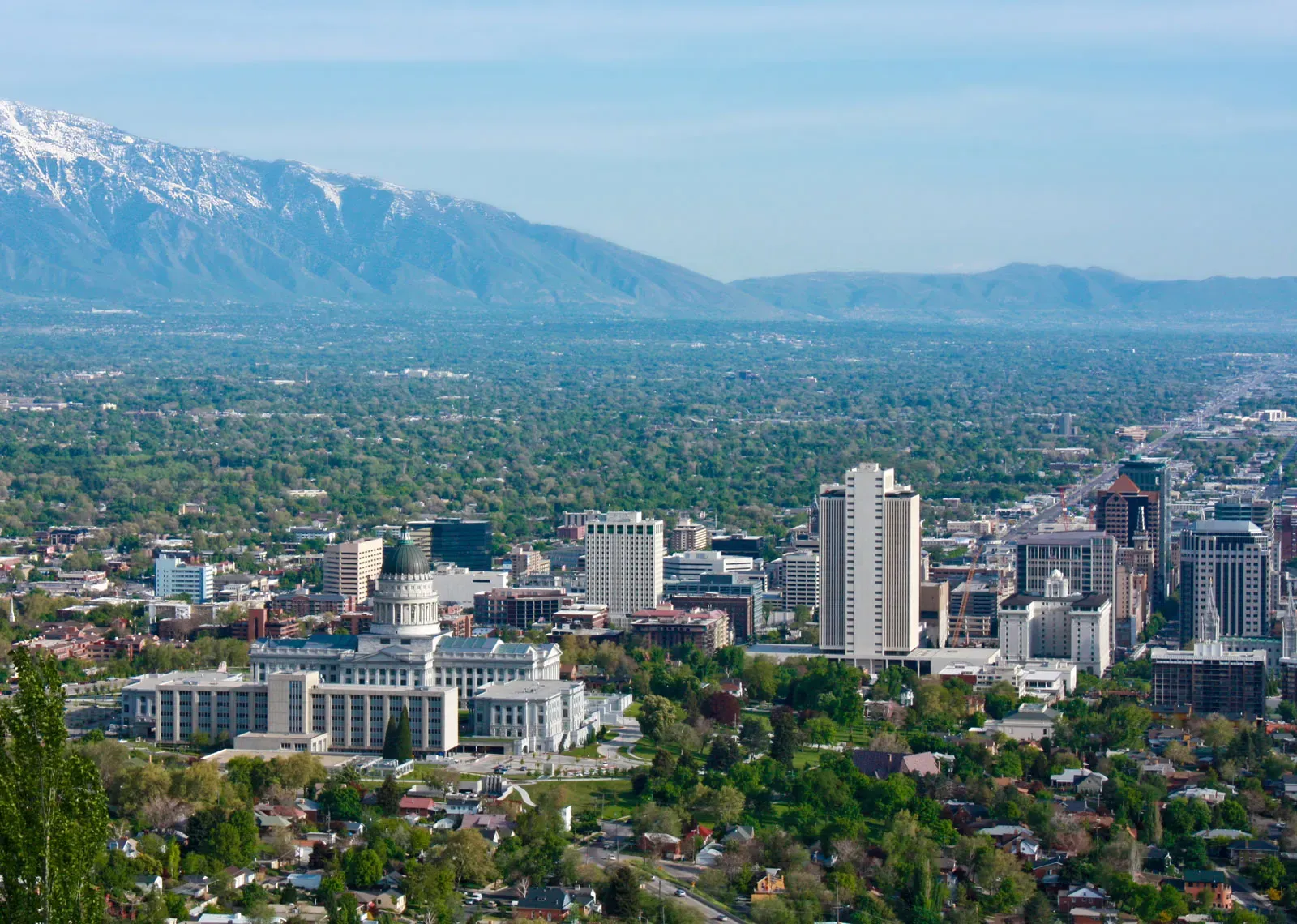
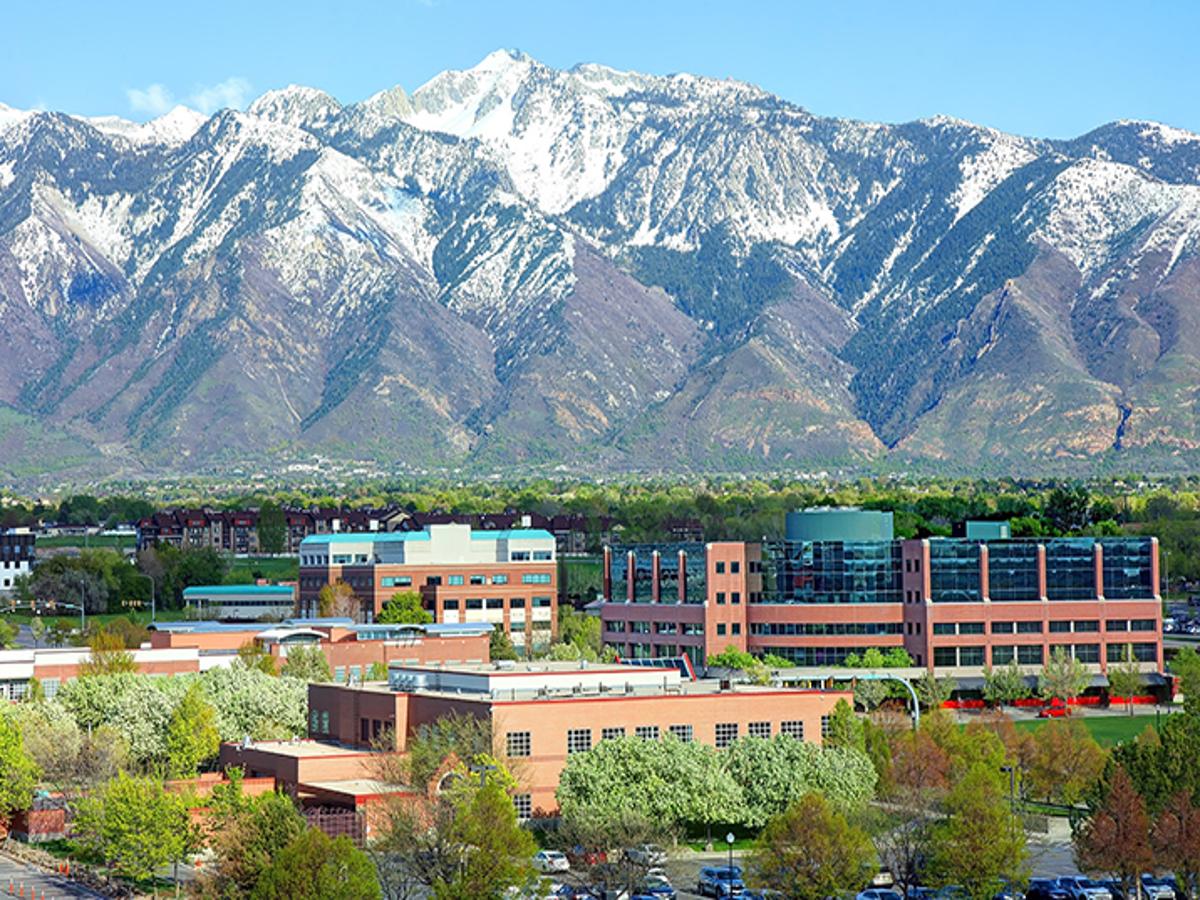
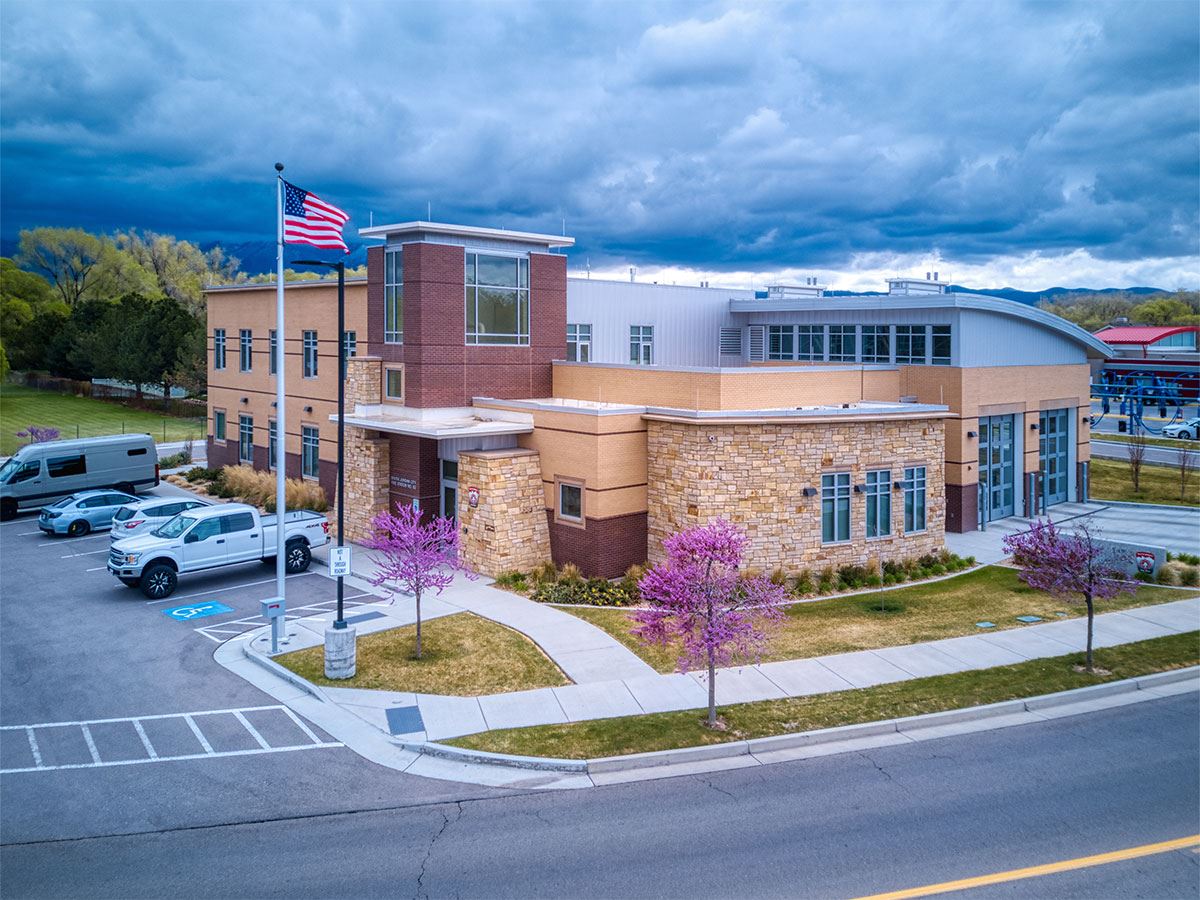

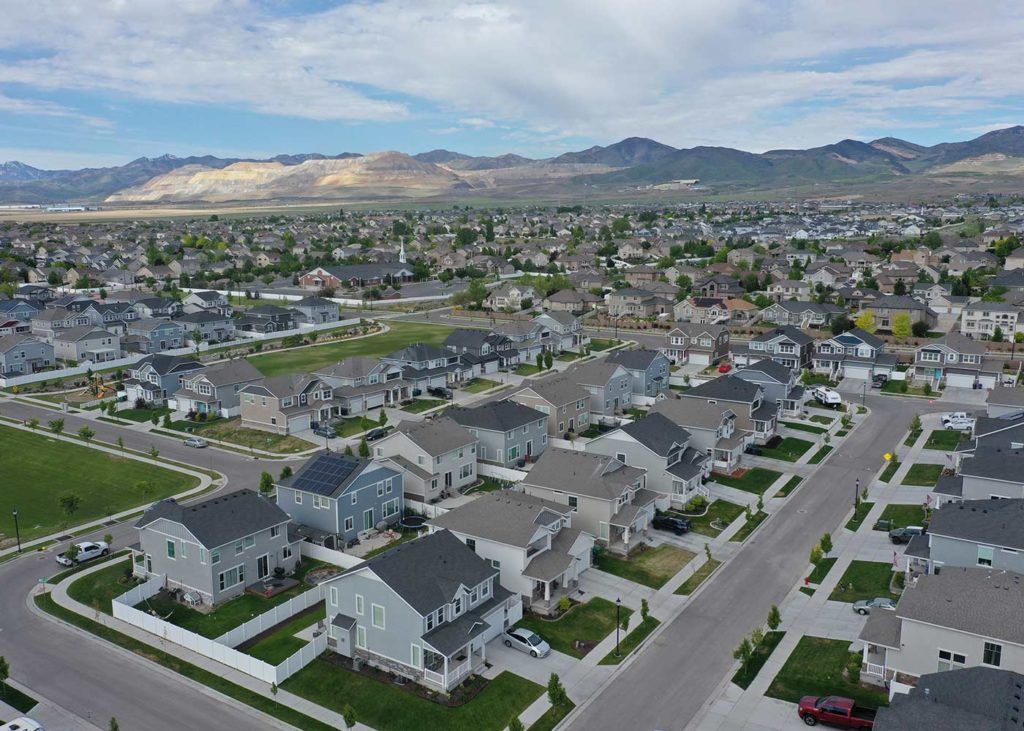
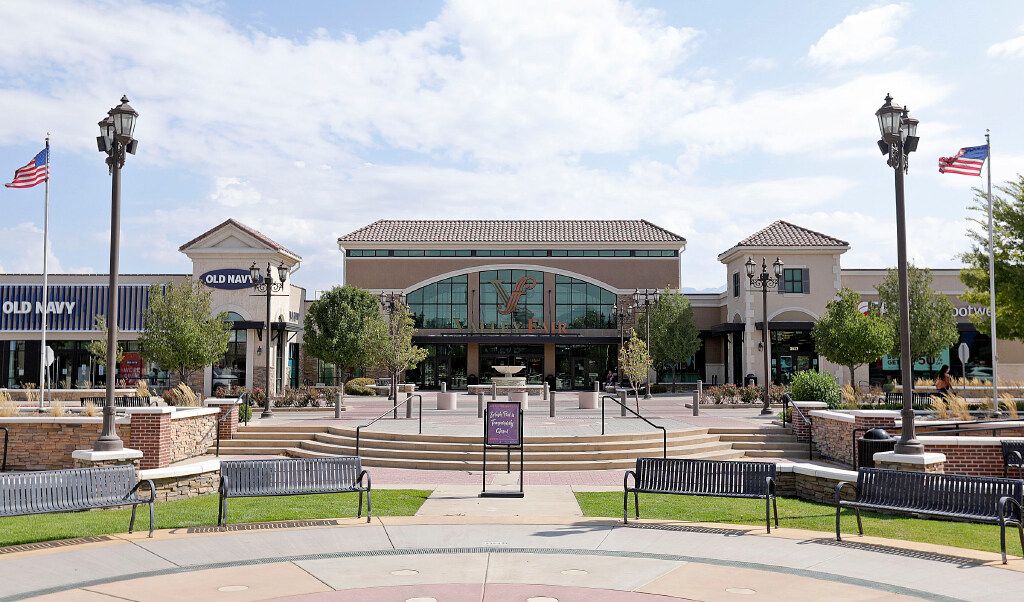
Moving services in Utah
Moving services in Utah
Star Van Lines runs local, long-distance, and interstate moves across Utah, from packing and loading to transport, delivery, and short-term storage. Because the state pairs a dense Wasatch Front urban strip with long stretches of mountain and desert highway, every job needs route-specific planning. Each move comes with one coordinator, a trained crew, and a written estimate.
Local moving in Utah
Most local moves cluster along the Wasatch Front on I-15. A two-person crew with a truck runs about $359 an hour as a typical rate, and a three- or four-person crew scales up for larger homes. Heavy local lanes are short: Salt Lake City to Provo is roughly 45 road miles, and Salt Lake City to Ogden and the Lehi-Draper tech belt are quick same-day jobs. On these intrastate runs, most of the bill comes from crew hours, stairs, and building access rather than mileage. Downtown Salt Lake high-rises often need elevator reservations, and the Point of the Mountain between Salt Lake and Utah counties can slow a loaded van. And we plan around that access when scheduling the crew.
Long-distance moving from Utah
Most long-distance loads out of Salt Lake City track the dominant outbound flows toward the Southwest. The shortest is Salt Lake City to Las Vegas at about 420 miles, followed by Salt Lake City to Phoenix near 662 miles and Salt Lake City to Los Angeles around 689 miles. Salt Lake City to Dallas is the longest of our common Utah lanes at 1,242 miles. These runs cross high-elevation passes like Parleys Canyon on I-80, where winter snow and chain restrictions can reset a schedule, and they pass long unserviced stretches of I-70 across central Utah where fuel and rest stops thin out. Because Utah sits a long haul from most major metros, the great majority of these moves are genuine interstate jobs.
Packing and storage
We offer full-service packing, partial packing, and self-pack. Full-service means our crew brings every box and packs each room; partial lets you split the work; self-pack keeps the cost lowest. And for storage, we hold goods at 43 warehouse locations nationwide for short or long terms. Utah's semi-arid climate is hard on stored goods because Salt Lake City reaches the 90s on about 62 days and tops 100 degrees on roughly 8 days each summer, while winters bring 51.9 inches of snow and freezing valley inversions from November through April. Climate-controlled space is the safe default for electronics, wood furniture, artwork, and instruments held through either season.
Auto transport and specialty items
We ship vehicles on open or enclosed carriers, and we crate pianos, gun safes, antiques, and artwork for specialty handling. One Utah step matters for cars. New residents have 60 days to transfer a title and registration, and an emissions check is required in the most populated Wasatch Front counties, including Salt Lake, Davis, Utah, and Weber, before you can register there. Coordinate auto transport so the vehicle arrives with enough lead time to pass inspection inside that 60-day window. Ski gear, mountain bikes, and outdoor equipment common to the Wasatch lifestyle also benefit from specialty crating, and your coordinator can line up the sequence.
How much does moving in Utah cost?
Moving costs in Utah depend on whether you stay inside the state or cross state lines. Local moves run on an hourly rate for crew and truck. Long-distance prices are built from distance and home size, starting near $1,035 for a studio and reaching about $6,842 for a large four-bedroom home on the longest lanes.
Local moving rates
| Crew size | Hourly rate |
|---|---|
| 2 movers + truck | $359 / hour (typical) |
| 3 movers + truck | $538 / hour (typical) |
| 4 movers + truck | $718 / hour (typical) |
Long-distance rates from Utah
| Move size | Estimated price range |
|---|---|
| Studio / 1 Bedroom | $1,035 - $1,725 |
| 2-3 Bedrooms | $1,897 - $3,795 |
| 4+ Bedrooms | $3,162 - $6,842 |
Popular routes and pricing from Utah
| Route | Distance | Avg cost (2-3 BR) |
|---|---|---|
| Salt Lake City to Las Vegas, NV | 420 mi | $1,897 - $2,300 |
| Salt Lake City to Denver, CO | 518 mi | $2,012 - $2,473 |
| Salt Lake City to Phoenix, AZ | 662 mi | $2,243 - $2,760 |
| Salt Lake City to Los Angeles, CA | 689 mi | $2,300 - $2,818 |
| Salt Lake City to Dallas, TX | 1,242 mi | $3,105 - $3,795 |
Pricing reflects market averages for moves in and from Utah as of June 2026. Your final price depends on inventory weight, packing level, access at both ends, and timing. Call (855) 822-2722 or use our free quote calculator for an exact estimate.
What affects your moving price
- Shipment weight and volume are the biggest factors on any long-distance move from Utah.
- Distance matters. Salt Lake City to Provo is 45 miles; Salt Lake City to Dallas is 1,242.
- Access at both ends adds up. Stairs, elevator waits, long carries, downtown Salt Lake high-rises, and the Point of the Mountain grade between Salt Lake and Utah counties all factor in.
- How much packing you want. Full-service costs more than partial, and self-pack is the lowest option.
- When you move. A mid-week or shoulder-season slot usually prices better than a peak-summer weekend, when demand runs highest.
- Add-ons like auto transport, climate-controlled storage, and specialty handling for pianos or safes carry their own line items.
Moving routes from Utah
Moving to Utah: what you should know
A Utah move is as much about elevation and weather windows as it is about boxes. You're heading into a fast-growing market with a young workforce, a strong tech base, and real mountain logistics. Below is a quick guide to what shapes the cost, the routes, the timing, and the paperwork.
What it costs to move to Utah
Utah's cost of living index is 98.9 (US average = 100, BEA RPP 2024), just below the national price level, so local moving labor sits close to the national rate. A two-person crew runs about $359 an hour as a typical figure along the Wasatch Front. Housing is the heavier expense. The median home value is $489,400 and median gross rent is $1,496 a month (Census ACS 2020-2024). Median household income sits at a strong $95,166, though a large share goes straight to housing. And building access can add cost where it applies, since downtown Salt Lake high-rises often require elevator reservations and certificate-of-insurance paperwork, while newer Wasatch Front subdivisions can limit truck size and delivery windows. If you're coming from a lower-cost state, budget for higher housing on the Utah end even though moving labor itself stays near average.
Access and logistics
Utah's highways stack along two axes. I-15 is the north-south backbone of the Wasatch Front, running 400.6 miles from the Arizona line to the Idaho line through St. George, Provo, and Salt Lake City, and it's the longest interstate in the state. I-80 crosses east-west for 197.5 miles through Salt Lake City, while I-70 runs east-west across southern Utah, I-84 reaches the north toward Idaho, and the I-215 belt loop circles the Salt Lake metro. The canyon routes are the real planning challenge. Winter snow and ice can trigger closures and chain restrictions on I-80 through Parleys Canyon and on the I-15 grades, and the Point of the Mountain between Salt Lake and Utah counties can slow a loaded van. Long unserviced stretches of I-70 across central and southern Utah mean limited fuel and rest stops on lanes toward Colorado, so your coordinator builds fuel and timing into the plan.
Climate and timing
Salt Lake City records a July average high near 94 degrees and a January average low around 23, with 51.9 inches of snow a year and only 15.5 inches of precipitation overall (NOAA 1991-2020 normals). But timing still matters. The best window to move is late May through September, when the city sees roughly 125 clear days, sun reaches the ground about 66 percent of daylight hours, and the canyon routes stay open and dry. The hardest stretch runs November through April, when snow and winter inversions reduce visibility on I-15 and the canyons. Mid-summer brings its own friction, since Salt Lake City logs about 62 days in the 90s and 8 days over 100 degrees, so crews schedule loading for cooler morning hours. April-May and September-October give you the calmest roads and the most schedule choice.
Residency and regulations
New residents face firm deadlines, although they work a little differently here. You must register an out-of-state vehicle within 60 days of establishing residency (Utah Code 41-1a-202), and driving without that registration is a class C misdemeanor carrying a $1,000 minimum fine. The driver license rule is residency-triggered rather than a fixed day count: anyone who makes Utah home, stays 6 months or more, registers a vehicle, or works here must hold a Utah license, handled by the Driver License Division at dld.utah.gov. There's no periodic safety inspection for private passenger vehicles, but an emissions check is required in 5 Wasatch Front counties: Salt Lake, Davis, Utah, Weber, and Cache. The other 24 counties have no emissions program, so the obligation depends entirely on your destination county.
What to know before moving to Utah
Benefits of moving to Utah
0,538,904 (Census V2025, up 8.2% since 2020)
Population
$0,166
Median household income
0.9 (US = 100, BEA RPP 2024)
Cost of living index
0.45% flat
State income tax
0.4 (youngest US state)
Median age
healthcare, higher education, and government
Dominant industries
Utah reached 3,538,904 residents in 2025, an 8.2% gain since 2020 (Census V2025). The economy leans on healthcare, higher education, and government by headcount, with technology, finance, and aerospace as the fast-growing secondary engines along the Silicon Slopes corridor; among the largest employers are Intermountain Health, the University of Utah, the State of Utah, Hill Air Force Base, and Brigham Young University. Median household income is $95,166, and 37.7% of adults hold a bachelor's degree or higher. The flat state income tax is 4.45% (Tax Foundation 2026), being phased down year by year, and there's no estate or inheritance tax. Because Utah is the youngest state at a median age of 32.4 and a net gainer of about 9,300 domestic migrants in 2024, movers stay busy on the inbound lanes from California, Arizona, and Idaho.
Is Utah a good place to live?
Utah offers a strong job market, a low flat income tax, and outdoor access most states can't match. The trade-offs are real: high home prices, mountain weather that complicates winter travel, and earthquake risk along the Wasatch Front. Whether it's a good fit depends on your career field, your budget, and how you feel about a fast-growing young state.
Tax environment
Utah levies a flat 4.45% individual income tax (Tax Foundation 2026), and the state has cut the rate annually in recent years, so the Tax Commission table still shows 4.5% for tax year 2025 while the phased-down figure for 2026 is 4.45%. Average combined state and local sales tax is about 7.19%, on a state base that includes a mandatory local add-on. The effective property tax rate is roughly 0.48% of home value, among the lowest in the nation. There is no estate tax and no inheritance tax, and Utah ranks 15th overall on the 2026 State Tax Competitiveness Index. Because the income tax is flat, relocation tax planning stays simple even for someone arriving from a graduated-rate state.
Housing market
The median home value in Utah is $489,400 (Census ACS 2020-2024), and median gross rent is $1,496 a month. About 70.2% of households own their homes. Prices vary sharply by region. The Salt Lake City-Murray and Provo-Orem-Lehi metros run higher, while St. George in the warmer south and smaller communities are more varied. And housing is the main reason a strong $95,166 median household income still feels stretched here, since a large share of pay goes to a mortgage or rent. New arrivals tend to weigh that home value against the income and the low tax burden before they buy.
Job market and economy
Utah's largest sectors by headcount are healthcare, higher education, and government, led by Intermountain Health, the University of Utah, and the State of Utah (Utah Department of Workforce Services). Technology and finance along the Silicon Slopes corridor, plus aerospace and defense anchored by Hill Air Force Base near Ogden, are the fast-growing secondary engines. The labor force participation rate is 69.4%, and 37.7% of adults hold a bachelor's degree or higher. Tech employment grew 6.3 percent in 2025, the fastest of any state, which keeps the Lehi-Draper-Provo belt drawing software, product, and sales talent. And for job seekers in tech, health systems, or defense, the Wasatch Front is the draw.
Safety and natural risks
Utah's headline geologic hazard is earthquake risk. The roughly 350-kilometer Wasatch Fault Zone runs straight through the densely populated Wasatch Front and is considered capable of a magnitude 6.75 or larger event, which is why it's often called one of the most dangerous faults in the nation. Wildfires, flooding and flash floods, and landslides or rockfall round out the main risks, while mountain areas add avalanche and the state as a whole faces drought and extreme summer heat. If you're buying near the foothills or the fault corridor, ask about earthquake coverage before you close, and your coordinator can plan around snow and pass conditions on moving day.
Who thrives in Utah?
Silicon Slopes tech transplants
Software engineers, product managers, and sales staff move into the Lehi, Draper, Provo, and Salt Lake City corridor where tech employment grew 6.3 percent in 2025, the fastest of any state. Many arrive from cooling coastal hubs and need tight scheduling tied to a start date, plus careful handling of multiple monitors, workstations, and home-office gear.
Young growing families
Utah is the nation's youngest state at a median age of 32.4, and households here skew toward young couples with children, since 26.6 percent of residents are under 18. These families move into larger suburban homes along the Wasatch Front and need crews used to cribs, play equipment, bulky family furniture, and a careful, child-safe move day.
University-bound students and BYU/UVU/U of U households
Utah County's median worker age is just 25.5, driven partly by roughly 80,000 students at Brigham Young University and Utah Valley University, alongside the University of Utah in Salt Lake City. These movers relocate dorm and apartment loads on academic-calendar timing, with August and December peaks, and often need short-term storage between leases.
Tax-and-cost-conscious relocators
Households drawn by Utah's flat individual income tax, the lack of an estate or inheritance tax, and a low 0.48 percent effective property tax often arrive from higher-tax states. They weigh a median home value of $489,400 against a strong median household income of $95,166, and they tend to plan larger interstate moves with cost transparency front of mind.
St. George and Washington County sun-seekers
Retirees and remote workers heading to the warmer red-rock corner around St. George, about 316 miles south of Salt Lake City on I-15 and roughly 400 miles from Southern California. They favor milder winters than the Wasatch Front and usually schedule moves to dodge the hottest summer stretch, when valley temperatures run highest.
First week after moving to Utah: what to do
After a Utah move, several tasks carry state deadlines. You have 60 days to register an out-of-state vehicle, and the driver license requirement kicks in once you establish residency, so start early. Here is a prioritized checklist.
- Register your vehicle.
Utah gives new residents 60 days to register an out-of-state vehicle (Utah Code 41-1a-202). Bring proof of residency and your title to a Utah DMV office. (dmv.utah.gov)
- Get your Utah driver license.
The license rule is residency-triggered rather than a fixed day count. Once you make Utah home, stay 6 months or more, or work here, you need a Utah license. The Driver License Division handles this at dld.utah.gov, a separate agency from the DMV.
- Handle emissions if your county requires it.
Emissions testing applies only in Salt Lake, Davis, Utah, Weber, and Cache counties. There's no periodic safety inspection for private passenger vehicles, so in the other 24 counties there is nothing to schedule before you register.
- Transfer your auto insurance.
Contact your insurer to re-rate the policy for Utah, which sets its own minimum liability requirements. Premiums can shift with your location and annual mileage.
- Update homeowner's or renter's insurance.
Earthquake risk on the Wasatch Front is Utah's headline geologic hazard. If you're near the fault corridor or the foothills, ask specifically about earthquake coverage and wildfire terms before you sign.
- Forward your mail.
USPS Change of Address is free online at usps.com. Mail forwarding starts within 7-10 business days.
- Register to vote.
Utah offers online registration at voter.utah.gov, plus mail, in-person at the county clerk, and same-day options on Election Day with two forms of ID. You must be a resident at least 30 days before the election.
- Transfer medical and school records.
Contact current providers and your old school district before the move, then line up a new primary care doctor and check enrollment rules. Top districts include Park City, Canyons, and Davis.
Utah at a glance: schools, jobs, and things to do
Schools and universities
Park City School District, Canyons School District in Sandy, and Davis School District in Farmington rank among the state's strongest (Niche 2026). But the university tier is where Utah really stands out. The University of Utah in Salt Lake City is the state flagship, founded in 1850, and it set a record with 38,257 students in fall 2025. Brigham Young University in Provo is a large private university near 35,873 students and competes in the Big 12. And Utah State University in Logan is the land-grant research school, with a statewide headcount of 29,831 that joins the Pac-12 in July 2026. Together they feed the Wasatch Front's tech, health, and research pipeline.
Major employers
Utah's largest employers lean toward healthcare, higher education, and government. Intermountain Health is the state's biggest employer at roughly 38,000 to 42,000 people, followed by the University of Utah and University of Utah Health with more than 23,000. The State of Utah employs 20,000-plus across about 30 agencies, and Hill Air Force Base near Ogden anchors federal and aerospace defense work with 10,000 to 14,999 employees. Brigham Young University in Provo adds roughly 15,000 to 19,999 more. Technology and finance names like Adobe and Goldman Sachs, plus aerospace at Northrop Grumman, fill out the fast-growing Silicon Slopes economy.
Attractions and recreation
Outdoor access is a primary reason people move here. Utah's Mighty 5 national parks lead the list: Zion is the most-visited, famous for Angels Landing and The Narrows; Bryce Canyon is known for its crimson hoodoo amphitheater; and Arches near Moab holds Delicate Arch and more than 2,000 natural stone arches. The Wasatch ski resorts around Park City, Alta, Snowbird, and Deer Valley draw world-renowned powder, hosted the 2002 Winter Olympics, and host the annual Sundance Film Festival. And in Salt Lake City, the Great Salt Lake is the largest saltwater lake in the Western Hemisphere, while downtown's Temple Square is the city's most-visited cultural landmark.
FAQ
Questions? Look here
Can’t find an answer? Call us
(855) 822-2722 or email
Local moving in Utah typically runs about $359 per hour for a two-person crew with a truck, and larger crews are priced higher for bigger homes. A standard three-bedroom home often takes a full crew the better part of a day. Stairs, long carries, elevator waits, and downtown Salt Lake high-rise access all add to the total. Call (855) 822-2722 for an itemized estimate.
Long-distance moves from Utah start around $1,035 for a studio and reach about $6,842 for a large four-bedroom home on the longest lanes. The final price depends on shipment weight, distance, and access at both ends. A Salt Lake City to Phoenix move of about 662 miles typically runs $2,243 to $2,760 for a two- to three-bedroom home. Star Van Lines puts every line item in a written estimate before you book.
Search our USDOT number 4176875 on the FMCSA SAFER website (safer.fmcsa.dot.gov). This federal database confirms our operating authority, MC number 1607491, insurance status, and safety record. Any legitimate interstate mover should be able to provide a verifiable USDOT number.
Watch for long-carry charges when the truck can't park close, stair and elevator-wait fees, shuttle costs at tight downtown or canyon addresses, and storage if your dates don't line up. Mountain-pass deliveries can also add time in winter. We list every potential charge in your written estimate before you book, so nothing shows up new on moving day.
Federal law requires interstate movers to offer two levels: Released Value Protection (free, covers $0.60 per pound per item) and Full Value Protection (paid, covers repair, replacement, or cash settlement at current value). Star Van Lines is fully insured under USDOT #4176875 and can explain both options when you request a quote.
Utah gives new residents 60 days to register an out-of-state vehicle (Utah Code 41-1a-202), and missing that deadline is a class C misdemeanor with a $1,000 minimum fine. The driver license rule is residency-triggered instead of a fixed day count, so anyone who makes Utah home, stays 6 months or more, registers a vehicle, or works here must hold a Utah license. Vehicles and titles go through the DMV, while licenses go through the separate Driver License Division at dld.utah.gov.
Utah has no periodic safety inspection for private passenger vehicles, though commercial vehicles still need an annual one. An emissions check is required only in 5 Wasatch Front counties: Salt Lake, Davis, Utah, Weber, and Cache. In those counties most gasoline vehicles under six model years old test every two years, and older eligible vehicles generally test annually. The other 24 counties have no emissions program, so it depends on your destination county.
Utah's cost of living index is 98.9 (US average = 100, BEA RPP 2024), just below the national level. The median home value is $489,400 and median gross rent is $1,496 a month (Census ACS 2020-2024). Median household income is $95,166, so pay is high too. The Salt Lake City and Provo-Orem-Lehi metros run higher, while St. George and smaller communities vary more.
Late May through September is the easiest window, when Salt Lake City sees about 125 clear days and the canyon routes stay open and dry. Avoid November through April, when snow and winter inversions reduce visibility on I-15 and the passes. Mid-summer brings about 62 days in the 90s and 8 days over 100 degrees, so crews load in cooler morning hours. April-May and September-October give you the mildest weather and the most schedule flexibility.
Yes. We ship cars on open or enclosed carriers, and bundling vehicle transport with your household goods is usually cheaper than booking it separately. Salt Lake City to Provo is about 45 miles, Salt Lake City to St. George runs roughly 316 miles down I-15, and Salt Lake City to Los Angeles is near 689 miles. If you're registering in a Wasatch Front emissions county, build the inspection into your 60-day registration timeline.
Utah has a flat 4.45% individual income tax (Tax Foundation 2026), being phased down year by year, plus no estate tax and no inheritance tax and a low 0.48% effective property tax. For someone arriving from a graduated-rate state, a single flat rate keeps tax planning simple. Keep in mind that the median home value of $489,400 offsets part of the savings, so weigh housing against the lower tax burden.
The Silicon Slopes corridor runs along I-15 through Lehi, Draper, Provo, and Salt Lake City, and Utah posted the fastest tech job growth of any state in 2025 at 6.3 percent. It's also the nation's youngest state at a median age of 32.4, so the workforce skews early-career. Many arrivals tie their move to a start date and need tight scheduling, plus careful handling of monitors, workstations, and home-office equipment. Your coordinator can sequence the move around your first day on the job.
Ready to Start Your Utah Move?
Get a free moving estimate today. No obligation, no pressure.
Call us or fill out the form - we'll get back to you fast.
USDOT #4176875 | MC #1607491 | Licensed & Insured