
Thank you for your feedback!
We will contact you shortly

Free consultation
Enter your phone number and we will call you back for a consultation on any moving and storage services

Pennsylvania
Trusted Pennsylvania Moving Company - Local & Long Distance
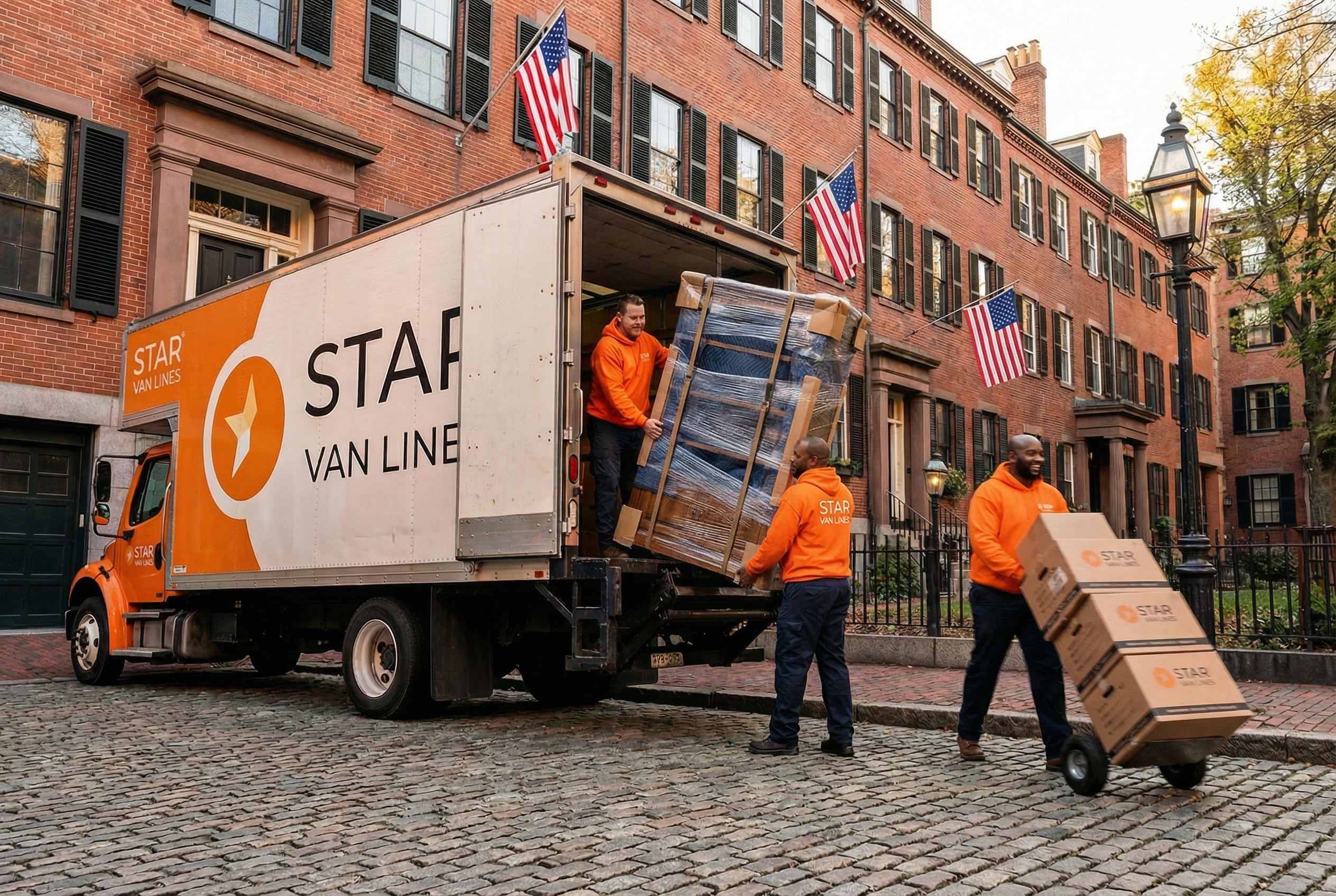
Pennsylvania is really two states wrapped into one move. The Philadelphia region anchors a 7.49-million-person metro in the southeast, Pittsburgh anchors a 2.43-million-person region nearly 300 miles to the west, and more than 3 million rural residents live in the wide Allegheny interior between them. A single relocation here can cross dense rowhouse blocks, mountain grades, and small-town addresses on the same trip. Star Van Lines is a USDOT-licensed interstate carrier (USDOT #4176875, MC #1607491) that handles local and long-distance moves across all of Pennsylvania. We've been running the I-76 Pennsylvania Turnpike between Philadelphia, Harrisburg, and Pittsburgh since 2016, plus I-80 across the northern tier and I-81 through the Lehigh Valley.
Our Pennsylvania moving services cover packing, loading, transport, delivery, and short-term storage. Because the Philadelphia-to-Pittsburgh haul runs about 360 miles on the I-76 Turnpike and climbs the Allegheny Mountains through steep grades and frequent tunnels, a cross-state move here is a genuine long-distance job, not a quick local hop. And Center City Philadelphia adds its own twist: tight rowhouse blocks, parking-permit staging, and walk-and-carry shuttle work. We handle both with the same coordinator and the same written estimate from pickup through delivery.
Curious what your Pennsylvania move will cost? Call (855) 822-2722 or use our online quote calculator. You'll get an itemized estimate that breaks down every line item, so there are no surprises on moving day. We're rated 4.0 on Trustpilot, 4.5 on Google, and 4.75 on Facebook across 240+ reviews.

Dennis has 15+ years of experience in interstate moving and has coordinated over 1,000 relocations across the United States.

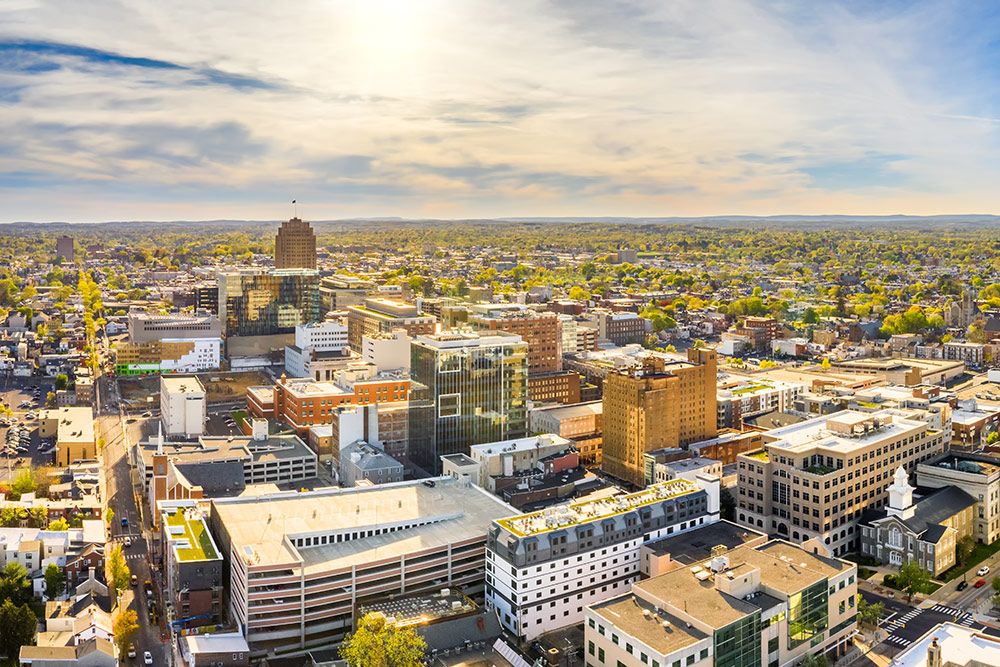



Moving services in Pennsylvania
Moving services in Pennsylvania
Star Van Lines provides local, long-distance, and interstate moving services across Pennsylvania. We handle packing, loading, transport, and delivery for residential and commercial moves. Because the state stretches two big metros nearly 300 miles apart with a wide rural interior in between, a Pennsylvania move can be a short city job or a full mountain-crossing haul. Every move includes a single coordinator, trained crew, and written estimate.
Local moving in Pennsylvania
Local moves in Pennsylvania run $109-$173 per hour for a two-person crew with a truck; three movers run $167-$305. High-demand in-state pairs include Philadelphia to Allentown and Philadelphia to Harrisburg in the east, and Pittsburgh to Erie in the west. Local jobs are billed mostly on crew hours and truck time rather than long-haul mileage, so the real rate driver is access. Parking, stairs, and shuttle distance in dense Philadelphia and Pittsburgh neighborhoods do more to set the price than the miles do. And many older homes in both cities have narrow staircases and no elevator, which adds labor time to a walk-up.
Long-distance moving from Pennsylvania
Most long-distance moves from Pennsylvania head to the neighboring Northeast or down to the Sun Belt. Short interstate runs to New York City and the Washington DC area cover roughly 100 to 150 miles, while Pennsylvania-to-Florida and Pennsylvania-to-Texas or Carolinas relocations span roughly 800 to 1,500 miles. Those longer hauls track the state's net domestic out-migration, since more residents leave Pennsylvania for lower-cost states than move in. We run regular loads on all of them. And your coordinator builds a written schedule around mountain-grade and weather windows on the Turnpike.
Packing and storage
We offer full-service packing, partial packing, and self-pack options. Full-service means our crew brings every material and packs each room; partial lets you pick the rooms; self-pack keeps the cost lowest. We have 43 warehouse locations nationwide for short-term and long-term storage. Pennsylvania storage has to handle both sticky summer humidity, with Philadelphia July highs near 88 degrees, and freeze-thaw winters, so climate-controlled units matter for wood furniture, electronics, leather, and documents. But in the northern tier and around Erie, a 100-inch lake-effect snow season makes indoor, climate-controlled storage well worth it.
Auto transport and specialty items
We ship vehicles by open or enclosed carrier. If you bring a car into Pennsylvania, plan around the deadlines: new residents must title and register within 20 days of establishing residency and pass a state safety inspection within 10 days, and emissions testing applies in many of the busier counties, including the Philadelphia and Pittsburgh metros. Auto transport is common on the long Philadelphia-to-Pittsburgh corridor, because driving more than 300 mountain miles is impractical. We also crate and move pianos, antiques, and large pieces that need hoisting or disassembly in narrow-stair rowhomes.
How much does moving in Pennsylvania cost?
Moving costs in Pennsylvania depend on whether you're relocating locally or across state lines. Local moves within Pennsylvania typically run $109-$173 per hour for a two-person crew with truck. Long-distance moves start at $690 for studio apartments and go up to $8,510 for large homes, depending on distance, weight, and access conditions.
Local moving rates
| Crew size | Hourly rate |
|---|---|
| 2 movers + truck | $109-$173 / hour |
| 3 movers + truck | $167-$305 / hour |
| 4 movers + truck | $224-$448 / hour |
Long-distance rates from Pennsylvania
| Move size | Estimated price range |
|---|---|
| Studio / 1 Bedroom | $690 - $2,128 |
| 2-3 Bedrooms | $1,265 - $4,658 |
| 4+ Bedrooms | $2,070 - $8,510 |
Popular routes and pricing from Pennsylvania
| Route | Distance | Avg cost (2-3 BR) |
|---|---|---|
| Philadelphia to New York | 94 mi | $1,265 - $1,495 |
| Philadelphia to Raleigh | 400 mi | $1,840 - $2,300 |
| Philadelphia to Houston | 1,550 mi | $3,335 - $4,025 |
| Philadelphia to Dallas | 1,470 mi | $3,507 - $4,313 |
| Philadelphia to Los Angeles | 2,727 mi | $3,852 - $4,658 |
Pricing reflects market averages for moves in and from Pennsylvania as of June 2026. Your final price depends on inventory weight, packing level, access at pickup and delivery, and scheduling flexibility. Call (855) 822-2722 or use our free quote calculator for an exact estimate.
What affects your moving price
- Shipment weight and volume are the biggest factors for any long-distance move from Pennsylvania.
- Distance drives the base price. Philadelphia to New York is 94 miles; Philadelphia to Los Angeles is 2,727.
- Access at both ends matters. Older Philadelphia and Pittsburgh walk-ups, narrow stairs, and parking-permit staging all add time.
- How much packing you want us to do. Full-service runs more than partial, and self-pack is the lowest option.
- When you move. Winter snow squalls on the Turnpike and the July-to-August heat-and-demand peak both push schedules and rates.
- Add-on services like auto transport, storage, and specialty item handling (pianos, antiques, large furniture) come with their own pricing.
Moving routes from Pennsylvania
Moving to Pennsylvania: what you should know
A move to Pennsylvania involves more than logistics. Few states stretch a single relocation across two distinct labor markets the way the Keystone State does, with Philadelphia anchoring a 7.49-million-person region in the southeast and Pittsburgh anchoring a 2.43-million-person region nearly 300 miles west, separated by a wide rural Allegheny interior. Below is a quick guide covering cost of living, access and logistics, climate and timing, and residency requirements that affect your move.
What it costs to move to Pennsylvania
Pennsylvania's cost of living index is 97.6 (US average = 100, BEA Regional Price Parities 2024), just below the national price level, so moving labor sits close to typical national rates: expect $109-$173 per hour for a two-person crew. Building access can add cost in the older neighborhoods of Philadelphia and Pittsburgh, because narrow staircases, missing elevators, and parking-permit staging stretch the labor hours. Median home value statewide is $254,500 (Census ACS 2020-2024), with median gross rent at $1,209 and median household income at $77,971. But prices split sharply by region. While the Philadelphia area generally runs higher, Pittsburgh and the rural interior come in lower, so where you land inside the state shifts the budget more than the statewide average suggests.
Access and logistics
Pennsylvania has a dense Interstate network. The I-76 Pennsylvania Turnpike is the main east-west spine, linking Philadelphia, Harrisburg, and Pittsburgh; I-80 runs east-west across the northern tier; I-79 heads north-south through western Pennsylvania and Pittsburgh; I-81 cuts through the Lehigh Valley and Harrisburg; I-95 carries the eastern coastal corridor through Philadelphia; and I-83 links Harrisburg to Maryland. But the catch is the middle. Because the 360-mile Philadelphia-to-Pittsburgh Turnpike run climbs the Allegheny Mountains through steep grades and frequent tunnels, a loaded truck slows to a crawl. Center City Philadelphia means tight rowhouse blocks and shuttle carries, while the northern tier around Erie faces a 100-inch lake-effect snow season that can close a winter date.
Climate and timing
Pennsylvania summers are warm and humid, with Philadelphia July highs near 88 degrees, and winters are cold, with January lows around 26 degrees, about 44 inches of annual rain, and 23 inches of snow in Philadelphia. Snow totals climb fast away from the coast. While Pittsburgh averages about 44 inches a season, Erie sees roughly 101 inches of lake-effect snow. But the real weather risk for a move is winter. Snow squalls and ice can cause sudden whiteouts and flash freezing on I-76, I-80, I-81, and I-79, especially in the Poconos, Laurel Highlands, and northern tier, while river valleys along the Susquehanna, Delaware, and Schuylkill carry the state's top flood risk. Best months to move are April through May or September through October. Avoid December through February for snow and ice, and the July-to-August stretch for peak heat and demand.
Residency and regulations
New residents have 60 days to get a Pennsylvania driver's license but only 20 days to title and register a vehicle, so the registration clock is the tight one. Pennsylvania requires an annual safety inspection statewide, and a newly registered out-of-state vehicle must pass within 10 days. Emissions testing applies in only 25 of the state's 67 counties, including Philadelphia and Allegheny, so confirm whether your destination county is an emissions county before you schedule. Handle the license and registration through PennDOT Driver and Vehicle Services.
What to know before moving to Pennsylvania
Benefits of moving to Pennsylvania
0%
Income tax rate
0
Major cities
+0.9
Millions of residents
$0K
Median household income
0
Year of foundation
$0K
Cost of average house
$0.6
Average gas price
+0
State parks
Pennsylvania is home to about 13.06 million people, split between the 7.49-million Philadelphia region in the southeast, the 2.43-million Pittsburgh region in the west, and roughly 3.06 million rural residents in between. Median household income is $77,971, and the cost of living index of 97.6 sits just below the national average. The state's flat personal income tax is 3.07 percent. Manufacturing is the largest contributor to Pennsylvania's GDP at about $113.2 billion and roughly 562,700 jobs, while health care and social assistance is the leading and fastest-growing sector by employment. Pennsylvania loses residents on net to other states. But it still drew about 238,000 newcomers from elsewhere in the country, about 1.9 percent of its population, in a recent year.
Is Pennsylvania a good place to live?
Pennsylvania offers two full-size job markets, a low flat income tax, and moderate home prices, with deep history and four-season outdoor recreation in between. The trade-offs are real: high local property and school-district taxes, cold and snowy winters in the west and north, and a long mountain-crossing drive between the two metros. Whether it's a good fit depends on which corner of the state suits your career, your budget, and your tolerance for winter.
Tax environment
Pennsylvania levies a flat 3.07 percent personal income tax, and it does not tax Social Security or qualifying retirement and pension income. Average combined state and local sales tax is 6.34 percent, with a 6 percent state rate plus a small local share that reaches 8 percent in Philadelphia. But the catch is property tax. Because effective rates run roughly 1.46 to 1.58 percent of home value, well above the national average near 0.9 percent, the bill adds up fast, and the Tax Foundation puts the median Pennsylvania real-estate tax paid at $4,216, with the school-district levy usually the largest piece. Many municipalities also add a local earned income tax of about 1 percent on wages.
Housing market
Median home value in Pennsylvania is $254,500 (Census ACS 2020-2024), and median gross rent is $1,209. About 69.3 percent of households own their homes. But prices vary widely by region. While the Philadelphia suburbs sit at the top of the market, central Pennsylvania around Harrisburg and the Lehigh Valley is more moderate, and Pittsburgh and the rural interior are more affordable still. A more recent Zillow reading put the typical Pennsylvania home value near $278,018 in October 2025, so expect the figure to move with the market.
Job market and economy
Pennsylvania's economy runs on health care, education, and manufacturing. UPMC is the state's largest private employer at about 100,000 staff, and the University of Pennsylvania with Penn Medicine employs roughly 49,000 to 53,000. Walmart, Amazon, and the Commonwealth of Pennsylvania round out the largest employers. Manufacturing is still the biggest contributor to state GDP, near $113.2 billion, while health care and social assistance is the fastest-growing sector by employment. The state's labor force participation rate is 62.6 percent, and 35.2 percent of adults hold a bachelor's degree or higher.
Safety and natural risks
Flooding is Pennsylvania's dominant hazard. The state's extensive river systems, the Susquehanna, Delaware, Allegheny, and Monongahela, drive riverine and flash flooding, and the remnants of tropical systems sometimes push heavy inland rain into the valleys. Winter storms bring heavy snow, ice, and sudden snow squalls, and spring and summer carry severe thunderstorms with damaging wind, hail, and the occasional tornado. None of it is extreme by Gulf Coast or Tornado Alley standards. But a mover here still plans loading windows around flash-flood and snow-squall days.
Who thrives in Pennsylvania?
Cross-state job switchers between Philadelphia and Pittsburgh
Because the state's two big job markets sit nearly 300 miles apart, taking a role in the other metro means a genuine long-distance, mountain-crossing move inside one state. Someone leaving a Philadelphia pharma, finance, or media job for a Pittsburgh health-system or tech role needs a mover comfortable on the full I-76 Turnpike haul, not just a local crew.
Healthcare and university staff relocating to UPMC, Penn, and Penn State
Health care and higher education are Pennsylvania's largest employment engines, and a steady stream of doctors, nurses, researchers, and faculty relocate to the anchor institutions: UPMC and the universities around Pittsburgh, Penn Medicine and the University of Pennsylvania in Philadelphia, and Penn State across the central interior. These hires often arrive from out of state on tight start dates.
Retirees keeping pension and Social Security income tax-free
Pennsylvania does not tax Social Security benefits and exempts qualifying retirement and pension income, including PSERS and SERS pensions, from the state income tax. Retirees relocating from higher-tax Northeast states, or downsizing from a Philadelphia or Pittsburgh suburb into a smaller home near a moderate $278,018 typical home value, move largely for that treatment.
Rural-interior families moving between small Pennsylvania towns
Pennsylvania has more than 3 million rural residents, and search demand reflects it, with steady queries from small communities such as Mars, Langhorne, Center Valley, Wescosville, and Sharpsville. These families move between towns scattered across the wide Allegheny interior, far from either major metro, and they benefit from a mover who can route reliably between small-town addresses, not just downtown hubs.
Businesses and offices relocating within the Philadelphia and Pittsburgh corridors
Commercial demand is a clear signal in Pennsylvania search data. Offices, medical practices, and professional firms moving inside the Philadelphia or Pittsburgh business districts, or consolidating between the two, need after-hours scheduling, IT and equipment handling, and minimal downtime, which is the core of a commercial relocation rather than a household move.
First week after moving to Pennsylvania: what to do
After your move to Pennsylvania, several tasks have state-specific deadlines. Pennsylvania gives new residents 60 days to switch a driver's license but only 20 days to title and register a vehicle. Since the vehicle window is the shorter one, handle it first. Here is a prioritized checklist.
- Update your driver's license.
Pennsylvania gives new residents 60 days to obtain a Pennsylvania driver's license through PennDOT Driver and Vehicle Services. Bring your out-of-state license and proof of Pennsylvania residency. (pa.gov/agencies/dmv)
- Register your vehicle.
You have only 20 days to title and register a vehicle after establishing residency. The MV-1 title application is not available online and must be completed by an authorized agent (a notary, dealer, or messenger service) who verifies the VIN, and your out-of-state title must be surrendered to the Bureau of Motor Vehicles. A newly registered vehicle must pass a state safety inspection within 10 days.
- Transfer your auto insurance.
Pennsylvania requires proof of in-state insurance before you can title and register, so contact your insurer to re-rate your policy for Pennsylvania first. Minimum liability requirements may differ from your previous state.
- Register to vote.
Pennsylvania lets you register online, by mail, in person at your county election office, or at PennDOT Driver's License Centers, with a deadline of at least 15 days before an election. The online application is at vote.pa.gov.
- Update homeowner's or renter's insurance.
Flooding is Pennsylvania's top hazard, and standard policies don't cover flood damage. If you're near the Susquehanna, Delaware, or Schuylkill, ask about a separate flood policy.
- Forward your mail.
USPS Change of Address is free online at usps.com, and mail forwarding starts within 7-10 business days.
- Update school records.
If you have children, request transcripts from your previous district and contact the new one for enrollment requirements and deadlines. Pennsylvania's best-rated districts include Radnor Township and Tredyffrin-Easttown near Philadelphia and North Allegheny near Pittsburgh, so research the specific district before choosing a neighborhood.
Pennsylvania at a glance: schools, jobs, and things to do
Schools and universities
Pennsylvania's top-rated public school districts cluster in the Philadelphia suburbs: Radnor Township ranks #1 and Tredyffrin-Easttown #3 on Niche's 2026 list, with North Allegheny near Pittsburgh at #2. The state's higher education is a national draw. Pennsylvania State University is the public flagship research university at University Park. The University of Pennsylvania is an Ivy League school in Philadelphia and Niche's top-ranked college in the state. And Carnegie Mellon University in Pittsburgh is nationally known for computer science and engineering. Together they pull students, faculty, and research staff into both metros and the central interior, since education is such a steady source of relocation demand here.
Major employers
Health care and education anchor Pennsylvania employment. UPMC, the University of Pittsburgh Medical Center, is the largest private employer in the state at about 100,000 staff system-wide. The University of Pennsylvania and Penn Medicine together employ roughly 49,000 to 53,000. Walmart runs about 57,000 jobs in Pennsylvania, Amazon is a major fulfillment and logistics employer across the state, and the Commonwealth of Pennsylvania covers state agencies, corrections, the state police, and the state university system. By output, manufacturing is still the largest contributor to state GDP at about $113.2 billion and roughly 562,700 jobs, while health care and social assistance is the leading and fastest-growing sector by employment.
Attractions and recreation
Pennsylvania carries deep colonial history. In Philadelphia, Independence National Historical Park holds Independence Hall and the Liberty Bell, the symbols of American independence. Gettysburg National Military Park and Valley Forge National Historical Park are two of Pennsylvania's best-known historic parks. Architecture travelers make the trip to Frank Lloyd Wright's Fallingwater, a UNESCO World Heritage site at Mill Run. And the Pocono Mountains are a four-season outdoor-recreation region, popular for skiing, hiking, boating, and rafting, and a place people relocate to for the lifestyle.
FAQ
Questions? Look here
Can’t find an answer? Call us
(855) 822-2722 or email
Local moving in Pennsylvania typically costs $109-$173 per hour for a two-person crew with truck. A standard three-bedroom home takes 4-6 hours, putting the total between $450 and $3,900. Add-ons like packing, disassembly, and long carries increase the total. Call (855) 822-2722 for an itemized estimate.
Long-distance moves from Pennsylvania start at $690 for studio apartments and go up to $8,510 for four-plus-bedroom homes. The final price depends on shipment weight, distance, and access at both locations. Star Van Lines provides binding estimates so your price won't change after booking.
Search our USDOT number 4176875 on the FMCSA SAFER website (safer.fmcsa.dot.gov). This federal database confirms our operating authority, MC number 1607491, insurance status, and safety record. Any legitimate interstate mover should be able to provide a verifiable USDOT number.
Common surcharges include stair fees for older Philadelphia and Pittsburgh walk-ups, long-carry charges for distances over 75 feet from truck to door, parking-permit staging in dense rowhouse blocks, and shuttle fees when a full-size truck can't reach your street. We disclose all potential charges in your written estimate before you book.
Federal law requires interstate movers to offer two levels: Released Value Protection (free, covers $0.60 per pound per item) and Full Value Protection (paid, covers repair, replacement, or cash settlement at current value). Star Van Lines is fully insured under USDOT #4176875 and can explain both options when you request a quote.
New residents have 60 days to obtain a Pennsylvania driver's license through PennDOT Driver and Vehicle Services, but only 20 days to title and register a vehicle. The MV-1 title application can't be completed online; an authorized agent has to verify your VIN, and you surrender your out-of-state title at registration. Get the license and registration sorted early, since the 20-day window is the tight one.
Yes. Pennsylvania requires an annual safety inspection statewide, and a newly registered out-of-state vehicle must pass within 10 days of registration. An emissions test is required in only 25 of the state's 67 counties, including Philadelphia and Allegheny (Pittsburgh) plus the busier Philadelphia-region and Pittsburgh-region counties; the other 42 counties need only a visual anti-tampering check. Confirm whether your destination county is an emissions county before scheduling.
Pennsylvania's cost of living index is 97.6 (US average = 100, BEA RPP 2024), just below the national price level, and the median home value is $254,500 (Census ACS 2020-2024). Prices vary widely inside the state: the Philadelphia suburbs sit at the top of the market, the Lehigh Valley and Harrisburg areas are more moderate, and Pittsburgh and the rural Allegheny interior are more affordable. A recent Zillow reading put the typical home value near $278,018 in October 2025.
The smoothest windows are April through May and September through October, with mild temperatures and low snow risk. Winter is the hard stretch: snow squalls and ice can hit the I-76 Turnpike and the mountain corridors, Pittsburgh averages about 44 inches of seasonal snow, and Erie sees roughly 101 inches of lake-effect snow. December through February moves face weather holds, so build schedule flexibility into a winter date.
The two metros sit about 300 miles apart, and the Turnpike haul runs roughly 360 miles over the Allegheny Mountains through steep grades and frequent tunnels, so many movers ship a vehicle rather than drive it. Auto transport is common on this corridor and on out-of-state moves. Remember that new residents must register within 20 days and pass a safety inspection within 10 days, with emissions testing in the Philadelphia and Pittsburgh metros.
Pennsylvania is one of the more retiree-friendly states on income. It does not tax Social Security benefits and exempts qualifying retirement and pension income, including PSERS and SERS pensions, from the flat 3.07 percent state income tax. The trade-off is property tax, which runs roughly 1.46 to 1.58 percent of home value, well above the national average, with the school-district levy usually the largest piece.
The biggest is the geography. Pennsylvania puts a 7.49-million-person Philadelphia region in the southeast and a 2.43-million-person Pittsburgh region nearly 300 miles west, with a wide rural Allegheny interior between them, so a single cross-state move is a real long-distance, mountain-crossing job. Add winter lake-effect snow near Erie at about 101 inches a season, tight historic-rowhouse access in Center City Philadelphia, and the 20-day vehicle-registration deadline, and the move rewards planning.
Ready to Start Your Pennsylvania Move?
Get a free moving estimate today. No obligation, no pressure.
Call us or fill out the form - we'll get back to you fast.
USDOT #4176875 | MC #1607491 | Licensed & Insured