
Thank you for your feedback!
We will contact you shortly

Free consultation
Enter your phone number and we will call you back for a consultation on any moving and storage services

Hawaii
Licensed Hawaii Movers - Island & Mainland Moves
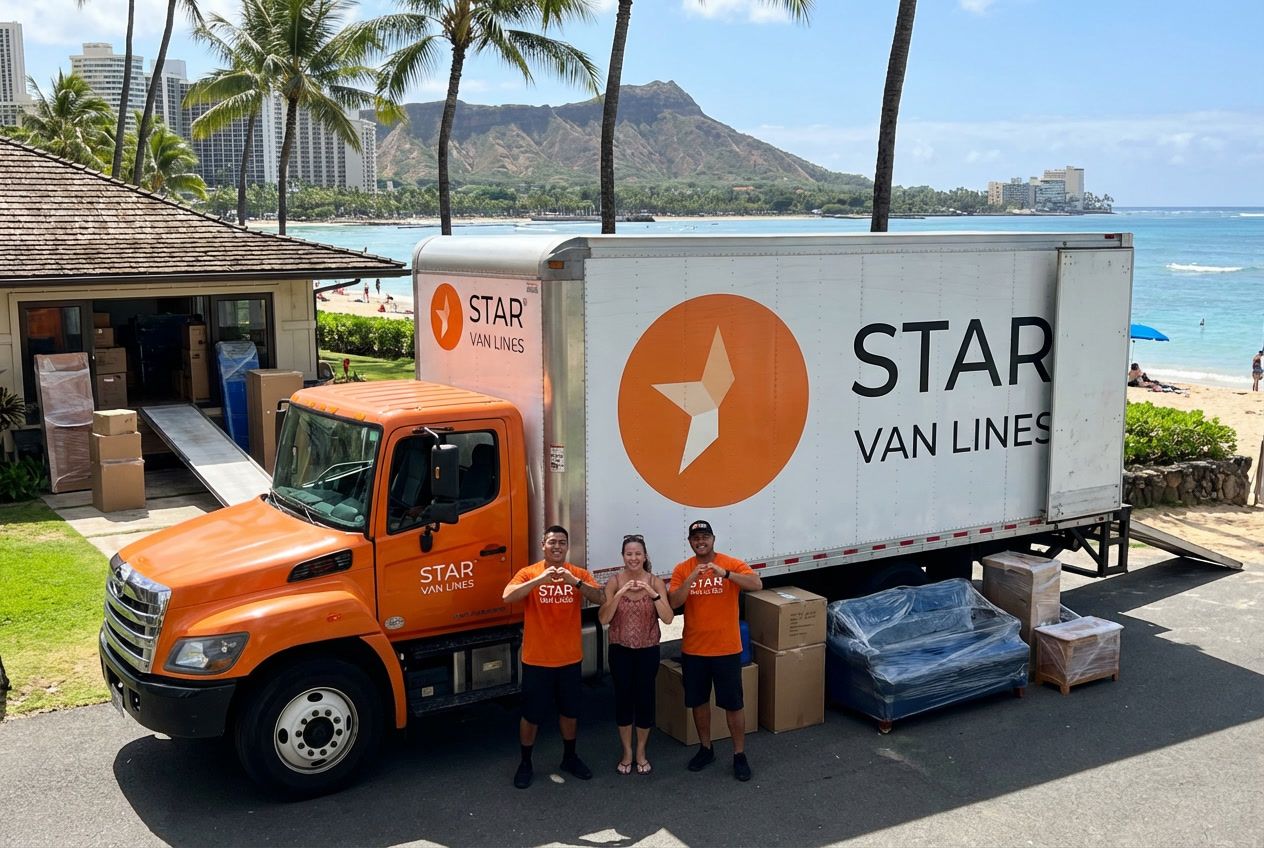
Hawaii is the only state you can't drive to. Every other relocation in the country, no matter how far, eventually rides one truck down one highway. A Hawaii move doesn't work that way. Because the islands sit roughly 2,223 nautical miles (about 2,558 statute miles) of open Pacific from the West Coast, virtually every interstate household shipment crosses the ocean in a sealed container and then finishes on the road. Star Van Lines is a USDOT-licensed interstate carrier (USDOT #4176875, MC #1607491) that has coordinated island and mainland moves since 2016, and the part that surprises most newcomers is that the trip involves two carriers and two handoffs, not one.
Not sure how a Hawaii move across the Pacific actually works? Here's the short version. A mainland move starts as a local pickup, gets loaded into an ocean container, sails Honolulu to a West Coast port, and then travels by ground to your final address. That's three legs glued into one coordinated job. Our Hawaii services cover local Oahu and inter-island moves, mainland relocations both directions, packing, ocean crating, vehicle shipping, and short-term storage at warehouse locations nationwide. And because salt air and a long sea voyage are hard on furniture, we plan moisture barriers and export-grade crating that a same-state mainland move never needs.
Curious what your Hawaii move will actually cost? Call (855) 822-2722 or use our online quote calculator. You'll get an estimate that breaks down every line item, the ocean leg and the ground leg both, so there aren't any surprises on moving day. We're rated 4.0 on Trustpilot, 4.5 on Google, and 4.75 on Facebook across 240+ reviews.

Dennis has 15+ years of experience in interstate moving and has coordinated over 1,000 relocations across the United States.

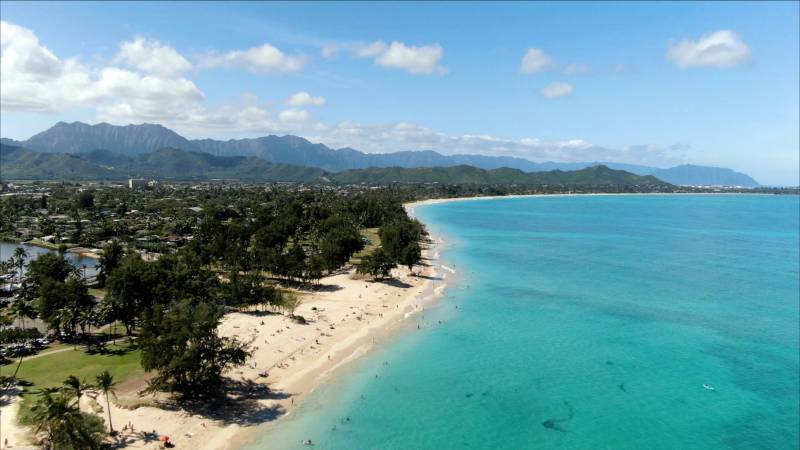
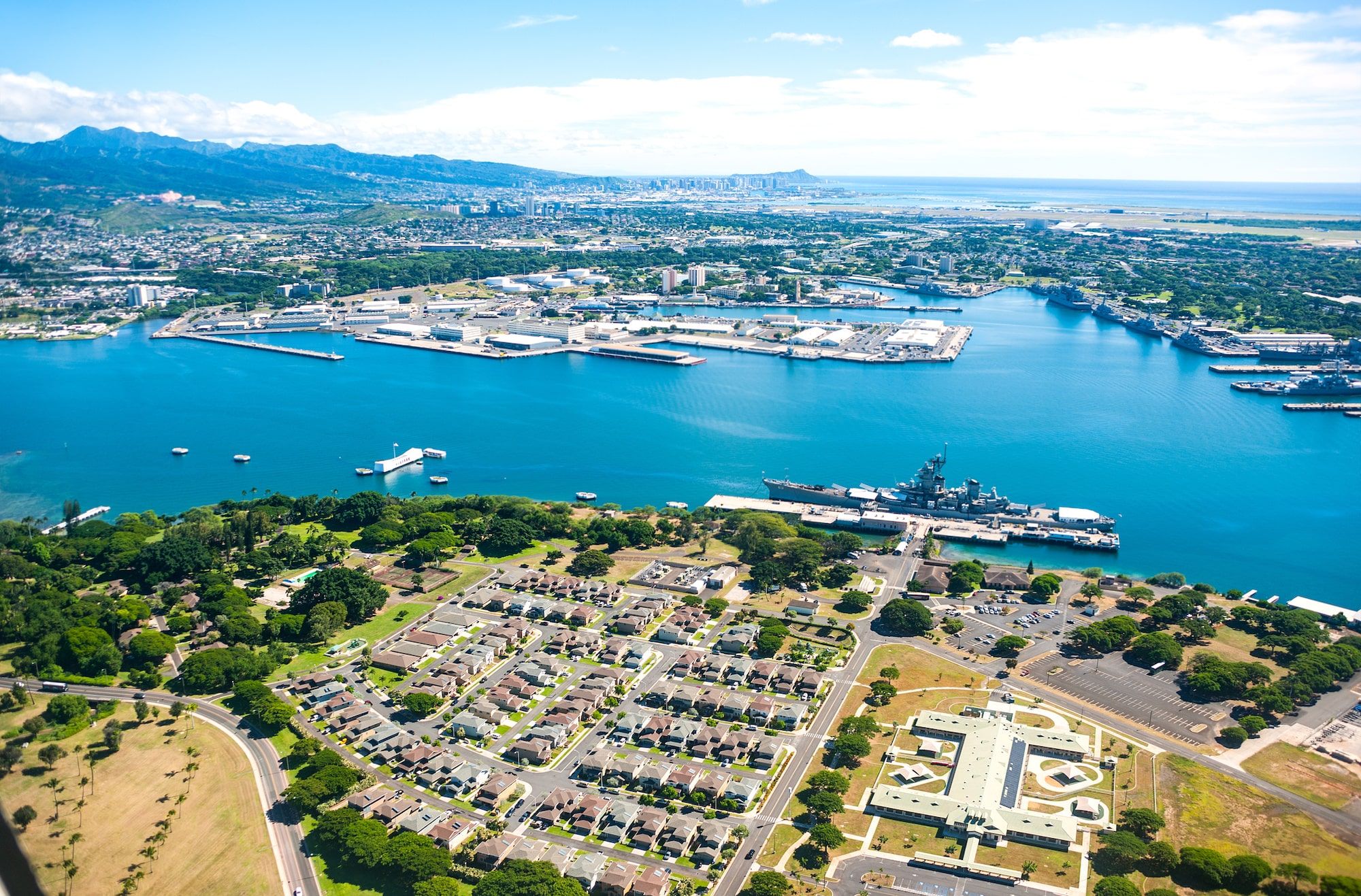
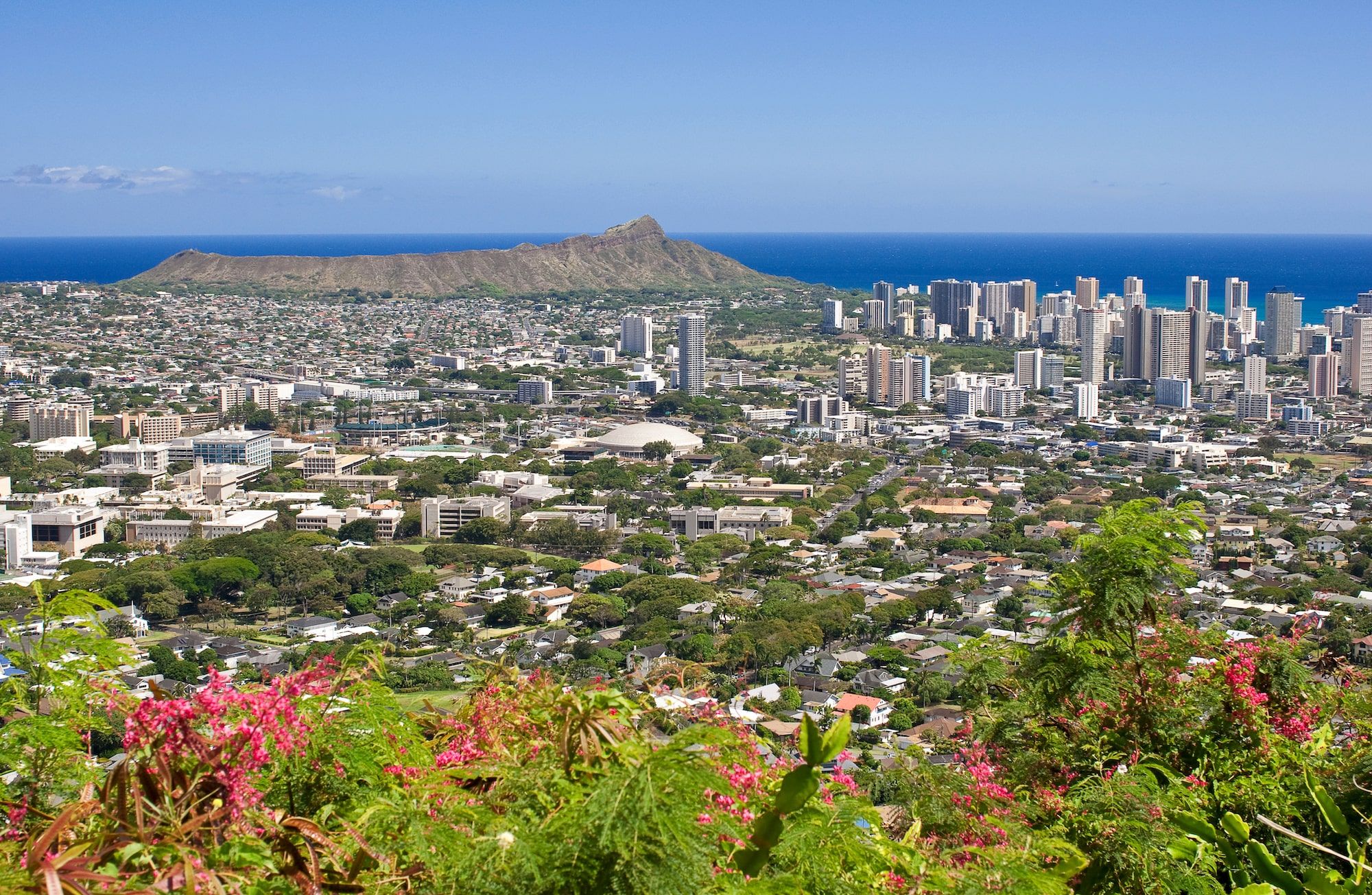
Moving services in Hawaii
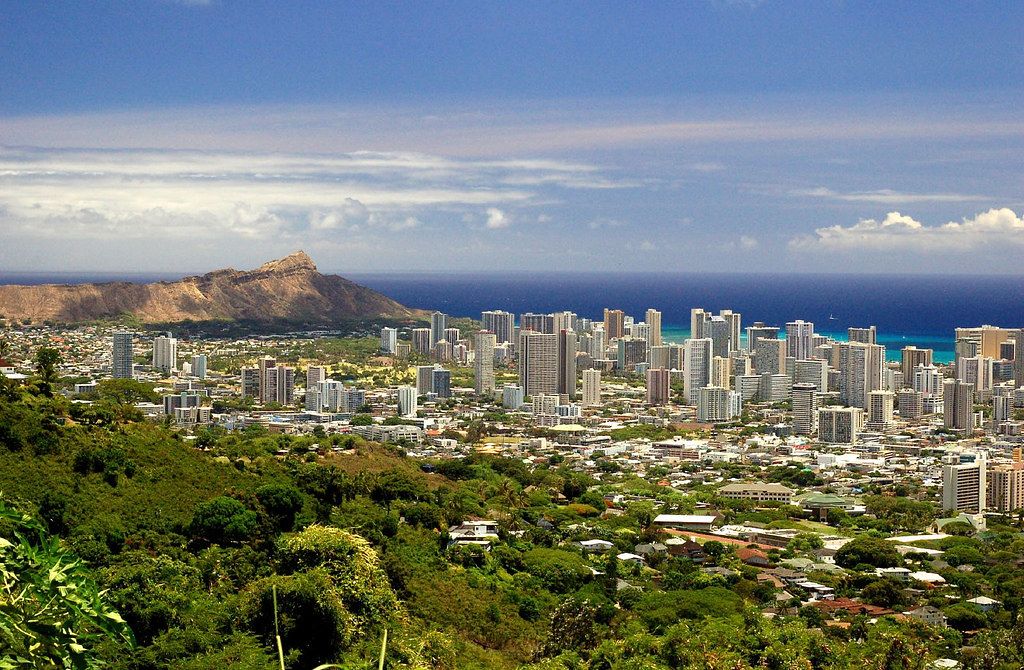
Star Van Lines provides local, inter-island, and mainland moving services across Hawaii. We handle packing, ocean crating, loading, sea transport, and final ground delivery for residential and commercial moves. Hawaii sets a different job in front of a crew than any mainland state does, because nearly every interstate shipment leaves the islands by container ship rather than by truck. Every move includes a single coordinator, a trained crew, and a written estimate that covers both the sea leg and the ground leg.
Local moving in Hawaii
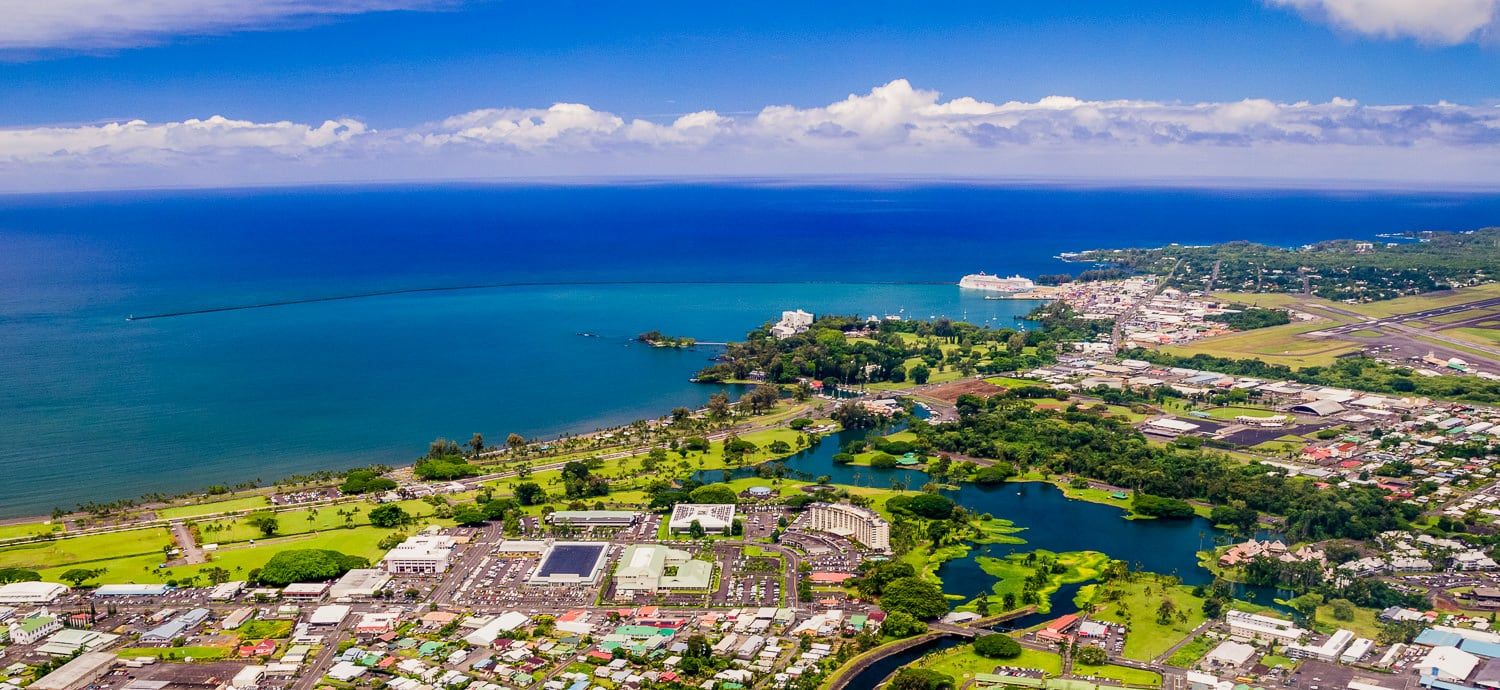
Local moves in Hawaii are Oahu and inter-island jobs, priced by the hour. A two-person crew runs $115-$173 per hour; three movers run $173-$311. On Oahu the busiest local lanes connect Honolulu with its bedroom communities, Honolulu to Pearl City, Honolulu to Waipahu, and Honolulu to Kailua over the Pali, and those tend to be short-distance moves. Neighbor-island local work centers on Hilo. But an inter-island move isn't really local in the mainland sense, since a barge or ferry leg sits between Oahu and Maui, Hawaii Island, or Kauai. And the humidity matters even on a short hop, because crews seal and protect goods against the salt-laden marine air.
Mainland moving from Hawaii
Mainland demand out of Hawaii is led by the Hawaii-to-California lane, followed by Hawaii to Florida, Hawaii to Texas, and Hawaii to Arizona. Every one of these is multimodal. The shared first leg is the ocean container run of about 2,223 nautical miles (roughly 2,558 statute miles) from Honolulu to a West Coast port, after which a ground leg carries the shipment the rest of the way, a short LA-metro drive for a California delivery or a multi-state haul for Florida. Because two carriers and two handoffs are involved, your coordinator builds the whole chain into one written estimate rather than quoting a single truck door to door.
Packing and storage
We offer full-service packing, partial packing, and self-pack options. Full-service means our crew brings every box and material and packs each room; partial lets you choose which rooms we handle; self-pack is the lowest-cost option. We have 43 warehouse locations nationwide for short-term and long-term storage. But in Hawaii's warm, humid, salt-laden air, climate-controlled storage matters more than usual, since untreated metals corrode, wood and leather can mildew, and electronics suffer in coastal humidity. That risk compounds during the June-to-November hurricane season, when storage that buffers a delayed ocean sailing should be sealed against moisture.
Auto transport and specialty items
You can't drive a car off the island, so vehicle relocation rides the same Pacific lane your household goods do. We ship cars by container or roll-on/roll-off vessel from Honolulu to a West Coast port, then deliver locally or truck them onward. It's worth planning vehicle transport and household goods together, because both ride the same ocean route and the same coordinator handles both. Specialty pieces like boats, surfboards, pianos, and fine art need salt-air crating built for the sea voyage, which is a different standard than a mainland van line uses.
How much does moving in Hawaii cost?
Moving costs in Hawaii depend on whether you're moving locally on Oahu or across the Pacific to the mainland. Local moves typically run $115-$173 per hour for a two-person crew with a truck. Mainland moves are multimodal, combining an ocean container leg with a ground leg, and the indicative ranges start around $2,012 for a studio and reach about $13,857 for a large four-plus-bedroom home, depending on the load, the destination, and access at both ends.
Local moving rates
| Crew size | Hourly rate |
|---|---|
| 2 movers + truck | $115-$173 / hour |
| 3 movers + truck | $173-$311 / hour |
| 4 movers + truck | $230-$460 / hour |
Mainland move ranges from Hawaii
| Move size | Estimated price range (multimodal) |
|---|---|
| Studio / 1 Bedroom | $2,012 - $3,450 |
| 2-3 Bedrooms | $3,622 - $7,590 |
| 4+ Bedrooms | $6,095 - $13,857 |
Popular mainland lanes and pricing from Hawaii
| Lane (ocean + ground) | Avg cost (2-3 BR) |
|---|---|
| Honolulu to Los Angeles CA | $3,622 - $4,485 |
| Honolulu to Las Vegas NV | $3,910 - $4,773 |
| Honolulu to Seattle WA | $4,428 - $5,463 |
| Honolulu to Dallas TX | $5,118 - $6,267 |
| Honolulu to Orlando FL | $6,210 - $7,590 |
Pricing reflects indicative multimodal ranges for moves in and from Hawaii as of June 2026, since every mainland lane combines an ocean sailing with a mainland ground leg. Your final price depends on inventory weight, packing and crating level, the destination's ground distance, and access at pickup and delivery. Call (855) 822-2722 or use our free quote calculator for an exact estimate.
What affects your moving price
- Shipment weight and volume are the biggest factors on any mainland move from Hawaii.
- The destination's ground leg drives a lot of the range. A California delivery is a short port-to-door drive; an Orlando delivery is a cross-country haul on top of the same ocean leg.
- Access at both ends matters. Tight Honolulu loading windows and the final-mile reach on the mainland can call for a shuttle or add time.
- How much packing and ocean crating you want us to do. Full-service and salt-air export crating run more than self-pack.
- When you move. The June-to-November Pacific hurricane season can disrupt ocean sailings, while summer is also peak demand.
- Add-on services like vehicle shipping, climate-controlled storage, and specialty handling for boats, pianos, or artwork carry their own pricing.
Moving to Hawaii: what you should know
A move to Hawaii involves more than logistics. The islands carry some of the steepest housing costs in the country and a tax mix that surprises people, and the ocean between Hawaii and the mainland gates every interstate move you'll ever make from here. Below is a quick guide covering cost of living, access and logistics, climate and timing, and the residency rules that affect your move.
What it costs to move to Hawaii
Hawaii is, by the composite cost-of-living index, the most expensive state in the country, with an index near 186 against a national 100. On the federal BEA Regional Price Parities measure (110.0 for 2024) Hawaii is among the most expensive states rather than the single highest, so the picture depends on which yardstick you use. Either way, housing is the headline: the median home value is $839,100, the highest in the nation, and median gross rent is $1,971. Median household income is a strong $100,389, but the price gap is real. Local moving labor runs $115-$173 per hour for a two-person crew, and because mainland moves add an ocean leg, the cost structure looks unlike any drive-only relocation.
Access and logistics
Hawaii has no Interstates that reach the mainland, so the real corridors here are sea lanes plus West Coast highways. Within Oahu the federally numbered routes are H-1, the Honolulu east-west spine, H-2 from central Oahu up to Wahiawa, and H-3, which crosses the Koolau Range from Halawa to Kaneohe. A mainland move runs the Honolulu-to-West-Coast ocean lane of about 2,223 nautical miles to a port near Long Beach, Los Angeles, or Oakland, then continues by ground on routes like I-5, I-10, I-40, or I-15. Because two carriers touch the shipment, the hard part isn't a single drive; it's coordinating the container booking, the port handoff, and the final ground delivery so they line up.
Climate and timing
Hawaii's climate barely changes by season. Honolulu sees July-to-September highs around 88 and January overnight lows near 67, with about 16.4 inches of rain a year across roughly 89 wet days, and around 271 days of sunshine. There is no snow anywhere people live, since measurable snow falls only on the high summits of Mauna Kea and Mauna Loa. The headline risks are tropical and geologic: the Central Pacific hurricane season from June 1 to November 30 with a peak in July through September, tsunami risk, heavy windward-coast rain and flash flooding, volcanic vog on the Big Island, and the wildfire hazard named the state's top risk in the 2023 hazard mitigation plan. The best window for a move is late winter through spring, roughly February through May, before hurricane season opens and while ocean sailings run calmest. Avoid June through November, when storms can disrupt container schedules and summer demand peaks at the same time.
Residency and regulations
Hawaii has no single statewide DMV. Driver licensing and vehicle registration are handled by the four counties, with Honolulu's work done through the City and County Customer Services Department, and state-level safety oversight sitting with the Hawaii DOT. New residents are widely directed to obtain a Hawaii license within 30 days, and an out-of-state vehicle must be registered or permitted within 30 days of arriving on the island. Start at the state portal (hawaii.gov) once you are settled. Because cars arrive by ocean, the sequence is ship-then-register: after a vehicle lands, you take it for an annual safety inspection (the Periodic Motor Vehicle Inspection required under Hawaii law), and it will fail on the missing Hawaii registration, after which you bring the failed inspection plus the shipping Bill of Lading to a satellite city hall to register. Hawaii has no emissions or smog test at all, which keeps that part simple. Online voter registration is available at olvr.hawaii.gov, and you can register automatically when you apply for a license.
What to know before moving to Hawaii
Benefits of moving to Hawaii
0,432,820
Population
$0,389
Median household income
~0 (US = 100, composite index 2026)
Cost of living index
0/year (approximate)
Days of sunshine
0.40% to 11.00% (graduated)
State income tax
-0.5%
Population change 2020-2025
Hawaii is home to about 1.43 million people, and unlike most of the country it lost population recently, slipping about 1.5 percent between 2020 and 2025. The economy leans on tourism and hospitality first, with military and defense second and healthcare close behind, and the two largest private employers, The Queen's Health Systems and Hawaii Pacific Health, are both Honolulu hospital networks. Median household income is a strong $100,389. The migration story runs outbound: Hawaii lost a net 8,876 residents to other states through domestic out-migration in the year ending July 2025 (Hawaii State Data Center), with California, Washington, and Texas the top destinations. And because cost pressure is the main driver, the busiest mainland lanes carry people leaving for lower-cost states.
Is Hawaii a good place to live?
Hawaii offers a year-round tropical climate, a deep military and healthcare job base, and an outdoor lifestyle few places can match. But the trade-offs are steep: housing costs among the steepest in the nation, a graduated income tax topping out at 11 percent, and the logistics of living on islands where everything imported arrives by sea. Whether it's a good fit depends on how much you value the climate and lifestyle against the cost of living and the reality of ocean-dependent supply lines.
Tax environment
Hawaii runs a graduated individual income tax from 1.40 percent up to a top marginal 11.00 percent, among the highest top rates in the United States. It has no conventional retail sales tax; instead it levies a General Excise Tax of 4.00 percent statewide, about 4.50 percent combined on Oahu, and because the GET applies to nearly all business activity including services, it can reach moving and storage in ways an ordinary sales tax would not. On the other side of the ledger, Hawaii has the lowest effective property tax in the country at about 0.29 percent of home value, helped by county home-exemption programs, and it charges no estate or inheritance tax. The statewide gas tax is 18.75 cents per gallon plus county-level taxes on top.
Housing market
Median home value in Hawaii is $839,100, the highest of any state, and median gross rent is $1,971. The owner-occupancy rate is 63.0 percent, which means roughly 37 percent of households rent in a market where buying is out of reach for a lot of households. Median monthly owner costs with a mortgage run about $2,904. Prices vary by island and neighborhood, but the floor sits high everywhere relative to the mainland, which is exactly why so many longtime residents end up shipping their belongings the other direction.
Job market and economy
Hawaii's economy is led by tourism and hospitality, which the state's own development agency ranks first, with military and defense second. Defense spending reached $10.2 billion in 2023, roughly 9 percent of state GDP, and a large share of jobs ties to it directly or indirectly. Healthcare anchors the private sector: The Queen's Health Systems employs about 9,452 people and Hawaii Pacific Health about 7,439. The University of Hawaii system is the single largest employer overall, while Pearl Harbor Naval Shipyard is the largest industrial employer. And because the high-wage base is narrower than on the mainland, household budgets feel the cost of living sharply.
Safety and natural risks
Hawaii faces a distinctive hazard mix. Hurricanes and tropical cyclones threaten from June through November, tsunamis can arrive with little warning, and the Big Island carries active volcanic hazards from lava flow and vog. Earthquakes, wildfire, and coastal flooding round out the list, and wildfire was named the state's top hazard in the FEMA-approved 2023 mitigation plan, with Hawaii County rated Relatively High on the FEMA National Risk Index. If you are buying near the coast, it is worth lining up flood and the right hazard coverage early, since standard homeowner policies often exclude the perils that matter most here.
Who thrives in Hawaii?
Military families on PCS orders
Hawaii hosts about 43,118 active-duty service members and roughly 73,072 total military personnel, most of them on Oahu around Joint Base Pearl Harbor-Hickam and Schofield Barracks. Permanent Change of Station orders move thousands of these households across the Pacific each year, and they need movers fluent in ocean-container logistics, vehicle shipping, and tight government timelines. Because PCS moves run both directions, the same coordinator handles the inbound container and the eventual outbound one.
Cost-of-living movers leaving for the mainland
With the nation's highest composite cost of living, near 186 against a US baseline of 100, and the highest median home value at $839,100, many longtime residents relocate to lower-cost states, and the population actually fell about 1.5 percent from 2020 to 2025. The Hawaii-to-California, Hawaii-to-Florida, and Hawaii-to-Texas lanes are the busiest. These movers want one coordinated multimodal quote covering both the ocean leg and the mainland delivery, not two separate bookings.
Remote and hybrid workers chasing island life
Knowledge workers who can keep a mainland salary while living in the islands move into Honolulu and neighbor-island communities for the climate and the outdoors. Because they ship household goods plus a home office, and often a vehicle, by sea, they prioritize careful export crating of electronics against salt-air humidity. And they tend to plan around realistic ocean-transit timing rather than expecting a fixed delivery date.
Inter-island movers between Oahu, Maui, Hawaii Island, and Kauai
About 70 percent of Hawaii residents, 1,003,666 of 1,432,820, live in Honolulu County on Oahu, and households frequently relocate between islands for jobs, family, or housing. Unlike a mainland move, an inter-island move still needs a barge or ferry leg between islands, so it's a scaled-down version of the same sea-plus-ground process, with crating that still has to survive a salt-air crossing.
Retirees and snowbirds relocating off-island
Older residents on fixed incomes feel Hawaii's cost pressure acutely, since median owner costs with a mortgage run about $2,904 and median rent about $1,971. Many retire to lower-cost mainland states, even though Hawaii charges no estate or inheritance tax. They typically downsize and ship a smaller load by sea, and they value clear guidance on packing, ocean crating, and vehicle shipping more than anything else.
First week after moving to Hawaii: what to do
After your move to Hawaii, several tasks need attention in the first weeks. New residents are directed to get a driver license within 30 days, and an out-of-state vehicle must be registered or permitted within 30 days of arriving on the island, so handle both early. Here is a prioritized checklist.
- Update your driver license.
Plan to get a Hawaii license within 30 days of establishing residency. Licensing is handled at the county level, so start at the state portal (hawaii.gov) and bring proof of identity and Hawaii residency to your county office.
- Register your vehicle.
Because cars arrive by ocean, the sequence is ship-then-register. Within 30 days of the vehicle landing, take it for the annual safety inspection (it will fail on the missing Hawaii registration), then bring the failed inspection and the shipping Bill of Lading to a satellite city hall to register or get an out-of-state permit. There is no emissions or smog test.
- Transfer your auto insurance.
Hawaii requires liability coverage, so contact your insurer to re-rate your policy before you register. Premiums differ by island and by county.
- Register to vote.
Hawaii offers online registration at olvr.hawaii.gov, and you can be registered automatically when you apply for a license or state ID. Same-day registration is available in person at voter service centers beginning 10 days before Election Day.
- Update homeowner's or renter's insurance.
Because hurricanes, flooding, and volcanic hazards all affect Hawaii, review your coverage. Standard policies often exclude flood and certain hazards, so a home near the coast may need separate policies.
- Forward your mail.
USPS Change of Address is free online at usps.com. Mail forwarding starts within 7-10 business days.
- Transfer medical records.
Contact your current providers before the move and find a new primary care physician near your new home, since neighbor-island access can take planning.
- Update school records.
If you have children, request transcripts from the previous district. Hawaii runs a single statewide public school district, so enrollment goes through the Hawaii Department of Education, and the school year usually starts in late July or early August.
Hawaii at a glance: schools, jobs, and things to do
Schools and universities
Hawaii has a single statewide public school district, the Hawaii Department of Education, serving about 170,209 students across 297 schools, so families compare areas rather than districts. Mililani in Central Oahu is a top-performing area, home to Mililani Ike Elementary, and the East and Windward Oahu communities of Kailua and Hawaii Kai, along with the Honolulu neighborhood of Manoa, rank among the best. On the Big Island, Waiakea near Hilo runs the strongest public schools outside Oahu. The University of Hawaii at Manoa in Honolulu is the public research flagship, founded in 1907, while Hawaii Pacific University is the largest private university and UH Hilo anchors the Big Island. Because area quality and home prices both vary sharply, many families research specific neighborhoods closely before choosing where to land.
Major employers
The University of Hawaii system is the largest single employer in the state, with about 10,106 people. Pearl Harbor Naval Shipyard is the largest industrial employer, part of a military presence of more than 73,000 personnel statewide. The Queen's Health Systems is the largest private employer at about 9,452, followed by Hawaii Pacific Health at about 7,439 and Kamehameha Schools at about 3,248. Because tourism and hospitality lead the economy while defense and healthcare follow, job seekers find the deepest opportunities in those sectors, and the hotel industry adds another large private-sector anchor.
Attractions and recreation
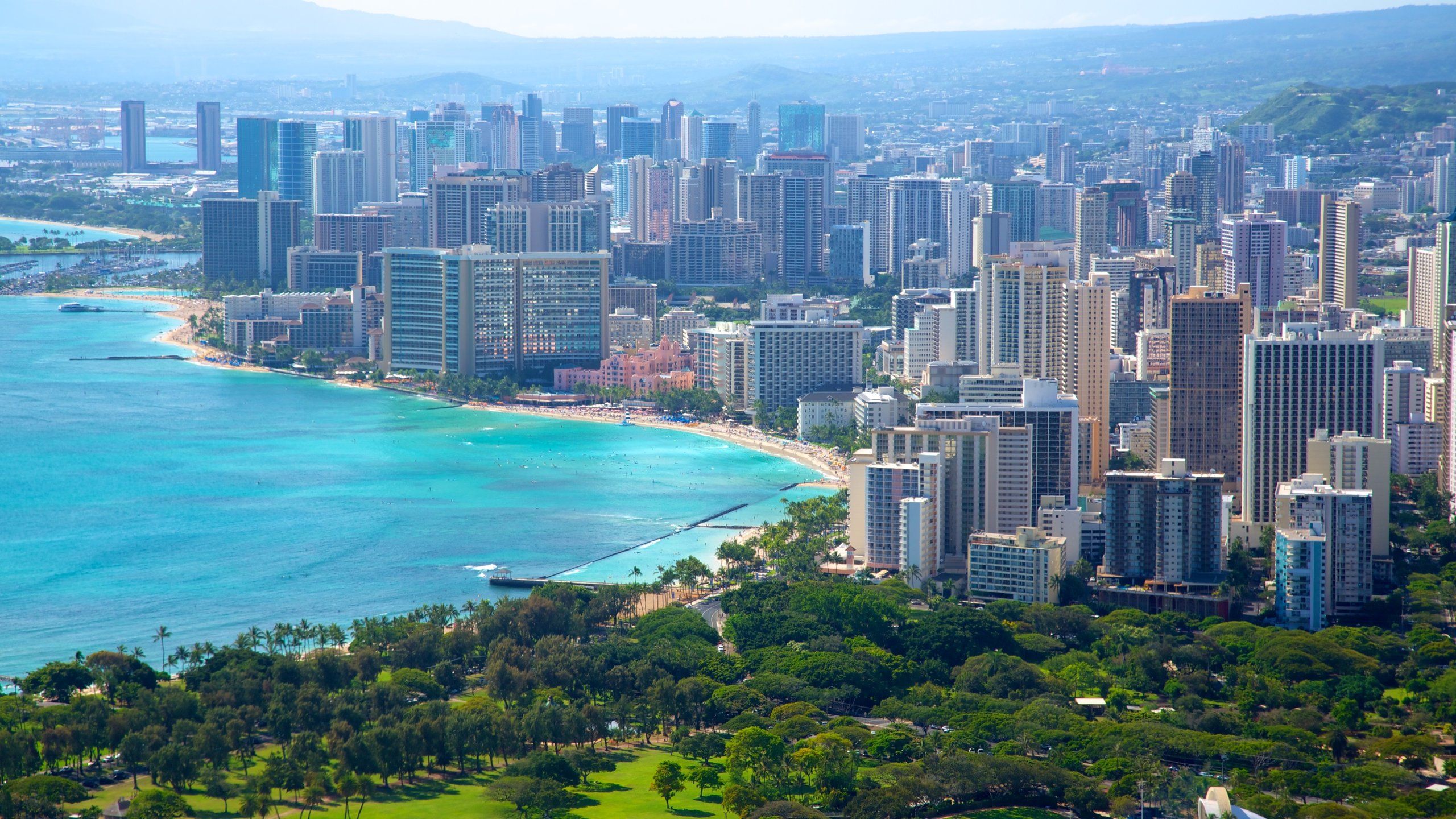
Pearl Harbor National Memorial, with the USS Arizona Memorial, is the state's top historical attraction and a World War II landmark. Waikiki Beach in Honolulu is Hawaii's most famous stretch of sand, framed by Diamond Head State Monument, the 475-acre volcanic cone that is the islands' most recognized landmark. On the Big Island, Hawaii Volcanoes National Park is home to the active Kilauea and Mauna Loa volcanoes, and on Maui, Haleakala National Park draws visitors to a summit over 10,000 feet for sunrise and stargazing. And these aren't only tourist stops; the Big Island's volcanic landscape is a reason some people relocate there for good.
FAQ
Questions? Look here
Can’t find an answer? Call us
(855) 822-2722 or email
Local moving in Hawaii typically costs $115-$173 per hour for a two-person crew with a truck, or $173-$311 for the three-person crew a three-bedroom home usually needs. At 4-6 hours, that puts a typical three-bedroom local move around $600 to $1,620. Local moves here are Oahu or inter-island jobs, and an inter-island move adds a barge or ferry leg. Call (855) 822-2722 for an itemized estimate.
Mainland moves from Hawaii are multimodal, combining an ocean container leg with a ground leg, and indicative ranges start around $2,012 for a studio and reach about $13,857 for a large four-plus-bedroom home. The final price depends on shipment weight, the destination's ground distance, and access at both ends. A two-to-three-bedroom move on the Honolulu-to-Los Angeles lane runs about $3,622 to $4,485, while a Honolulu-to-Orlando move runs higher because of the cross-country ground leg. Star Van Lines provides written estimates so your price won't change after booking.
Search our USDOT number 4176875 on the FMCSA SAFER website (safer.fmcsa.dot.gov). This federal database confirms our operating authority, MC number 1607491, insurance status, and safety record. Any legitimate interstate mover should be able to provide a verifiable USDOT number.
In Hawaii the charges to ask about are ocean-crating and container fees for the sea leg, port and terminal handling, long-carry or shuttle fees when a full-size truck can't reach an address at either end, and stair fees for walk-up units. We disclose every potential charge in your written estimate before you book, the ocean leg and the ground leg both, so nothing is a surprise on moving day.
Federal law requires interstate movers to offer two levels: Released Value Protection (free, covering $0.60 per pound per item) and Full Value Protection (paid, covering repair, replacement, or cash settlement at current value). Star Van Lines is fully insured under USDOT #4176875 and can explain both options when you request a quote.
New residents are widely directed to get a Hawaii driver license within 30 days of establishing residency, and an out-of-state vehicle must be registered or permitted within 30 days of arriving on the island. Licensing and registration are handled by the four counties, not a single statewide DMV. Because vehicles arrive by ocean, you register after the car lands and passes a Hawaii safety inspection. There is no emissions or smog test in Hawaii.
Every mainland move is multimodal. Your belongings are packed and loaded into a sealed ocean container, shipped from Honolulu to a West Coast port across about 2,223 nautical miles (roughly 2,558 statute miles) of Pacific, and then driven by ground to the final address. That means two carriers and two handoffs rather than one truck door to door, and it means salt-air crating and moisture barriers a mainland move never needs. Your coordinator builds the container booking, the port handoff, and the ground delivery into one written estimate.
On the composite cost-of-living index Hawaii is the most expensive state, near 186 against a national 100, and it has the highest median home value in the country at $839,100. The drivers are housing scarcity and the fact that nearly everything is imported by sea. For a move, the cost difference shows up less in labor and more in the ocean leg, since every interstate shipment crosses the Pacific in a container before any ground travel. Call (855) 822-2722 and we'll quote the sea leg and the ground leg together.
Late winter through spring, roughly February through May, is the best window, because it comes before the Central Pacific hurricane season opens on June 1 and ocean sailings tend to run calmest. Avoid June through November, when the hurricane season peaks in July through September and storms can disrupt container schedules at the same time summer demand peaks. If you have to move in that window, book early and build schedule flexibility into the ocean leg.
You can't drive a car off the island, so vehicle shipping rides the same Pacific lane your household goods do. We ship cars by container or roll-on/roll-off vessel from Honolulu to a West Coast port across about 2,223 nautical miles, then deliver locally or truck them onward. It's best to plan the car and the household goods together on one order, since both ride the same ocean route. When a vehicle lands in Hawaii, remember it must pass a safety inspection and be registered within 30 days.
Hawaii runs a graduated income tax from 1.40 percent up to a top marginal 11.00 percent, among the highest top rates in the country. It has no conventional sales tax; instead it levies a General Excise Tax of 4.00 percent statewide and about 4.50 percent combined on Oahu, and because the GET applies broadly, including to services, it can reach moving and storage. On the other side, Hawaii has the lowest effective property tax in the nation at about 0.29 percent and no estate or inheritance tax. So the trade is a high income tax against very low property tax.
Both are sea-plus-ground jobs, just at different scales. About 70 percent of residents live on Oahu, and an inter-island move, say Oahu to Maui or Hawaii Island, still needs a barge or ferry leg between islands rather than a drive, plus salt-air crating for the crossing. A Hawaii-to-mainland move crosses about 2,223 nautical miles of open Pacific by container before a mainland ground leg, so it's the same multimodal idea over a much longer ocean distance. Either way, one coordinator handles the whole chain.
Ready to Start Your Hawaii Move?
Get a free moving estimate today. No obligation, no pressure.
Call us or fill out the form - we'll get back to you fast.
USDOT #4176875 | MC #1607491 | Licensed & Insured