
Thank you for your feedback!
We will contact you shortly

Free consultation
Enter your phone number and we will call you back for a consultation on any moving and storage services

District of Columbia
Trusted District of Columbia Moving Company - Local & Long Distance
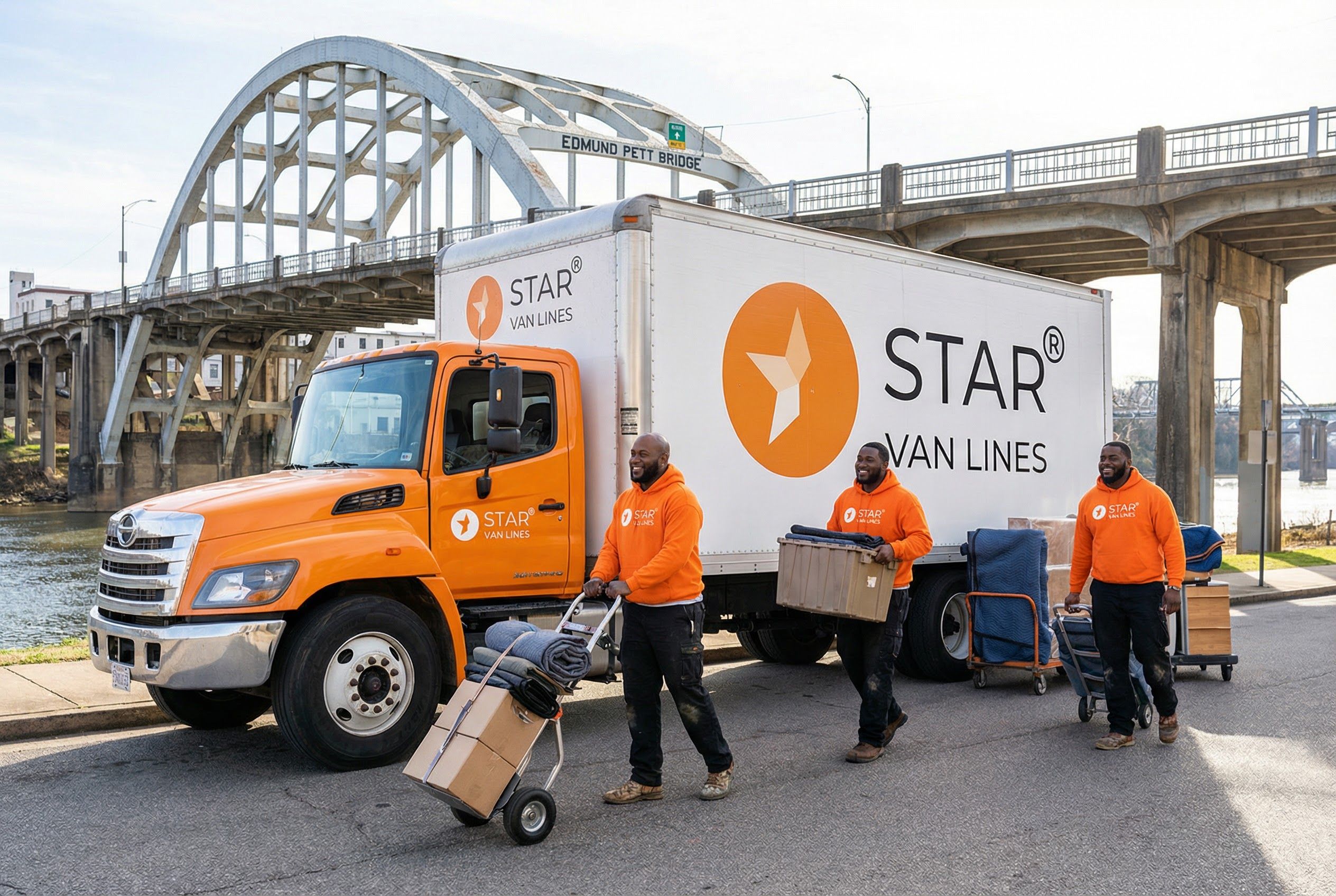
District of Columbia is one of the most compact but logistically demanding moving markets in the United States. The District covers just over 61 square miles, yet it holds about 693,645 residents, a dense street grid, strict parking rules, controlled-access apartment buildings, historic rowhouses, and heavy commuter traffic from Maryland and Virginia every weekday. A move here can be only a few blocks long and still require elevator reservations, curbside staging, certificate of insurance paperwork, and a careful truck-access plan. Star Van Lines is a USDOT-licensed interstate carrier (USDOT #4176875, MC #1607491) that handles local and long-distance moves across Washington, DC and the surrounding DMV region.
Our District of Columbia moving services cover packing, loading, transport, delivery, and short-term storage. Because DC sits between Maryland and Virginia and connects directly to I-95, I-495, I-66, US-50, I-270, and the Baltimore-Washington corridor, many moves that feel local are technically interstate relocations. A move from Capitol Hill to Arlington, from Georgetown to Bethesda, or from Navy Yard to Alexandria crosses jurisdiction lines fast. We handle those details with one coordinator, trained crew, and a written estimate from pickup to delivery.
Curious what your District of Columbia move will cost? Call (855) 822-2722 or use our online quote calculator. You'll get an itemized estimate that breaks down every line item, so there are no surprises on moving day. We're rated 4.0 on Trustpilot, 4.5 on Google, and 4.75 on Facebook across 240+ reviews.

Dennis has 15+ years of experience in interstate moving and has coordinated over 1,000 relocations across the United States.


Moving services in District of Columbia
Star Van Lines provides local, long-distance, and interstate moving services across the District of Columbia. We handle packing, loading, transport, and delivery for residential and commercial moves. Because DC is small, dense, and surrounded by two different states, a move can shift from a short neighborhood job to a regulated interstate relocation within minutes. Every move includes a single coordinator, trained crew, and written estimate.
Customers who need local details can review our columbia long distance moving company page for practical planning information in Columbia.
Local moving in District of Columbia
Local moves in District of Columbia typically run $138-$207 per hour for a two-person crew with a truck; three movers run $195-$334. The final cost depends less on mileage and more on access. Elevator reservations, loading dock windows, rowhouse stairs, narrow alleys, street parking, security desks, long carries, and building COI requirements can all add time. Dense neighborhoods like Georgetown, Dupont Circle, Capitol Hill, Adams Morgan, Shaw, Logan Circle, and Navy Yard often need more planning than a standard suburban move.
Long-distance moving from District of Columbia
Most long-distance moves from District of Columbia head along the I-95 corridor to New York, Philadelphia, Baltimore, Richmond, Raleigh, Charlotte, Atlanta, Florida, and Texas. Short interstate moves to Northern Virginia and Maryland are common, while longer relocations to Florida, Texas, California, and the Carolinas usually involve shipment weight, mileage, delivery window, and packing level. We run regular routes out of DC and build schedules around traffic windows on I-495, I-95, I-66, and US-50.
Packing and storage
We offer full-service packing, partial packing, and self-pack options. Full-service means our crew brings the materials and packs each room; partial packing lets you choose fragile or high-value areas; self-pack keeps the cost lowest. We also provide short-term and long-term storage through 43 warehouse locations nationwide. In DC, storage is especially useful when lease dates do not line up, condo boards limit delivery windows, or a new apartment requires freight elevator approval before move-in. Climate-controlled storage is recommended for wood furniture, electronics, artwork, documents, and leather items because DC summers are humid and winters can bring freeze-thaw conditions.
Auto transport and specialty items
We ship vehicles by open or enclosed carrier. Auto transport is common for long-distance moves out of DC because parking, registration, and inspection rules can make keeping multiple vehicles in the city inconvenient. New residents who bring a vehicle into DC have 60 calendar days from the date they begin living in the District to register it, and they must first convert their out-of-state license or ID through DC DMV. We also crate and move pianos, antiques, artwork, glass, fitness equipment, office equipment, and large furniture that may need disassembly or careful stair carries in older buildings.
How much does moving in District of Columbia cost?
Moving costs in District of Columbia depend on whether you're moving within DC, crossing into Maryland or Virginia, or relocating across state lines. Local DC moves typically run $138-$207 per hour for a two-person crew with truck. Long-distance moves start at $805 for studio apartments and can reach $9,430 for large homes, depending on distance, shipment weight, packing, building access, and delivery schedule.
Local moving rates
| Crew size | Hourly rate |
|---|---|
| 2 movers + truck | $138-$207 / hour |
| 3 movers + truck | $195-$334 / hour |
| 4 movers + truck | $265-$483 / hour |
Long-distance rates from District of Columbia
| Move size | Estimated price range |
|---|---|
| Studio / 1 Bedroom | $805 - $2,358 |
| 2-3 Bedrooms | $1,438 - $5,290 |
| 4+ Bedrooms | $2,415 - $9,430 |
Popular routes and pricing from District of Columbia
| Route | Distance | Avg cost (2-3 BR) |
|---|---|---|
| Washington DC to New York | 225 mi | $1,725 - $2,415 |
| Washington DC to Raleigh | 278 mi | $1,840 - $2,645 |
| Washington DC to Miami | 1,055 mi | $3,105 - $4,140 |
| Washington DC to Dallas | 1,330 mi | $3,450 - $4,600 |
| Washington DC to Los Angeles | 2,660 mi | $4,140 - $5,520 |
Pricing reflects market averages for moves in and from District of Columbia as of June 2026. Your final price depends on inventory weight, packing level, access at pickup and delivery, and scheduling flexibility. Call (855) 822-2722 or use our free quote calculator for an exact estimate.
What affects your moving price
- Shipment weight and volume are the biggest factors for any long-distance move from District of Columbia.
- Distance drives the base price. DC to New York is about 225 miles; DC to Los Angeles is about 2,660.
- Access at both ends matters. Elevators, loading docks, stairs, long carries, alleys, and security procedures all add labor time.
- Street parking and permits can affect the move plan, especially in rowhouse neighborhoods and high-rise corridors.
- How much packing you want us to do. Full-service packing costs more than partial packing, while self-pack is the lowest option.
- When you move. End-of-month lease turnover, summer demand, federal job start dates, and weekday traffic can tighten schedules.
- Add-on services like auto transport, storage, piano moving, artwork crating, and specialty handling have separate pricing.
Moving to District of Columbia: what you should know
A move to District of Columbia is different from a move to a large state. The territory is small, but the logistics are dense. DC has a population of about 693,645 residents on roughly 61 square miles, with a population density above 11,000 people per square mile. That means traffic, building access, curbside staging, elevator rules, and parking permits often matter more than mileage. Below is a quick guide covering cost of living, access and logistics, climate and timing, and residency requirements that affect your move.
What it costs to move to District of Columbia
District of Columbia is an expensive housing market. Census data shows a median owner-occupied home value of $737,100 and median gross rent of $1,954 for 2020-2024, while median household income is $109,870. Labor costs are also higher than in many surrounding markets because crews spend more time handling access: freight elevators, loading zones, rowhouse stairs, controlled apartment entrances, and truck restrictions. Expect $138-$207 per hour for a two-person crew on local DC moves, with higher totals when the building requires COI paperwork, reserved elevator time, or shuttle carries.
Access and logistics
DC moving logistics are built around access. In a suburban move, the truck usually parks near the door. In DC, the crew may need to stage around a loading dock, park legally on a narrow street, carry items through a lobby, reserve an elevator, or use a smaller shuttle vehicle where a full-size truck cannot fit. The main regional routes are I-495, I-95, I-66, I-295, US-50, and the Baltimore-Washington Parkway. Local traffic is heaviest during weekday commute windows, around federal buildings, near event venues, and in neighborhoods with limited street parking. Moves into or out of Maryland and Virginia should be treated as interstate moves even when the distance is short.
Climate and timing
District of Columbia has hot, humid summers, mild spring and fall windows, and occasional winter snow or ice. The best months to move are usually April through May and September through October. Summer moves are common because of lease cycles and school calendars, but heat and building-demand peaks can make July and August harder. Winter is usually manageable compared with northern states, but even a small snow or ice event can slow trucks, elevators, curb access, and loading-dock schedules.
Residency and regulations
New DC residents who drive must convert an out-of-state license after residing in the District for more than 60 days, unless they qualify for a reciprocity exception such as student, military, diplomat, member of Congress, presidential appointee, or part-time resident status. Vehicles housed and operated in DC must be registered with DC DMV within 60 calendar days from the date the resident begins living in the District. DC DMV also issues residential parking permits for eligible blocks, and those permits are tied to DC registration or reciprocity.
What to know before moving to District of Columbia
Benefits of moving to District of Columbia
0,645
Population
$0,870
Median household income
$0,100
Median home value
$0,954
Median gross rent
0.9 (US = 100, BEA RPP 2024)
Cost of living index
graduated, 0.0% to 10.75%
State income tax
0.13 sq mi
Land area
0.2%
Bachelor’s degree or higher
District of Columbia is a compact, high-income, high-cost urban market with strong demand from government, law, consulting, education, healthcare, technology, nonprofit, and international affairs professionals. The District's median household income is $109,870, and 64.2 percent of adults age 25+ hold a bachelor's degree or higher. Housing is expensive, with a median owner-occupied home value of $737,100 and median gross rent of $1,954. The BEA's 2024 regional price parity puts DC at 109.9, meaning overall prices are about 9.9 percent above the national level.
Is District of Columbia a good place to live?
District of Columbia is a strong fit for people who want career access, walkable neighborhoods, major universities, public transportation, museums, restaurants, international institutions, and proximity to federal agencies. The trade-offs are real: high housing costs, limited parking, dense traffic, higher income taxes for upper earners, and strict building logistics for moving. Whether DC is a good fit depends on your career, commute tolerance, housing budget, and preference for city living.
Tax environment
DC has a graduated individual income tax with rates from 4.0 percent to 10.75 percent for tax years beginning after December 31, 2021. The general sales tax rate is 6.0 percent until September 30, 2026 and is scheduled to become 7.0 percent beginning October 1, 2026. Residential real property is taxed at $0.85 per $100 of assessed value for Class 1A property, with a higher bracket for certain Class 1B residential value above $2.558 million.
Housing market
DC housing is expensive and highly neighborhood-specific. Median owner-occupied home value is $737,100, and median gross rent is $1,954, but actual prices vary sharply between Georgetown, Capitol Hill, Dupont Circle, Shaw, Navy Yard, Brookland, Petworth, Columbia Heights, Tenleytown, and neighborhoods east of the Anacostia River. Condos, co-ops, rowhouses, basement units, and high-rise apartments all come with different moving rules. For movers, the biggest housing-related cost driver is usually access, not distance.
Job market and economy
DC's economy is anchored by federal government, legal services, public policy, associations, nonprofits, universities, healthcare systems, hospitality, and contractors. Large local anchors include Georgetown University, George Washington University, Howard University, American University, Children's National Hospital, MedStar Washington Hospital Center, and many federal agencies and government-related employers. Higher education and healthcare are especially important relocation drivers because they bring students, faculty, physicians, nurses, researchers, administrators, and contractors into the city.
Safety and natural risks
DC's most common move-disruption risks are not hurricanes or mountain snow. They are heavy rain, flash flooding in low-lying areas, summer heat, winter ice, traffic closures, demonstrations, major events, and street restrictions near government buildings. Severe weather can still affect the city, especially thunderstorms, remnants of tropical systems, and occasional snow or ice. A good DC move plan leaves room for traffic holds, parking issues, and building access changes.
Who thrives in District of Columbia?
Federal employees, policy professionals, and contractors
DC is built around government, public policy, law, national associations, think tanks, and federal contracting. Many people move here on firm start dates and need tight delivery windows, apartment coordination, and reliable interstate service from across the country.
Students, faculty, and university staff
Georgetown University, George Washington University, American University, Howard University, Catholic University, Gallaudet University, and the University of the District of Columbia create steady moving demand. Students need small-load moves and storage, while faculty and administrators often need full-service household relocation.
Healthcare professionals
Children's National Hospital, MedStar Washington Hospital Center, George Washington University Hospital, Georgetown University Hospital, Howard University Hospital, and specialty clinics create regular relocations for physicians, nurses, researchers, and administrators. These moves often involve strict timing and temporary storage between lease or closing dates.
Apartment and condo residents in high-access buildings
DC has many buildings that require COI paperwork, freight elevator reservations, loading dock scheduling, move-in deposits, and limited delivery windows. People who live in Navy Yard, NoMa, Southwest Waterfront, Mount Vernon Triangle, and downtown high-rises benefit from a mover that knows building procedures.
Rowhouse families in historic neighborhoods
Capitol Hill, Georgetown, Logan Circle, Shaw, Bloomingdale, Petworth, and Columbia Heights have beautiful older housing, but narrow stairs, English basements, rear alleys, and limited parking can complicate a move. These jobs need careful packing, disassembly, protection, and crew planning.
Car-light urban residents
DC is one of the better US cities for living with fewer cars because of Metrorail, bus service, bikeshare, rideshare, and walkable neighborhoods. People relocating from car-dependent states often downsize vehicles, use storage, or ship a car later rather than bringing multiple vehicles into the District.
First week after moving to District of Columbia: what to do
After your move to District of Columbia, several tasks should be handled quickly. DC gives new residents 60 calendar days to register a vehicle and requires drivers living in the District for more than 60 days to obtain a DC DMV driver license unless they qualify for reciprocity. Here is a prioritized checklist.
- Convert your driver's license.
If you live in DC for more than 60 days and drive in public space, you generally need a DC DMV REAL ID driver license unless you qualify for reciprocity. Bring proof of identity, proof of Social Security number, and two proofs of current DC residency.
- Register your vehicle.
If your vehicle is housed and operated in DC, you have 60 calendar days from the date you begin living in the District to register it. You must first convert your out-of-state license or obtain a DC identification credential.
- Handle inspection and emissions.
DC requires vehicle inspection as part of the registration process, and DC DMV operates an inspection station plus self-service emissions kiosks for eligible private vehicles.
- Apply for residential parking if needed.
If you live on an RPP block, DC DMV can issue a residential parking permit for an eligible DC-registered vehicle or qualifying reciprocity vehicle. Without the right permit, visitor or non-resident parking may be limited.
- Update voter registration.
Register or update your voter information after establishing DC residency. If you convert your license, voter registration options may be included in the DMV process.
- Update renter's or homeowner's insurance.
Ask about coverage for water damage, basement units, storage, high-value items, and building-specific rules. Standard policies may not cover every flood-related risk.
- Forward your mail.
Submit a USPS Change of Address and update banks, subscriptions, employers, universities, medical providers, and insurance accounts.
- Set up utilities and building access.
Confirm electricity, gas if applicable, internet, trash/recycling rules, package room access, move-in documents, and elevator reservations.
- Transfer medical records.
DC has major healthcare networks, but specialist availability can vary. Set up a primary care provider early if you moved for school, work, or a long-term assignment.
- Learn your commute pattern.
Test your Metro, bus, bike, walking, or driving route before your first full workweek. Commute timing can vary significantly by neighborhood and federal-office schedule.
District of Columbia at a glance: schools, jobs, and things to do
Schools and universities
District of Columbia has a high concentration of major universities for its size. Georgetown University, George Washington University, American University, Howard University, Catholic University of America, Gallaudet University, and the University of the District of Columbia all bring students, faculty, researchers, and staff into the city. DC also has public, public charter, private, and international school options, with school choice and commute patterns often playing a major role in where families settle.
Major employers
DC's employment base is shaped by the federal government, local government, universities, hospitals, law firms, nonprofits, associations, international organizations, hospitality, consulting, and federal contractors. Major institutional anchors include Georgetown University, George Washington University, Howard University, American University, Children's National Hospital, MedStar Washington Hospital Center, George Washington University Hospital, and DC Government. The broader metro also includes large employers in Arlington, Alexandria, Bethesda, Silver Spring, Rockville, Tysons, and Reston, making cross-border commuting common.
Attractions and recreation
District of Columbia is known for the National Mall, Smithsonian museums, the US Capitol, the White House, Lincoln Memorial, Washington Monument, Library of Congress, National Gallery of Art, Rock Creek Park, the Wharf, Georgetown waterfront, Eastern Market, Union Market, Kennedy Center, and major sports venues. The city also gives residents fast access to Maryland and Virginia weekend trips, including Shenandoah National Park, Annapolis, Baltimore, wineries, beaches, and regional trails.
FAQ
Questions? Look here
Can’t find an answer? Call us
(855) 822-2722 or email
Local moving in District of Columbia typically costs $138-$207 per hour for a two-person crew with truck. A three-person crew usually runs $195-$334 per hour. The final total depends on building access, elevator reservations, stairs, parking, packing, and the size of your inventory. Call (855) 822-2722 for an itemized estimate.
Long-distance moves from District of Columbia typically start around $805 for studio apartments and can reach $9,430 for large homes. The final price depends on shipment weight, distance, packing level, delivery window, and access at both locations. Star Van Lines provides written estimates so you can see the price structure before moving day.
Search our USDOT number 4176875 on the FMCSA SAFER website. This federal database confirms our operating authority, MC number 1607491, insurance status, and safety record. Any legitimate interstate mover should be able to provide a verifiable USDOT number.
Common DC surcharges include long-carry fees, stair fees, elevator waiting time, shuttle service when a large truck cannot access the street, parking-related delays, packing materials, storage, and specialty item handling. We disclose potential charges in your written estimate before you book.
Many DC moves require a parking plan, especially in neighborhoods with limited curb space or residential permit parking. Some buildings also require loading dock reservations. Check with your building manager and local parking rules before the move date. Our coordinator can help plan truck staging.
Yes. Even if the move is short, crossing from DC into Maryland or Virginia is an interstate move. That matters because interstate movers must have federal operating authority. Star Van Lines is licensed under USDOT #4176875 and MC #1607491.
If you reside in DC for more than 60 days and drive in public space, you generally must convert your out-of-state license to a DC DMV driver license unless you qualify for a reciprocity exception.
If you move to the District, you have 60 calendar days from the date you begin living in DC to register your vehicle with DC DMV. You must first convert your out-of-state driver license or obtain a DC DMV identification credential.
Yes. DC DMV handles vehicle inspections and emissions testing. Eligible private vehicles may use self-service OBD emissions kiosks, while other vehicles use the DC inspection station.
The smoothest windows are usually April through May and September through October. Summer is busy and humid, while winter can bring occasional snow, ice, and schedule delays. For apartment moves, book early around the end of the month because lease turnover increases demand.
Yes. DC has a high cost of living compared with the national average. The BEA's 2024 regional price parity for DC is 109.9, and Census data shows median gross rent at $1,954 and median owner-occupied home value at $737,100.
The main challenge is access. DC has dense traffic, strict parking rules, high-rise move policies, rowhouse stairs, narrow alleys, security desks, elevator reservations, and frequent jurisdiction crossings into Maryland and Virginia. A short DC move can still require careful scheduling and a detailed access plan.
Ready to Start Your District of Columbia Move?
Get a free moving estimate today. No obligation, no pressure.
Call us or fill out the form - we'll get back to you fast.
USDOT #4176875 | MC #1607491 | Licensed & Insured