
Thank you for your feedback!
We will contact you shortly

Free consultation
Enter your phone number and we will call you back for a consultation on any moving and storage services

West Virginia
West Virginia Long-Distance Moving Company
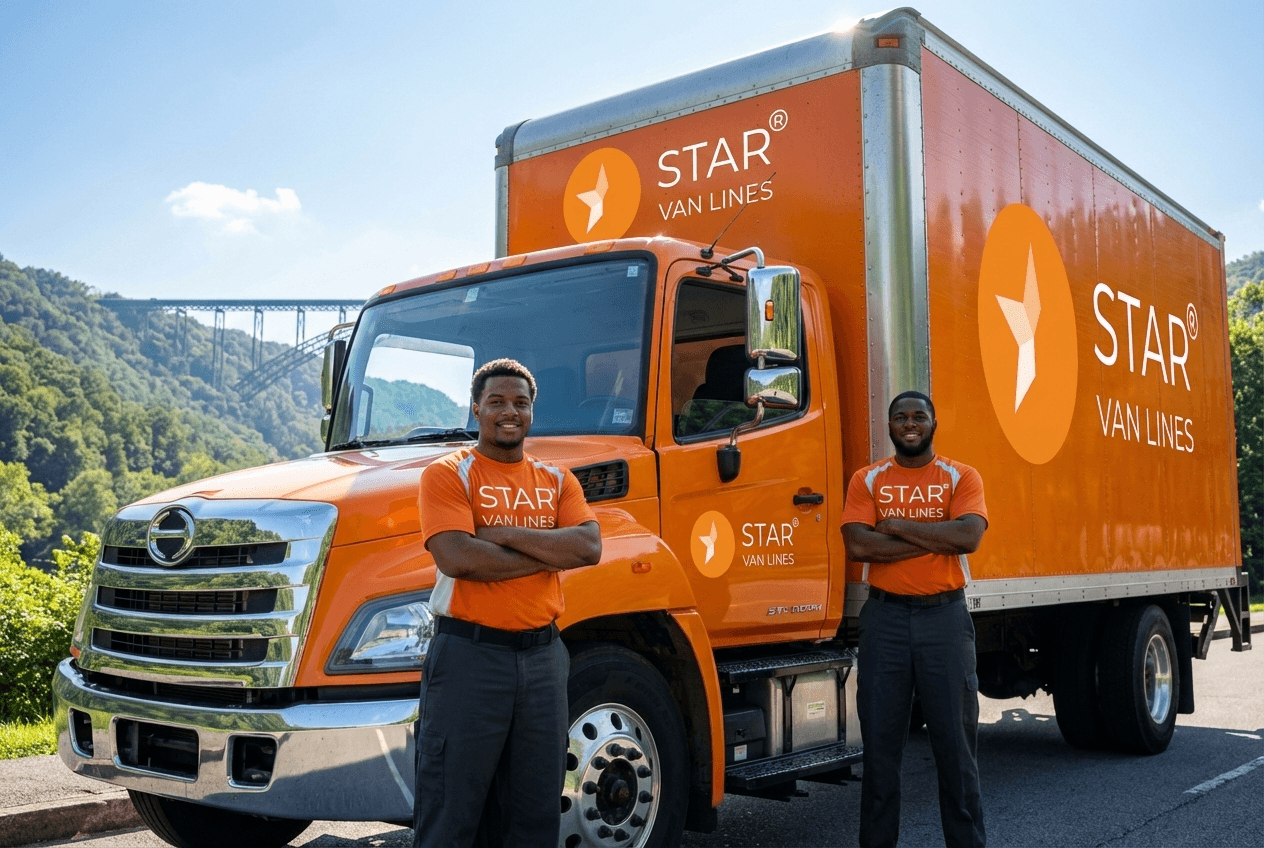
West Virginia has quietly become one of the most affordable relocation destinations east of the Mississippi. The state's median home price sits at $162,600, roughly one-third of what you'd pay in neighboring Virginia. And the Ascend WV remote-worker incentive program is actively recruiting out-of-state professionals to settle in mountain communities like Lewisburg, Shepherdstown, and Morgantown. Domestic migration brought a net gain of 6,400 residents in 2024-2025, enough to nearly offset the entire year's population decline. Star Van Lines is a USDOT-licensed interstate carrier (USDOT #4176875, MC #1607491) that handles local and long-distance moves across all of West Virginia. We've been running Appalachian corridors since 2016, from the I-64 stretch connecting Huntington to Charleston through the I-79 spine linking Charleston to Morgantown and the Pennsylvania border.
But moving in West Virginia isn't the same as moving in a flat state. Mountain terrain is the primary logistics challenge here. Many communities are accessible only through two-lane roads with steep grades, weight restrictions, and hairpin turns. GPS doesn't always know that the shortcut through a hollow dead-ends at a suspension bridge rated for passenger cars only. Our crews know which roads can handle a 53-foot trailer and which ones need a shuttle truck. We cover packing, loading, transport, delivery, and storage, with 43 warehouse locations nationwide for households that need a gap between move-out and move-in.
Want a price for your West Virginia move? Call (855) 822-2722 or use our online quote calculator. You'll get an itemized estimate that breaks down every charge, from packing materials to any access fees for mountain properties. We're rated 4.0 on Trustpilot, 4.5 on Google, and 4.75 on Facebook across 240+ reviews.

Dennis has 15+ years of experience in interstate moving and has coordinated over 1,000 relocations across the United States.


Moving services in West Virginia
Star Van Lines provides local, long-distance, and interstate moving services across West Virginia. We handle packing, loading, transport, and delivery for residential and commercial moves. Because the state is almost entirely mountainous, with limited interstate coverage in its southern and eastern regions, every West Virginia move requires route-specific planning that accounts for terrain, road access, and weather. Every move includes a single coordinator, trained crew, and written estimate.
Local moving in West Virginia
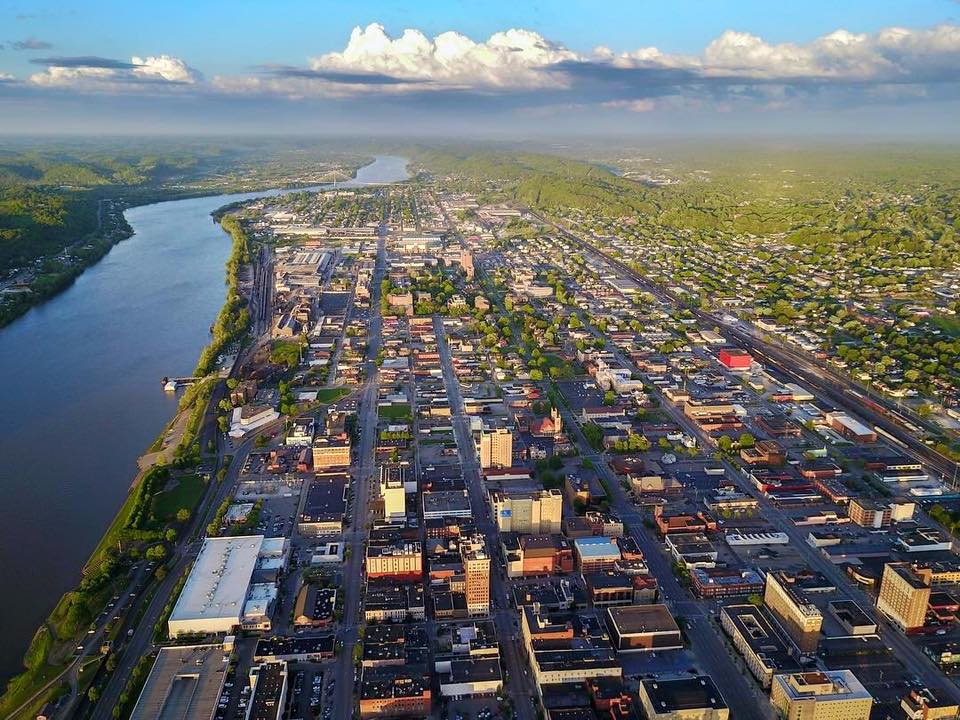
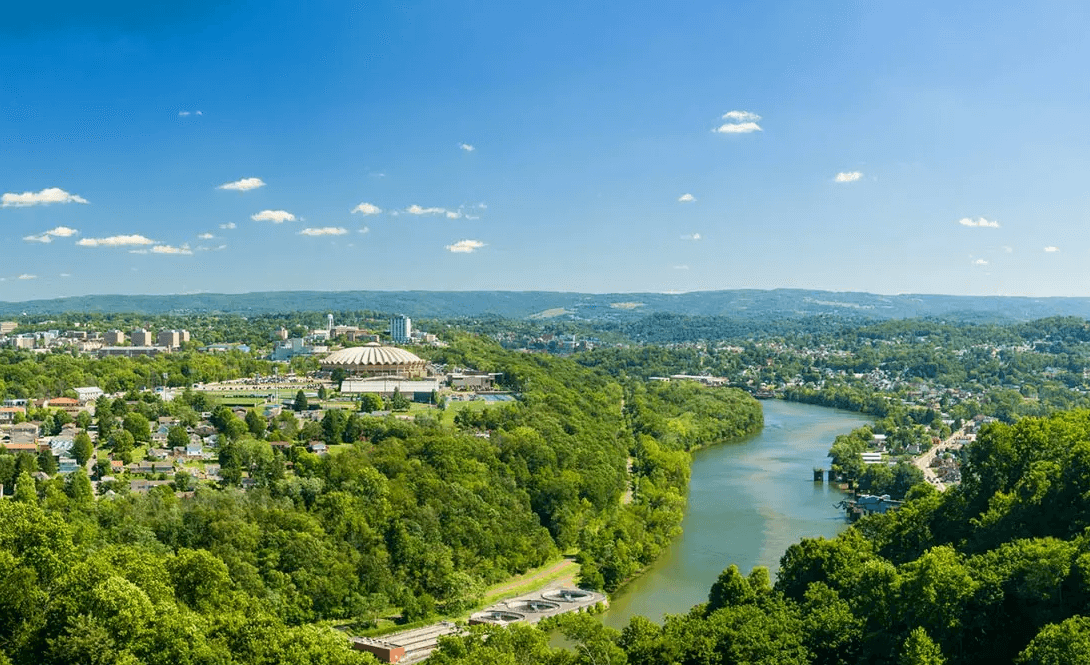
Local moves in the Charleston metro area typically run 2-4 hours for a one-bedroom apartment. Morgantown and Huntington have their own quirks. Morgantown's university-district streets are narrow and parking is limited, especially during fall move-in season when WVU students flood the area. Huntington's older neighborhoods along the Ohio River often have steep stairways and tight doorways that add time. A crew of two costs $115-$190 per hour. And three movers run $184-$328. We serve the Charleston to Huntington corridor on I-64, the Morgantown to Clarksburg stretch on I-79, and the Eastern Panhandle communities around Martinsburg on I-81. Although many of these distances are under 100 miles, the mountain roads between them can double your drive time compared to what a map suggests.
Long-distance moving from West Virginia
Most long-distance moves from West Virginia head to Ohio, Virginia, and Florida. The WV-to-FL corridor covers roughly 775 miles, routing south through Virginia on I-77 and I-81 before picking up I-95 or I-85. Moves to Ohio are shorter but still require navigating the WV Turnpike's steep grades between Princeton and Charleston. We also run regular loads west to Texas (1,200 miles via I-64 to I-81 to I-40) and east to the DC-Baltimore metro through the Eastern Panhandle. Your coordinator monitors weather conditions, mountain pass closures, and WV Turnpike toll schedules that can affect your timeline and budget.
Packing and storage
We offer full-service packing, partial packing, and self-pack options. Full-service means our crew brings all materials and packs every room. Partial lets you choose which rooms we handle. Self-pack is the lowest-cost option. We have 43 warehouse locations nationwide for short-term and long-term storage. In West Virginia, moisture is the main storage concern. The state averages 45 inches of rain annually. And mountain valley humidity can cause mold on furniture and damage to electronics if items aren't properly protected. Climate-controlled storage is worth considering for moves with a gap between closing dates.
Auto transport and specialty items
We ship vehicles via open or enclosed carrier. Most West Virginia-origin vehicle shipments head to Ohio, Virginia, and Florida. We also move pianos, gun safes, antiques, and artwork with specialty crating. If you're moving to a mountain or hollow property with an unpaved access road, your coordinator will check whether the carrier can reach your driveway or whether a transfer point is needed. Because West Virginia requires a biennial safety inspection for all vehicles, your coordinator can walk you through the inspection timeline after your car arrives.
How much does moving in West Virginia cost?
Moving costs in West Virginia depend on whether you're relocating locally or across state lines. Local moves within the state typically run $115-$190 per hour for a two-person crew with truck. Long-distance moves start at $805 for studio apartments and go up to $8,970 for large homes, depending on distance, weight, and access conditions at mountain properties.
Local moving rates
| Crew size | Hourly rate |
|---|---|
| 2 movers + truck | $115-$190 / hour |
| 3 movers + truck | $184-$328 / hour |
| 4 movers + truck | $241-$489 / hour |
Long-distance rates from West Virginia
| Move size | Estimated price range |
|---|---|
| Studio / 1 Bedroom | $805 - $2,243 |
| 2-3 Bedrooms | $1,438 - $4,945 |
| 4+ Bedrooms | $2,415 - $8,970 |
Popular routes and pricing from West Virginia
| Route | Distance | Avg cost (2-3 BR) |
|---|---|---|
| WV to Florida | 775 mi | $2,473 - $3,047 |
| WV to California | 2,450 mi | $4,025 - $4,945 |
| WV to Texas | 1,200 mi | $2,990 - $3,680 |
| WV to Ohio | 211 mi | $1,438 - $1,782 |
| WV to North Carolina | 380 mi | $1,840 - $2,243 |
Pricing reflects market averages for moves in and from West Virginia as of May 2026. Your final price depends on inventory weight, packing level, access at pickup and delivery, and scheduling flexibility. Mountain property access with unpaved roads or weight-restricted bridges may require shuttle service, which adds to the total. Call (855) 822-2722 or use our free quote calculator for an exact estimate.
What affects your moving price
- Shipment weight and volume are the biggest factors for any long-distance move from West Virginia.
- Distance matters, but terrain matters just as much. A 100-mile move through mountain roads takes longer than a 200-mile haul on flat interstate.
- Access at both locations plays a major role. Narrow mountain driveways, steep staircases in older coal-town homes, long carries from road to front door, and hollow properties with no truck turnaround all add to labor time.
- How much packing you want us to do. Full-service costs more than partial packing, and self-pack is the lowest option.
- When you move. Mid-week moves, mid-month pickups, and October through March typically cost less than peak summer.
- Add-on services like auto transport, storage, and specialty item handling (pianos, gun safes, artwork) come with their own pricing.
Moving routes from West Virginia
Moving to West Virginia: what you should know
West Virginia offers the lowest median home price east of the Mississippi. And its mountain geography means your moving logistics require a team that knows how to handle winding two-lane roads, steep grades, and limited-access hollows that GPS alone can't navigate. Below is a guide covering cost of living, access and logistics, climate and timing, and residency requirements.
What it costs to live in West Virginia
West Virginia's cost of living index is 89.5 (US average = 100, BEA RPP 2024), one of the lowest in the eastern United States. That number shows up in real costs. Median home value is $162,600 (Census ACS 2020-2024), the lowest among the 10 states in our pilot group and well below the national average. Median monthly rent is $872, also among the lowest in the country. Median household income is $59,608, below the national average. But the low cost of living means your dollar goes further here than in most neighboring states. State income tax ranges from 2.22% to 4.82%, and the average combined sales tax is 6.6%. Property taxes are among the lowest in the US, which is one reason 74.9% of West Virginia households own their homes, one of the highest homeownership rates in the country.
Access and logistics
West Virginia's interstate network covers about 515 miles, which sounds like a lot until you realize the state has roughly 38,000 miles of public roads. Most of those are winding two-lane mountain roads. I-64 runs east-west through the southern half, connecting Huntington to Charleston and continuing to Virginia. I-77 goes north-south through the center, including the WV Turnpike between Princeton and Charleston with its steep grades and toll booths. I-79 links Charleston to Morgantown and the Pennsylvania border. In the Eastern Panhandle, I-81 connects Martinsburg to Virginia and Maryland. But large sections of the state, particularly in the southern coalfields and the eastern mountains, have no interstate access at all. Your moving truck may need to use US-19, US-50, or US-60, and those routes add hours. Cell service drops out in mountain valleys, so your crew can't always rely on real-time GPS routing. We pre-plan every West Virginia delivery with paper maps and local route knowledge.
Climate and timing
Summers in West Virginia are warm and humid, with average highs around 86 degrees and frequent afternoon thunderstorms. Winters bring serious cold. Average winter lows hit 26 degrees in Charleston, colder at higher elevations. And the state averages 62 inches of snowfall per year (NOAA). That's more snow than most people expect from an East Coast state. West Virginia also gets only about 160 days of sunshine per year, one of the lowest figures in the eastern US. Mountain fog can reduce visibility to near zero on passes. Best months for a West Virginia move are May through June and September through October, when mountain weather is mild, roads are clear, and demand is lower. December through February is the worst window, with mountain snow, ice, road closures, and fog. Even spring moves in March and April carry risk. Because mudslides and flooding hit mountain roads after snowmelt.
Residency and regulations
New residents must apply for a West Virginia driver's license within 30 days of establishing residency. Visit the West Virginia DMV (transportation.wv.gov/DMV) with proof of residency, your out-of-state license, and Social Security verification. Vehicle registration also has a 30-day deadline. West Virginia requires a biennial safety inspection for all vehicles, but does not require emissions testing. If you're bringing a vehicle from a state that doesn't require inspections, schedule your WV inspection promptly after arrival. Voter registration is available online at ovr.sos.wv.gov, by mail, or at the DMV.
What to know before moving to West Virginia
Benefits of moving to West Virginia
0-6%
Income tax rate
0
Major cities
+0.7
Millions of residents
$0K
Median household income
0
Year of foundation
$0K
Cost of average house
$0.39
Average gas price
+0
State parks
Is West Virginia a good place to live?
West Virginia offers some of the most affordable housing in the country, four distinct seasons, and outdoor recreation that rivals destinations costing three times as much. The trade-offs are real: job opportunities are concentrated in a few metros, internet service in rural areas remains spotty, and the state's population has been declining for years because deaths outpace births. Whether it's a good fit depends on your work situation, tolerance for rural living, and what you value in a community.
Tax environment
West Virginia's progressive income tax ranges from 2.22% to 4.82% (Tax Foundation 2026), well below rates in neighboring Virginia and Pennsylvania. Average combined state and local sales tax is 6.6%. Property taxes are among the lowest in the US, which partly explains the state's 74.9% homeownership rate. For someone relocating from a higher-tax state on the East Coast, the savings can be significant. And because Social Security income is being phased out of state taxation, retirees get an additional benefit that neighboring states don't offer.
Housing market
Median home value in West Virginia is $162,600 (Census ACS 2020-2024), the lowest of any eastern state. You can buy a three-bedroom home in many parts of the state for what a studio apartment costs in DC or Northern Virginia. Median monthly rent is $872. But the market varies significantly by location. The Eastern Panhandle, within commuting distance of the DC metro, has prices that reflect its proximity to federal jobs. Charleston, Morgantown, and Huntington are moderately priced. And small towns in the southern coalfields can be remarkably cheap, although amenities there are limited. About 74.9% of West Virginia households own their homes (Census ACS 2020-2024).
Job market and economy
West Virginia's economy is transitioning from coal dependence to a more diversified base. Healthcare is the largest employer, followed by education, government, and retail. WVU Medicine and CAMC (Charleston Area Medical Center) are major employers in Morgantown and Charleston respectively. Marshall University anchors the Huntington economy. Energy remains important, but the sector has shifted toward natural gas and renewables. The state's labor force participation rate is 53.6%, the lowest in the nation, reflecting an aging population and legacy health issues. Unemployment typically runs at or above the national average. Remote work has been a game-changer for some communities, particularly in the Eastern Panhandle and around Lewisburg, where the Ascend WV program brings in workers earning coastal salaries.
Safety and natural risks
Flooding is West Virginia's primary natural risk. River valleys along the Kanawha, Ohio, and Elk Rivers have flood zones that can affect property values and insurance costs. The 2016 floods killed 23 people and destroyed hundreds of homes. And smaller flood events happen most years during spring snowmelt and heavy summer rains. Landslides on mountain roads are another concern, particularly after prolonged rain or during spring thaw. Winter storms bring ice and snow that close mountain passes and can knock out power for days in rural areas. Home insurance rates are generally affordable compared to coastal states. But properties in flood zones require separate flood insurance through FEMA's National Flood Insurance Program. There are no earthquake, wildfire, or hurricane risks comparable to what coastal states face.
Who thrives in West Virginia?
Remote workers earning out-of-state salaries
West Virginia's Ascend WV program pays remote workers $12,000 in cash plus outdoor recreation perks to relocate. Even without the incentive, a remote worker earning $80,000 in West Virginia has purchasing power equivalent to someone earning well over $100,000 in the DC metro. Morgantown, Lewisburg, and the Eastern Panhandle are the most popular landing spots. Internet is the make-or-break factor, though. Verify speeds before signing a lease.
Outdoor recreation enthusiasts
New River Gorge became a national park in 2021, and the state offers world-class whitewater rafting, rock climbing, skiing at Snowshoe and Canaan Valley, and thousands of miles of hiking and ATV trails. Mountain biking on the Hatfield-McCoy Trail system draws riders from across the East Coast. If your idea of a good weekend involves being outside and away from crowds, West Virginia delivers.
Retirees on fixed incomes
With the lowest median home value east of the Mississippi, low property taxes, and Social Security income being phased out of state taxation, West Virginia is genuinely affordable for retirees. The four seasons are a draw for people who want variety without the extreme cold of the upper Midwest. Healthcare access in rural areas is limited, however, so proximity to Charleston, Morgantown, or Huntington matters if you have ongoing medical needs.
Families seeking small-town life
Class sizes are small. Commute times are short. And the cost of raising a family here is a fraction of what it costs in the DC-Baltimore corridor two hours east. Schools vary by county, with Monongalia County (Morgantown) and Putnam County consistently ranking among the state's best. If both parents work remotely or one commutes to a nearby metro, the math works out well.
Artists and craftspeople
Appalachian arts, music, and craft traditions run deep in West Virginia. Communities like Lewisburg, Thomas, and Shepherdstown have developed creative economies that attract glassblowers, potters, musicians, and writers. The cost of studio and workshop space is almost negligible compared to urban arts districts, and tourism provides a customer base during peak seasons.
First week after moving to West Virginia: what to do
After your move to West Virginia, several tasks have state-specific deadlines. The state gives new residents 30 days to update their driver's license and vehicle registration, a reasonable window that's more forgiving than some neighboring states. Here is a prioritized checklist.
- Update your driver's license.
West Virginia requires new residents to apply at the West Virginia DMV within 30 days. Bring proof of residency, your out-of-state license, and Social Security verification. Most DMV offices are in county seats; check hours before visiting because some rural offices have limited schedules. (transportation.wv.gov/DMV)
- Register your vehicle.
You have 30 days to register your vehicle at the West Virginia DMV. The state requires a biennial safety inspection for all vehicles, but there is no emissions test. Schedule your inspection at a state-authorized station after registering. Bring your out-of-state title, proof of insurance, and identification.
- Transfer your auto insurance.
Contact your insurer to re-rate your policy for West Virginia. Premiums often decrease when moving from a higher-density state. West Virginia has specific minimum liability coverage requirements, and your insurer can explain the differences from your previous state.
- Register to vote.
West Virginia offers online voter registration at ovr.sos.wv.gov, plus DMV and mail options. Same-day registration is available during early voting periods.
- Update homeowner's or renter's insurance.
West Virginia's flooding risk may change your coverage needs. Standard homeowner's insurance doesn't cover flood damage, so check whether your property is in a designated flood zone and consider NFIP coverage. Properties in river valleys along the Kanawha and Ohio Rivers are at highest risk.
- Forward your mail.
USPS Change of Address is free online at usps.com. Mail forwarding starts within 7-10 business days. In rural areas, verify your physical address with the local post office, because some mountain properties have different mailing and physical addresses.
- Transfer medical records.
Contact current providers before your move and find a new primary care physician in West Virginia. Healthcare access in rural areas is limited, and specialists may require travel to Charleston, Morgantown, or Huntington. If you're on employer insurance, verify your new plan's West Virginia network before scheduling appointments.
- Check internet service.
If you work remotely, verify that your new address has adequate internet speeds before your first workday. Fiber and cable are available in most towns, but rural properties may rely on satellite, fixed wireless, or DSL with speeds that don't support video conferencing. The Ascend WV program can help connect relocating remote workers with service options.
West Virginia at a glance: schools, jobs, and things to do
Schools and universities
George Washington High School in Charleston, Bridgeport High School, and University High School in Morgantown are among the top-rated public high schools in the state. West Virginia University in Morgantown is the state's flagship institution and its largest employer, with strong programs in engineering, health sciences, and forensic accounting. Marshall University in Huntington is known for its medical school and business programs. West Virginia Wesleyan College in Buckhannon and Davis and Elkins College in Elkins offer smaller liberal-arts options. For families, school quality varies by county. Monongalia County (Morgantown), Putnam County (Hurricane/Teays Valley), and Cabell County (Huntington) consistently produce the strongest results.
Major employers
Healthcare dominates West Virginia's job market. WVU Medicine operates hospitals across the northern half of the state. CAMC (Charleston Area Medical Center) is the largest employer in the capital region. Thomas Health System, St. Mary's Medical Center, and Mon Health are also significant. Beyond healthcare, West Virginia University and Marshall University are major employers. The energy sector, while smaller than its historical peak, still provides jobs in natural gas extraction and power generation. Toyota's Buffalo manufacturing plant in Putnam County, the FBI's Criminal Justice Information Services complex in Clarksburg, and the federal facilities in Martinsburg (IRS, ATF) round out the larger employers. Tourism and outdoor recreation are growing sectors, particularly around New River Gorge and the Snowshoe ski resort.
Attractions and recreation
New River Gorge National Park and Preserve was designated in 2021, making West Virginia home to one of America's newest national parks. The gorge offers world-class rock climbing, whitewater rafting, and the famous Bridge Day festival in October when BASE jumpers leap from the 876-foot New River Gorge Bridge. Blackwater Falls State Park features a 57-foot waterfall stained dark by tannic acid from hemlock and spruce forests. The Greenbrier resort in White Sulphur Springs has hosted 26 US presidents and sits atop a declassified Cold War bunker. Snowshoe Mountain and Canaan Valley provide skiing and snowboarding in winter. The Hatfield-McCoy Trail system offers over 900 miles of ATV and off-road trails spread across nine southern West Virginia counties. And the state's network of rail-trails, including the Greenbrier River Trail (77 miles), draws cyclists and hikers year-round.
FAQ
Questions? Look here
Can’t find an answer? Call us
(855) 822-2722 or email
Local moving in West Virginia typically costs $115-$190 per hour for a two-person crew with truck. A standard three-bedroom home takes 4-6 hours, putting the total between $705 and $4,607. Mountain properties with limited road access or steep stairways may take longer. Call (855) 822-2722 for an itemized estimate.
Long-distance moves from West Virginia start at $805 for studio apartments and go up to $8,970 for four-plus-bedroom homes. The final price depends on shipment weight, distance, and access at both locations. Moves to Ohio run around $1,438-$1,782 for a two-bedroom, while California-bound moves can reach $4,025-$4,945. Star Van Lines provides binding estimates so your price won't change after booking.
Search our USDOT number 4176875 on the FMCSA SAFER website (safer.fmcsa.dot.gov). This federal database confirms our operating authority, MC number 1607491, insurance status, and safety record. Any legitimate interstate mover should be able to provide a verifiable USDOT number.
Ascend WV is a state-funded incentive program that pays remote workers $12,000 in cash plus outdoor recreation perks to relocate to designated West Virginia communities. You must work remotely for an out-of-state employer and commit to living in the state for at least two years. Eligible communities include Lewisburg, Shepherdstown, Morgantown, and several others. Applications are competitive, so check the program's website for current openings and requirements before planning your move.
Federal law requires interstate movers to offer two levels: Released Value Protection (free, covers $0.60 per pound per item) and Full Value Protection (paid, covers repair, replacement, or cash settlement at current value). Star Van Lines is fully insured under USDOT #4176875 and can explain both options when you request a quote.
It depends on exactly where you're moving. Towns along the I-79 and I-64 corridors generally have cable or fiber options from Suddenlink, Frontier, or Breeze. But once you're off the main highways and into mountain valleys, your options may be limited to satellite, fixed wireless, or slow DSL. Starlink has improved coverage in some areas. If you're a remote worker, test the connection at your specific address before signing a lease or closing on a property.
Many West Virginia properties, especially in rural hollows and mountain communities, are only accessible via narrow, winding roads that may be unpaved or have weight restrictions. Some driveways are too steep or narrow for a full-size moving truck. In those cases, your moving company may need to use a shuttle truck, which is a smaller vehicle that transfers your belongings from the main truck to your door. Shuttle service adds to the total cost, so flag road-access concerns early when requesting your quote.
Yes. Healthcare is the state's largest employment sector, anchored by WVU Medicine, CAMC, and Thomas Health System. Education, government, and retail are also major employers. The energy sector has shifted toward natural gas and renewables. The FBI's CJIS complex in Clarksburg, Toyota's manufacturing plant in Buffalo, and the IRS facility in Martinsburg provide federal and industrial jobs. Tourism is growing, particularly around New River Gorge. And remote work has opened up opportunities for people willing to live in West Virginia while earning salaries from employers in DC, Pittsburgh, or other metros.
May through June and September through October offer the best conditions for a West Virginia move. Mountain weather is mild, roads are clear, and moving demand is lower during these windows. The worst months are December through February, when snow, ice, and fog can close mountain passes and add days to your delivery timeline. Spring moves in March and April carry some risk too, because snowmelt triggers mudslides and flooding on mountain roads. Book at least 6-8 weeks in advance for peak summer dates.
New residents have 30 days to register their vehicle at the West Virginia DMV. The state requires a biennial safety inspection for all vehicles, which covers brakes, lights, tires, steering, and other mechanical components. There is no emissions test. You'll need your out-of-state title, proof of insurance, and identification. Schedule your safety inspection at a state-authorized station after completing registration.
West Virginia has some of the lowest property taxes in the eastern United States. The state assesses property at 60% of market value, and tax rates are set by county. Effective rates typically run well below 1% of market value. By comparison, neighboring Virginia, Ohio, and Pennsylvania all have higher effective property tax rates. Combined with the low purchase prices, your total annual housing cost in West Virginia can be a fraction of what you'd pay one state over.
Average winter lows hit 26 degrees in Charleston, and higher elevations see significantly colder temperatures. The state averages 62 inches of snowfall per year, more than many people expect. Mountain fog can reduce visibility to near zero, and ice storms knock out power in rural areas for days at a time. Daily commutes on mountain roads take longer in winter because of plowing delays, black ice, and reduced speed limits on grades. Most residents keep a winter emergency kit in their vehicles, and four-wheel drive or all-wheel drive is practically a requirement outside of the interstate corridors.
Ready to Start Your West Virginia Move?
Get a free moving estimate today. No obligation, no pressure.
Call us or fill out the form - we'll get back to you fast.
USDOT #4176875 | MC #1607491 | Licensed & Insured