
Thank you for your feedback!
We will contact you shortly

Free consultation
Enter your phone number and we will call you back for a consultation on any moving and storage services

North Dakota
Your North Dakota Moving Company Since 2016
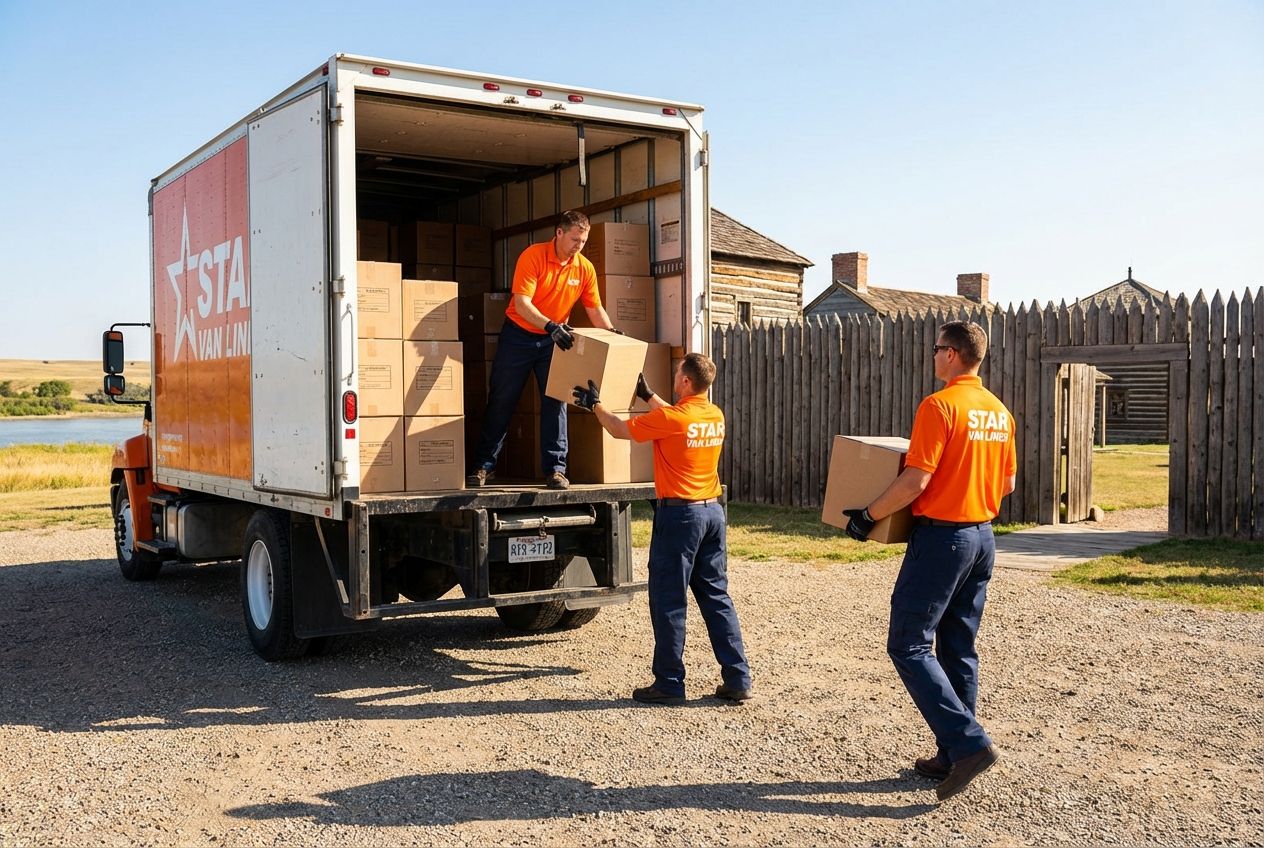
North Dakota consistently ranks among the top states for job availability and lowest unemployment in the country. The Bakken oil region around Williston created a genuine boom-town dynamic that drew workers from across the nation. And while that initial surge has cooled, the state's economy remains strong enough to support a record-high population of 799,358 as of 2025. North Dakota ranked 14th nationally for per capita population growth that year, about 50% faster than the US average. International immigration was the primary driver, with domestic migration adding a net +512 residents. Star Van Lines is a USDOT-licensed interstate carrier (USDOT #4176875, MC #1607491) that handles local and long-distance moves across all of North Dakota. We've been running these corridors since 2016, from I-94 connecting Fargo to Bismarck and Dickinson, up I-29 along the eastern border from the South Dakota line through Fargo and Grand Forks, and along US-2 across the northern tier to the oil patch communities near Williston.
But North Dakota moves come with challenges that flat terrain alone can't explain. Winter here is the real variable. Wind chill drops below -40 degrees, blizzards close I-94 and I-29 for days at a time, and the 470-mile drive from Fargo to Williston crosses some of the most isolated highway in the Lower 48. Spring flooding in the Red River Valley can block routes in and out of Fargo and Grand Forks for weeks. Our crews know these corridors and plan around weather windows, county road conditions, and the seasonal patterns that affect every North Dakota delivery.
Want a price for your North Dakota move? Call (855) 822-2722 or use our online quote calculator. You'll get an itemized estimate covering every charge, from packing materials to any access fees for rural or oil-patch properties. We're rated 4.0 on Trustpilot, 4.5 on Google, and 4.75 on Facebook across 240+ reviews.

Dennis has 15+ years of experience in interstate moving and has coordinated over 1,000 relocations across the United States.

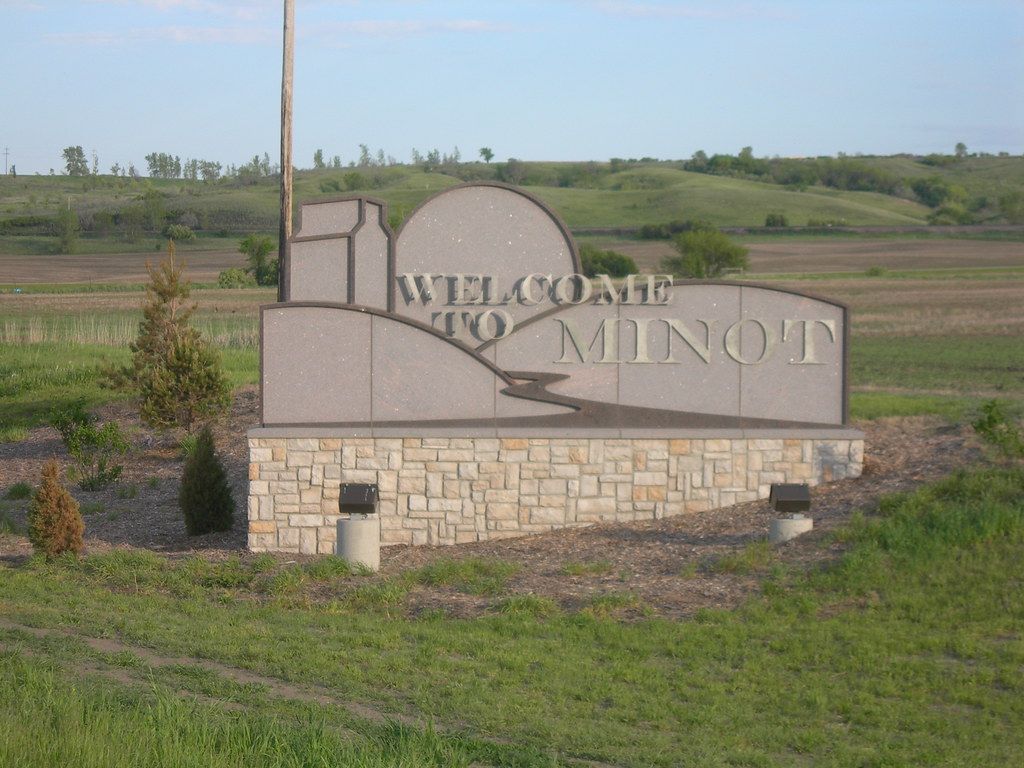
Moving services in North Dakota
Star Van Lines provides local, long-distance, and interstate moving services across North Dakota. We handle packing, loading, transport, and delivery for residential and commercial moves. Because the state's population centers are separated by vast distances across open prairie, and winter conditions can shut down highways for days, every North Dakota move requires weather-aware planning and route knowledge that generic movers often lack. Every move includes a single coordinator, trained crew, and written estimate.
Local moving in North Dakota
Local moves in the Fargo-Moorhead metro typically run 2-4 hours for a one-bedroom apartment. Bismarck, Grand Forks, and Minot have similar timelines. The biggest local-move challenge in North Dakota isn't distance but weather and timing. College move-in at NDSU (Fargo) and UND (Grand Forks) creates a surge in August that books crews out weeks in advance. And winter moves in any North Dakota city require scheduling flexibility because a single blizzard can push your move date by days. A crew of two costs $86-$138 per hour; three movers run $132-$241. We serve the Fargo-Grand Forks corridor on I-29, the Fargo-Bismarck run on I-94, and the Minot-Bismarck connection. Although these are flat, straight highways, distances between cities are long, and winter conditions add unpredictability.
Long-distance moving from North Dakota
Most long-distance moves from North Dakota head to Minnesota, Texas, California, Florida, and Colorado. The ND-to-MN corridor is the shortest major route at about 240 miles from Fargo to Minneapolis. And it's by far the busiest. California and Florida are both roughly 1,780-1,790 miles away, making them among the longer residential corridors in the country. Texas-bound moves cover about 1,087 miles through the Great Plains. We also handle moves between the Williston oil patch and cities across the US. But those often require extra scheduling lead time because of the limited staging and housing options in the Bakken region. Your coordinator monitors NDDOT road conditions, blizzard warnings, and Red River flood alerts that can reroute or delay your shipment.
Packing and storage
We offer full-service packing, partial packing, and self-pack options. Full-service means our crew brings all materials and packs every room. Partial lets you choose which rooms we handle. Self-pack is the lowest-cost option. We have 43 warehouse locations nationwide for short-term and long-term storage. North Dakota's dry continental climate means moisture is less of a concern than in humid states. But extreme cold is the real risk. Items stored in unheated spaces during winter can be damaged by temperatures that drop well below zero. If you need storage between November and March, climate-controlled facilities are worth the additional cost.
Auto transport and specialty items
We ship vehicles via open or enclosed carrier. Most North Dakota-origin vehicle shipments head to Minnesota, Texas, and Colorado. We also move pianos, gun safes, antiques, and artwork with specialty crating. Rural properties in western North Dakota may require shuttle service if county roads are unpaved or impassable during spring mud season. North Dakota requires only a VIN inspection for out-of-state vehicles, with no safety inspection and no emissions test. And the vehicle compliance process at your destination is straightforward.
How much does moving in North Dakota cost?
Moving costs in North Dakota depend on whether you're relocating locally or across state lines. Local moves within the state typically run $86-$138 per hour for a two-person crew with truck. Long-distance moves start at $862 for studio apartments and go up to $8,050 for large homes, depending on distance, weight, and access conditions.
Local moving rates
| Crew size | Hourly rate |
|---|---|
| 2 movers + truck | $86-$138 / hour |
| 3 movers + truck | $132-$241 / hour |
| 4 movers + truck | $184-$368 / hour |
Long-distance rates from North Dakota
| Move size | Estimated price range |
|---|---|
| Studio / 1 Bedroom | $862 - $2,012 |
| 2-3 Bedrooms | $1,552 - $4,428 |
| 4+ Bedrooms | $2,588 - $8,050 |
Popular routes and pricing from North Dakota
| Route | Distance | Avg cost (2-3 BR) |
|---|---|---|
| ND to Minnesota | 240 mi | $1,552 - $1,897 |
| ND to California | 1,780 mi | $3,622 - $4,428 |
| ND to Florida | 1,790 mi | $3,622 - $4,428 |
| ND to Texas | 1,087 mi | $2,818 - $3,450 |
| ND to Colorado | 901 mi | $2,703 - $3,277 |
Pricing reflects market averages for moves in and from North Dakota as of May 2026. Your final price depends on inventory weight, packing level, access at pickup and delivery, and scheduling flexibility. Winter moves may require rescheduling if blizzards close highways. Call (855) 822-2722 or use our free quote calculator for an exact estimate.
What affects your moving price
- Shipment weight and volume are the biggest factors for any long-distance move from North Dakota.
- Distance is significant. Minnesota is 240 miles away, but California and Florida are both nearly 1,800.
- Access at both locations plays a role. Oil-patch housing in Williston and rural farm properties may have unpaved access roads, long carries, and limited truck turnaround space.
- How much packing you want us to do. Full-service runs more than partial packing, and self-pack is the lowest option.
- When you move. Winter moves carry a weather risk. Summer is peak season, and the limited number of moving companies serving North Dakota means crews book up early.
- Add-on services like auto transport, storage, and specialty item handling (pianos, gun safes, artwork) come with their own pricing.
Moving routes from North Dakota
Moving to North Dakota: what you should know
North Dakota has one of the lowest unemployment rates in the country and no vehicle inspection requirement. But its extreme winters and vast distances between cities mean your moving timeline and logistics need a team that plans for weather-related delays. Below is a guide covering cost of living, access and logistics, climate and timing, and what to do after you arrive.
What it costs to live in North Dakota
North Dakota's cost of living index is 89.0 (US average = 100, BEA RPP 2024), making it one of the more affordable states in the country. Median home value is $249,900 (Census ACS 2020-2024), below the national average and roughly one-third of what you'd pay in coastal metros. Median monthly rent is $954. Median household income is $76,657, above the national average, which means your dollar stretches considerably further here than in most states. State income tax ranges from 1.95% to 2.50%, among the lowest progressive rates in the nation (Tax Foundation 2026). Average combined sales tax is 7.1%. Property taxes are moderate, though farmland and agricultural property valuations follow their own rules. About 62.9% of North Dakota households own their homes (Census ACS 2020-2024). But the biggest cost variable is heating. Winters last 5-6 months, and heating bills can easily run $200-$400 per month during the coldest stretch.
Access and logistics
North Dakota has two Interstate highways. I-94 runs 352 miles east-west across the southern half of the state, from the Montana border through Dickinson, Bismarck, and Fargo to Minnesota. It's the primary corridor for most household moves in North Dakota. I-29 runs 217 miles north-south along the eastern border, from South Dakota through Fargo and Grand Forks to the Canadian border at Pembina. Beyond these two interstates, the state relies on US highways. US-2 crosses the northern tier from Williston to Grand Forks, serving oil-patch communities. US-85 runs north-south in the west, connecting Williston to the Badlands. These highways are two-lane roads with limited services between towns. And cell coverage drops west of Bismarck. For moving companies, North Dakota means long hauls between cities, potential weather delays, and the need to pre-plan fuel stops and staging areas, particularly for deliveries to the oil-patch region around Williston.
Climate and timing
Winters in North Dakota are among the harshest in the Lower 48. Average winter lows hit 2 degrees in Bismarck (NOAA), and wind chill regularly drops below -40 degrees. The state averages 51 inches of snowfall per year, and blizzards can shut down I-94 and I-29 for days. But summer is surprisingly warm, with average highs around 85 degrees. North Dakota gets about 215 days of sunshine per year, more than many people expect. Annual rainfall is just 18 inches, making it one of the drier states. Spring is a mixed bag. The Red River Valley around Fargo and Grand Forks faces significant flooding risk from March through May, and floodwaters can block major routes for weeks. Best months for a North Dakota move are May through September, when roads are clear, weather is warm, and daylight hours are long. November through February is the worst window, with blizzards, dangerous cold, and highway closures. And even October can bring early snowstorms that catch newcomers off guard.
Residency and regulations
North Dakota has a unique two-step driver's license process. You must first establish residency for 90 days, then you have 60 days after that threshold to obtain a North Dakota license, giving you an effective window of about 150 days. Visit the North Dakota DOT (dot.nd.gov) with proof of residency and your out-of-state license. Vehicle registration should be completed upon establishing residency. The state requires only a VIN inspection for out-of-state vehicles, with no safety inspection and no emissions test. And North Dakota is the only US state that does not require voter registration. Voters simply present valid identification at the polls on election day.
What to know before moving to North Dakota
Benefits of moving to North Dakota
0,358
Population
$0,657
Median household income
0.0
Cost of living index
0.95%-2.50%
State income tax
consistently among lowest in US
Unemployment
0/year
Days of sunshine
Is North Dakota a good place to live?
North Dakota offers an affordable cost of living, strong job market, low crime, and genuinely friendly communities. The trade-offs are equally real: winters are brutal, distances to major metros are long, and the social and cultural scene in smaller cities doesn't compare to what coastal transplants are accustomed to. Whether it's a good fit depends on your career, your tolerance for extreme cold, and how much you value community over convenience.
Tax environment
North Dakota's progressive income tax ranges from 1.95% to 2.50% (Tax Foundation 2026), among the lowest in the nation for states with an income tax. Average combined state and local sales tax is 7.1%. Property taxes are moderate, and the state offers a homestead credit and property tax relief for qualifying homeowners and renters. The low income tax combined with affordable housing makes North Dakota one of the more tax-friendly states for working families. And for retirees, Social Security income is not taxed at the state level.
Housing market
Median home value in North Dakota is $249,900 (Census ACS 2020-2024), well below the national average. Fargo and Bismarck are the most expensive metros. But even there, a three-bedroom home costs a fraction of what it does in Minneapolis, Denver, or any coastal city. Median monthly rent is $954. Housing availability varies significantly by location. Williston and the western oil-patch communities have experienced boom-bust cycles that created temporary shortages and inflated rents during peak drilling activity. But during downturns, the market corrects. About 62.9% of North Dakota households own their homes (Census ACS 2020-2024).
Job market and economy
Energy is the backbone of North Dakota's economy. The Bakken oil region in the western part of the state supports thousands of direct and indirect jobs. Agriculture is the second pillar, with North Dakota ranking first nationally in production of spring wheat, durum wheat, sunflower seeds, and dry beans. Healthcare is a major employer in every metro, with Sanford Health (Fargo/Bismarck), Altru Health System (Grand Forks), and CHI St. Alexius Health (Bismarck) anchoring the sector. North Dakota State University and the University of North Dakota are both significant employers and research institutions. Minot Air Force Base and Grand Forks Air Force Base provide federal employment. The state's labor force participation rate of 67.4% is among the highest in the US, and unemployment consistently ranks among the lowest.
Safety and natural risks
Extreme cold is North Dakota's primary risk. Temperatures with wind chill below -40 degrees are a regular winter occurrence, and frostbite can happen in minutes on exposed skin. Blizzards shut down highways and can strand travelers. The Red River Valley faces major flooding risk, particularly in Fargo and Grand Forks, where spring snowmelt and ice jams have caused catastrophic floods in the past. Tornadoes occur during summer, primarily in the eastern part of the state. The state has minimal earthquake, wildfire, or hurricane risk. Crime rates are low, particularly in smaller communities. The biggest day-to-day safety consideration is winter driving. Black ice, whiteout conditions, and drifting snow on rural roads are facts of life from November through March.
Who thrives in North Dakota?
Energy sector workers
The Bakken oil region supports well-paying jobs that don't require a college degree. Roughnecks, pipeline workers, truck drivers, and support staff can earn $70,000-$120,000 annually. The work is hard, the conditions are tough, and the boom-bust cycles are real, but for workers willing to handle the lifestyle, the income potential is substantial. And the low cost of living means more of that paycheck gets saved.
Healthcare professionals
Every North Dakota metro is hiring nurses, physicians, and specialists. Rural hospitals and clinics face even more acute shortages. If you're a healthcare worker, North Dakota offers strong demand, competitive pay, student loan repayment programs, and a cost of living that makes your salary stretch further than it would in Minneapolis or Denver.
Military families
Minot Air Force Base and Grand Forks Air Force Base are major installations. Military families stationed in North Dakota benefit from the low cost of living, safe communities, and strong public schools near the bases. And the BAH rates combined with North Dakota's affordable housing make it one of the better financial assignments in the Air Force.
Families seeking affordability and safety
North Dakota has low crime rates, affordable housing, good schools in the larger districts, and a community-oriented culture. Class sizes are small. Neighbors know each other. And the outdoor recreation, while different from mountain or coastal states, includes fishing, hunting, boating, and access to Theodore Roosevelt National Park. The adjustment from a major metro is significant, but families who commit to the lifestyle often find it hard to leave.
Remote workers wanting to maximize income
With a median home price under $250,000, income tax under 2.50%, and a cost of living index of 89.0, a remote worker earning a national-average salary has noticeably more disposable income here than in most states. Fargo has the best broadband infrastructure and the most urban amenities. Grand Forks and Bismarck are reasonable alternatives. Western ND is a harder sell for remote workers because of limited internet options.
First week after moving to North Dakota: what to do
After your move to North Dakota, the state gives you a generous timeline for administrative tasks. The driver's license process is unique, with a 90-day residency threshold before the 60-day clock starts. Here is a prioritized checklist.
- Understand the driver's license timeline.
North Dakota has a unique two-step process. You must first establish residency for 90 days, then you have 60 days after that to obtain a North Dakota license (effective ~150 days total). Visit the North Dakota DOT (dot.nd.gov) with proof of residency, your out-of-state license, and identification. There's no urgency in week one, but mark the calendar so you don't miss the deadline later.
- Register your vehicle.
Vehicle registration should be completed upon establishing residency. North Dakota requires a VIN inspection for out-of-state vehicles, which can be done at a local law enforcement office. There is no safety inspection and no emissions test. Bring your out-of-state title, proof of insurance, and identification.
- Transfer your auto insurance.
Contact your insurer to re-rate your policy for North Dakota. Premiums may decrease if you're coming from a higher-density state. North Dakota has specific minimum liability coverage requirements, and your insurer can explain the differences from your previous state.
- No voter registration needed.
North Dakota is the only US state that does not require voter registration. When election day arrives, simply bring valid identification to your polling location. No advance registration, no forms, no deadline to worry about.
- Update homeowner's or renter's insurance.
North Dakota's primary insurance considerations are extreme cold (pipe freezing, ice dam damage), wind, and spring flooding. If your property is in the Red River Valley flood zone (Fargo, Grand Forks area), you'll need separate flood insurance through FEMA's NFIP.
- Forward your mail.
USPS Change of Address is free online at usps.com. Mail forwarding starts within 7-10 business days. In rural areas, verify your physical address with the local post office. Some properties use P.O. boxes for mail delivery.
- Transfer medical records.
Contact current providers before your move and find a new primary care physician in North Dakota. Healthcare access in rural western ND is limited. And specialist referrals may require travel to Fargo, Bismarck, or even Minneapolis. If you have ongoing medical needs, verify access to your required specialists before your move.
- Winterize immediately (if moving October-April).
If you're arriving during the cold half of the year, invest in winter readiness before your first storm. This means a block heater for your vehicle (most North Dakota cars have one), snow tires or chains, a vehicle emergency kit (blankets, flashlight, snacks, phone charger), and a supply of ice melt for your walkways. Make sure your home's heating system is inspected and your pipes are insulated.
North Dakota at a glance: schools, jobs, and things to do
Schools and universities
Fargo Davies High School, Century High School in Bismarck, and Northern Cass High School are among the top-rated public high schools in the state. North Dakota State University in Fargo is the state's largest university and a strong research institution, particularly in agriculture, engineering, and pharmaceutical sciences. The University of North Dakota in Grand Forks is known for its aviation program (one of the best in the country), medical school, and law school. Minot State University, Dickinson State University, Valley City State University, and Bismarck State College round out the public higher education options. For families, school quality is generally strong in the larger districts. Fargo, Bismarck, and West Fargo public schools consistently rank well. But smaller rural districts face teacher recruitment challenges.
Major employers
Sanford Health is one of the largest employers in the state, operating hospitals and clinics across North Dakota and the region. Altru Health System (Grand Forks) and CHI St. Alexius Health (Bismarck) are also major healthcare employers. North Dakota State University and the University of North Dakota are significant economic anchors. The state government, including agencies like NDDOT and the North Dakota National Guard, employs thousands. Minot Air Force Base and Grand Forks Air Force Base provide federal employment. In the energy sector, Hess Corporation, Continental Resources, and Whiting Petroleum operate in the Bakken region. MDU Resources (Bismarck) is a major utility and construction conglomerate. Scheels (Fargo) is a regional sporting goods retailer headquartered in the state. Agriculture supports employment across the entire state, from farms and ranches to grain elevators and food processing.
Attractions and recreation
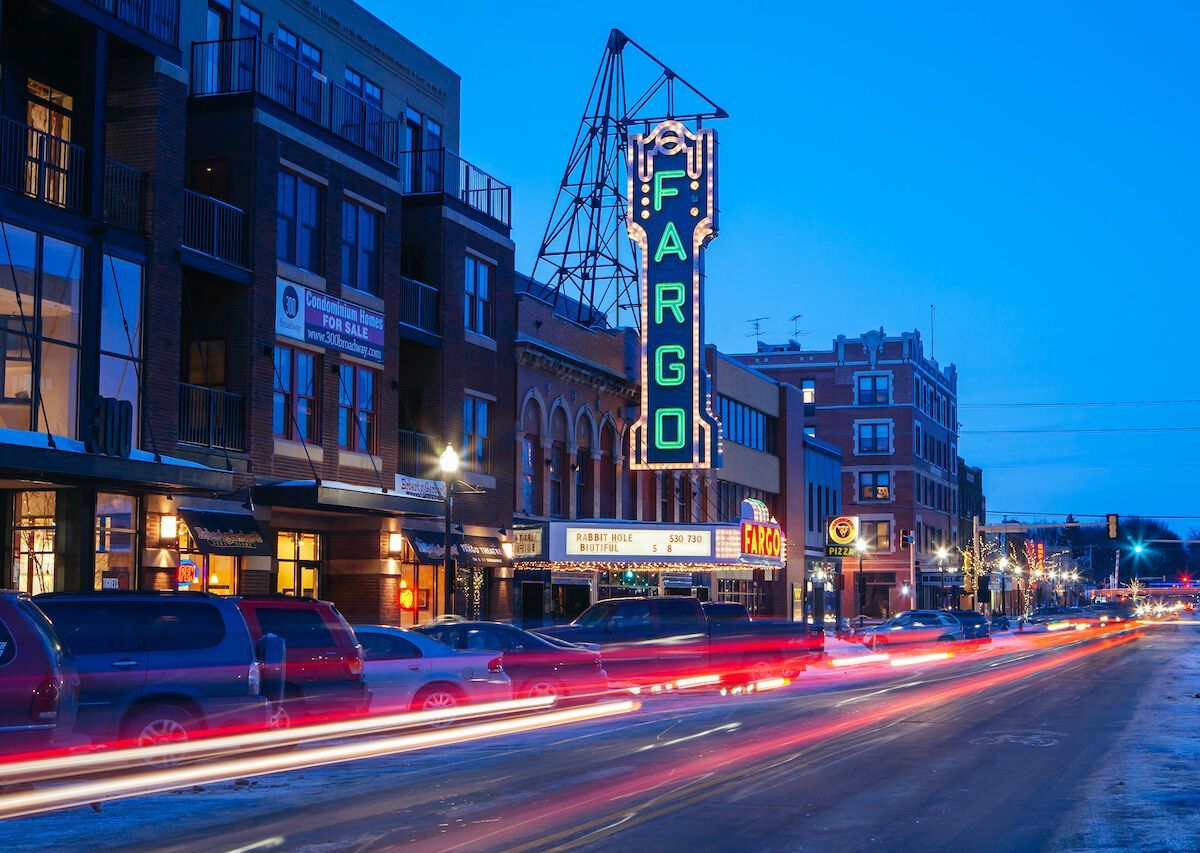
Theodore Roosevelt National Park in the western Badlands is North Dakota's premier outdoor destination, offering rugged terrain, bison herds, wild horses, and some of the most photogenic landscapes in the northern Great Plains. The International Peace Garden on the Manitoba border is a 2,339-acre botanical garden straddling the US-Canada line. The North Dakota Heritage Center in Bismarck houses four museum galleries covering the state's geological, Native American, and settlement history. Fargo's downtown arts scene includes the Plains Art Museum, Fargo Theatre, and a growing restaurant and brewery district. Lake Sakakawea, one of the largest man-made lakes in the country, offers boating, fishing, and camping. Medora, the gateway to Theodore Roosevelt National Park, hosts the Medora Musical every summer, one of the top outdoor musical productions in the Great Plains. Hunting and fishing are central to North Dakota culture, and the state's public land access for sportsmen is among the most generous in the country.
FAQ
Questions? Look here
Can’t find an answer? Call us
(855) 822-2722 or email
Local moving in North Dakota typically costs $86-$138 per hour for a two-person crew with truck. A standard three-bedroom home takes 4-6 hours, putting the total between $411 and $3,314. Winter moves may require rescheduling if blizzards shut down roads. Call (855) 822-2722 for an itemized estimate.
Long-distance moves from North Dakota start at $862 for studio apartments and go up to $8,050 for four-plus-bedroom homes. The closest major destination, Minnesota, runs around $1,552-$1,897 for a two-bedroom, while California and Florida are roughly equal at $3,622-$4,428. Star Van Lines provides binding estimates so your price won't change after booking.
Search our USDOT number 4176875 on the FMCSA SAFER website (safer.fmcsa.dot.gov). This federal database confirms our operating authority, MC number 1607491, insurance status, and safety record. Any legitimate interstate mover should be able to provide a verifiable USDOT number.
The short answer: they're as cold as you've heard. Average winter lows hit 2 degrees in Bismarck, and wind chill drops below -40 regularly. Blizzards can shut down highways for days. You'll need a block heater for your car (to keep the engine warm enough to start), snow tires or studded tires, a vehicle emergency kit, and insulated outerwear rated for sub-zero conditions. Most North Dakota homes have attached garages for a reason, and locals keep their cars plugged in overnight from November through March.
Federal law requires interstate movers to offer two levels: Released Value Protection (free, covers $0.60 per pound per item) and Full Value Protection (paid, covers repair, replacement, or cash settlement at current value). Star Van Lines is fully insured under USDOT #4176875 and can explain both options when you request a quote.
The Bakken oil region remains active, though production has stabilized below its 2019 peak. During boom periods, housing in Williston, Watford City, and surrounding communities gets extremely tight, and rents spike well above state averages. During downturns, the market corrects and availability opens up. If you're moving to the oil patch, check current rental listings and availability before committing to a move date. Temporary housing options like man camps and extended-stay hotels still exist for workers without permanent housing.
Fargo is the state's largest metro with over 250,000 people in the metro area. It has restaurants, shopping, arts, NDSU, and feels like a midsized Midwestern city. Western ND (Williston, Dickinson, Watford City) is rural, energy-driven, and significantly more isolated. Amenities are limited, and the nearest major shopping or medical center may be hours away. Bismarck splits the difference as the state capital with a moderate-sized metro. Your experience of North Dakota will vary dramatically depending on which part of the state you choose.
Healthcare access in the larger metros (Fargo, Bismarck, Grand Forks, Minot) is strong, with major hospital systems and most specialties available. Rural areas are a different story. Small-town hospitals and clinics provide basic care, but specialist referrals often require travel to Fargo or Bismarck. Western ND has more limited options, and some residents travel to Billings, Montana, or even Minneapolis for specialized care. Air ambulance services are available but costly, and many residents carry supplemental flight insurance.
May through September offers the best conditions. Roads are clear, weather is warm (summer highs around 85 degrees), and daylight hours are long. November through February is the worst window because of blizzards, extreme cold, and highway closures. October can bring early snowstorms, and March through April carries flooding risk in the Red River Valley. Book 6-8 weeks in advance for summer dates, since North Dakota's limited moving industry means crews fill up quickly.
Vehicle registration should be completed upon establishing residency. North Dakota requires a VIN inspection for out-of-state vehicles (no safety inspection, no emissions test). The driver's license timeline is unique: you must establish residency for 90 days, then you have 60 days after that threshold to obtain a North Dakota license, giving you an effective window of about 150 days. Visit the North Dakota DOT (dot.nd.gov) with proof of residency and your current license.
North Dakota's property taxes are moderate and generally lower than Minnesota's, which has some of the higher property tax rates in the region. Montana's property tax structure is different, with no sales tax to offset it. North Dakota offers homestead credits and property tax relief programs that can further reduce your effective rate. The combination of low income tax, moderate property tax, and the state's homestead credit makes North Dakota's overall tax burden one of the lightest in the upper Midwest.
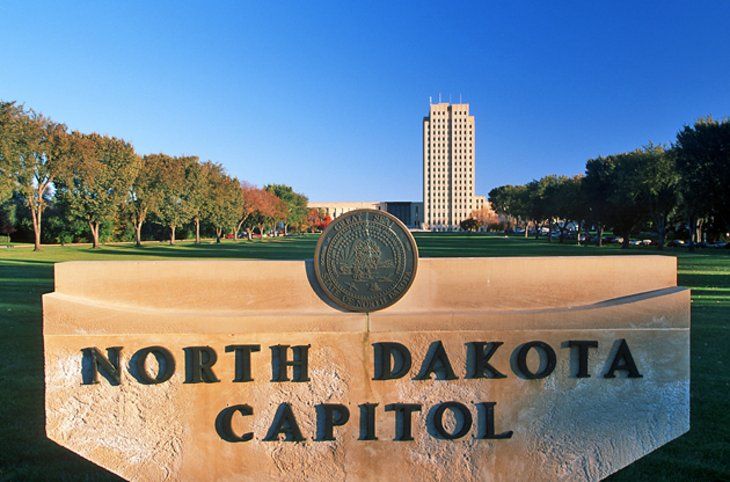
Fargo has the most developed arts and entertainment scene, with live music venues, craft breweries, the Plains Art Museum, and Fargo Theatre. Bismarck offers the North Dakota Heritage Center, state capitol tours, and riverfront trails. Medora hosts the Medora Musical every summer, a top outdoor production in the Great Plains. Theodore Roosevelt National Park provides year-round outdoor recreation. Hunting and fishing are central to the culture, and public land access is among the most generous in the country. College sports (NDSU Bison football, UND hockey) draw large crowds. North Dakota won't feel like New York or LA, but for people who value outdoor recreation, community events, and a slower pace, there's more than enough to fill a calendar.
Ready to Start Your North Dakota Move?
Get a free moving estimate today. No obligation, no pressure.
Call us or fill out the form - we'll get back to you fast.
USDOT #4176875 | MC #1607491 | Licensed & Insured