
Thank you for your feedback!
We will contact you shortly

Free consultation
Enter your phone number and we will call you back for a consultation on any moving and storage services

North Carolina
Licensed North Carolina Movers - Interstate & Local
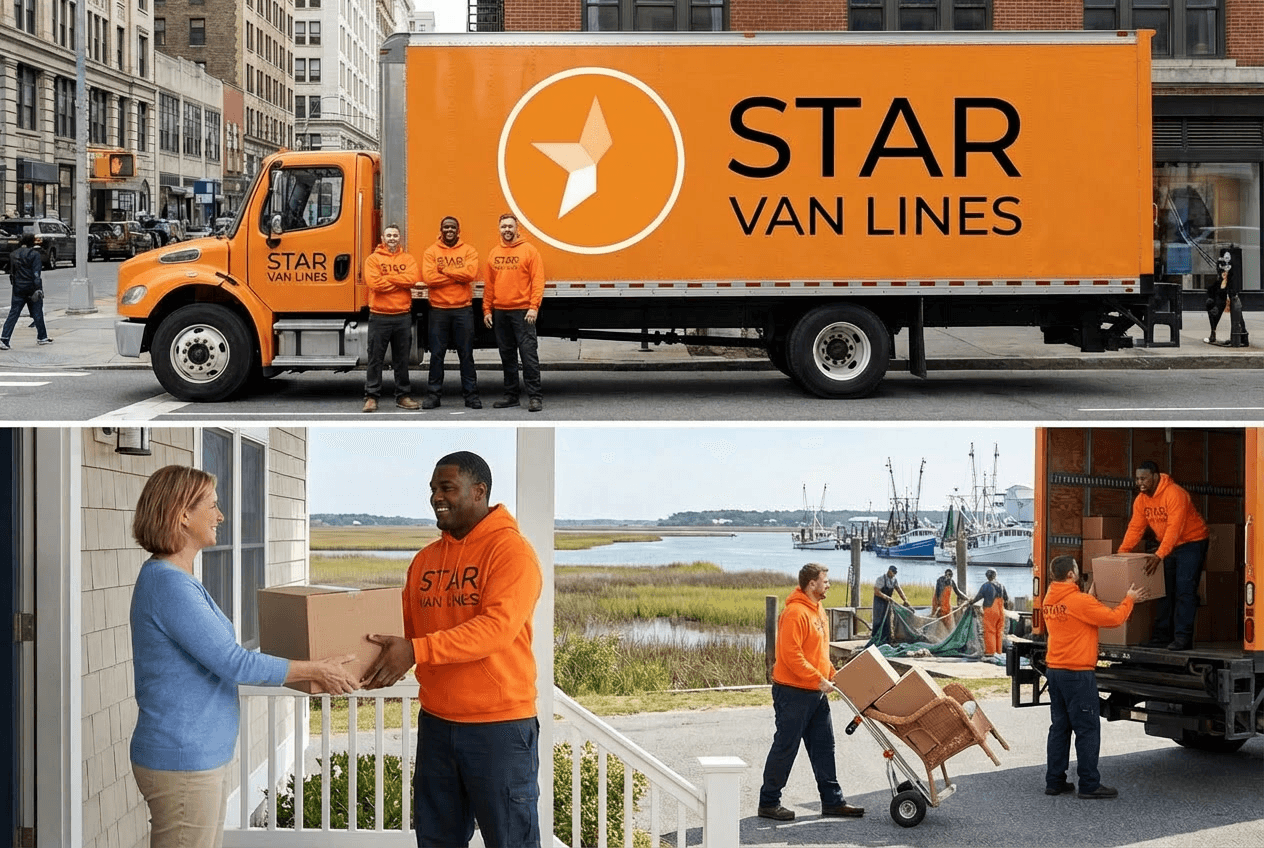
Between July 2024 and July 2025, no state added more people through state-to-state migration than North Carolina, which gained about 84,000 more residents than it lost (Census Population Estimates, NC OSBM), edging out even Texas and Florida. Two named job engines drive that pull. The Research Triangle, anchored by Research Triangle Park, is the largest research park in the United States with roughly 55,000 workers and a $25.1 billion annual economic impact, while Charlotte ranks as the nation's second-largest banking center. On the separate 2024 calendar-year ACS measure, North Carolina also placed 3rd nationally with a net gain near 58,600 domestic movers. Star Van Lines is a licensed interstate carrier, USDOT #4176875 and MC #1607491, and we've been moving households into and out of the Tar Heel State since 2016, from the I-85 banking corridor through Charlotte to the I-40 spine that ties the Triangle to the coast and the mountains.
Our North Carolina moving services cover packing, loading, transport, delivery, and short-term storage at warehouse locations around the region. Because the state runs from the Blue Ridge in the west to the Outer Banks on the Atlantic, a "local" move can mean a cross-town hop in Raleigh or a grade-aware mountain haul into Asheville. Uptown and South End high-rises in Charlotte need reserved freight elevators and tight move-in windows, while coastal moves near Wilmington call for moisture-resistant packing through a long hurricane season. One coordinator and one written estimate carry the whole job, from the first call through delivery.
Curious what it costs? Call (855) 822-2722 or use our online quote calculator. Your estimate breaks down every line item, so there aren't any surprises once the truck pulls up. We're rated 4.0 on Trustpilot, 4.5 on Google, and 4.75 on Facebook across 240+ reviews.

Dennis has 15+ years of experience in interstate moving and has coordinated over 1,000 relocations across the United States.


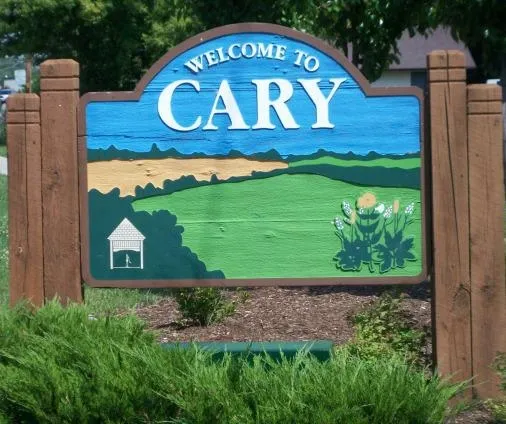






Moving services in North Carolina
Moving services in North Carolina
Star Van Lines provides local, long-distance, and interstate moving services across North Carolina. We handle packing, loading, transport, and delivery for residential and commercial moves. Because the state holds three distinct geographies in one, the western Blue Ridge, the dense Piedmont metros, and the humid Atlantic coast, every North Carolina move needs route-specific and weather-aware planning. Every move includes a single coordinator, trained crew, and written estimate.
Local moving in North Carolina
Local moves within a Piedmont metro run on the lowest distance-coefficient bands plus the standard service fee, while Charlotte high-rise moves take longer because of freight-elevator reservations along I-77. A two-person crew costs $207-$299 per hour; three movers run $311-$448. High-demand in-state lanes include Charlotte to Raleigh and Greensboro to Durham along the I-85 and I-40 backbone, plus Triangle suburb moves around Cary, Morrisville, Apex, and Holly Springs near Research Triangle Park. Because these short intrastate moves price on the lowest mileage tier, cost is driven mostly by volume, crew size, and building access rather than distance.
Long-distance moving from North Carolina
Most long-distance moves from North Carolina head south to Atlanta, north to the Boston-to-New York corridor, or west across the country. Charlotte to Atlanta is a short interstate hop of about 243 driving miles, while Raleigh to Boston runs roughly 697 miles and Raleigh to Chicago about 793 miles, both mid-range corridors in the higher coefficient bands. Cross-country moves to our Southern California hub run roughly 2,415 miles from Charlotte. Because the Atlantic hurricane season can flood eastern North Carolina and briefly close stretches of I-95 and I-40 from August through October, your coordinator tracks storm forecasts and adjusts load-out windows when a system is developing.
Packing and storage
We offer full-service packing, partial packing, and self-pack options. Full-service means our crew brings all materials and packs every room. With partial packing you pick the rooms we cover, while self-pack keeps the cost lowest. We have 43 warehouse locations nationwide for short-term and long-term storage. North Carolina summers bring an almost continuous run of high-heat, high-humidity days, and the coastal plain near Wilmington holds moisture year-round, so climate-controlled storage is strongly advised to protect wood furniture, electronics, documents, and upholstery from warping, mildew, and condensation. And during the long hurricane season, storage set back from the coast also reduces flood exposure between your move-out and move-in dates.
Auto transport and specialty items
We ship vehicles via open or enclosed carrier, and most North Carolina moves pair the household van with auto transport. New residents who plan to drive must title and register every vehicle within 60 days of establishing residency and pay the state's Highway Use Tax, so we line up the car to land inside that registration window. Because mountain destinations near Asheville may need a smaller shuttle vehicle for tight, steep access, your coordinator plans the final leg of a Blue Ridge delivery ahead of move day.
How much does moving in North Carolina cost?
Moving costs in North Carolina depend on whether you're relocating locally or across state lines. Local moves within North Carolina typically run $207-$299 per hour for a two-person crew with truck. Long-distance moves start at $862 for studio apartments and go up to $8,970 for large homes, depending on distance, weight, and access conditions. The five corridors below, from a 243-mile Charlotte-to-Atlanta hop to a 2,415-mile run to Los Angeles, show how much distance moves the price.
Local moving rates
| Crew size | Hourly rate |
|---|---|
| 2 movers + truck | $207-$299 / hour |
| 3 movers + truck | $311-$448 / hour |
| 4 movers + truck | $414-$598 / hour |
Long-distance rates from North Carolina
| Move size | Estimated price range |
|---|---|
| Studio / 1 Bedroom | $862 - $2,243 |
| 2-3 Bedrooms | $1,552 - $4,945 |
| 4+ Bedrooms | $2,588 - $8,970 |
Popular routes and pricing from North Carolina
| Route | Distance | Avg cost (2-3 BR) |
|---|---|---|
| Charlotte to Atlanta | 243 mi | $1,552 - $1,897 |
| Raleigh to Chicago | 793 mi | $2,530 - $3,047 |
| Raleigh to Boston | 697 mi | $2,358 - $2,875 |
| Charlotte to Los Angeles | 2,415 mi | $4,025 - $4,945 |
| Raleigh to Atlanta | 405 mi | $1,897 - $2,300 |
Pricing reflects market averages for moves in and from North Carolina as of June 2026. Your final price depends on inventory weight, packing level, access at pickup and delivery, and scheduling flexibility. Call (855) 822-2722 or use our free quote calculator for an exact estimate.
What affects your moving price
- Shipment weight and volume are the biggest factors for any long-distance move from North Carolina.
- Distance drives the base price. Charlotte to Atlanta is 243 miles; Charlotte to Los Angeles is more than 2,400.
- Access at both ends matters. Freight-elevator wait times in Charlotte's Uptown and South End high-rises, long carries, stairs, and steep mountain driveways near Asheville that need a shuttle vehicle all add time.
- How much packing you want us to do. Full-service runs more than partial, and self-pack is the lowest option.
- When you move. Hurricane season runs June through November, and peak summer heat and humidity can affect scheduling, so the milder spring and fall windows are generally calmer.
- Add-on services like auto transport, climate-controlled storage, and specialty handling for antiques come with their own pricing.
Moving routes from North Carolina
Moving to North Carolina: what you should know
A move to North Carolina involves more than logistics. You're choosing among three different states inside one: mountains, Piedmont metros, and coast. Below is a quick guide covering cost of living, access and logistics, climate and timing, and residency requirements that affect your move.
What it costs to move to North Carolina
North Carolina's cost of living index is 94.3 (US average = 100, BEA RPP 2024), which sits just below the national average, so local moving labor runs close to the US norm. Expect $207-$299 per hour for a two-person crew in the Charlotte or Triangle metros. Building access adds cost in the Piedmont. Many Charlotte Uptown and South End high-rises require a reserved freight elevator and a scheduled move-in window, and mountain addresses near Asheville can force a smaller shuttle vehicle up steep, narrow drives. Median home value sits at $288,900 (Census ACS 2020-2024), and median monthly rent is $1,228. Although housing here costs far less than the California and Northeast metros most inbound movers leave, fast growth in Raleigh and Charlotte has pushed prices above where they sat a decade ago. Median household income is $72,388.
Access and logistics
North Carolina's interstate network threads three regions together. I-85 is the southwest-to-northeast banking corridor through Charlotte, Greensboro, and Durham, while I-40 runs east to west from the coast through the Triangle and Triad to the mountains. I-95 carries north-south traffic through the eastern coastal plain, I-77 is the north-south spine through Charlotte, and I-26 runs west toward Asheville and the Blue Ridge. The geography splits into three logistics problems. Western mountain moves near Asheville demand grade-aware routing and sometimes a shuttle vehicle for steep, narrow drives. The dense Piedmont brings high-rise apartment and parking-permit logistics in Charlotte along I-77 and the Triangle along I-40. And humid coastal moves near Wilmington need moisture-resistant packing during a long Atlantic hurricane season.
Climate and timing
Charlotte sees about 214 to 218 days with sun a year, summer highs near 91 degrees, and a mild January with lows around 30 (NOAA 1991-2020 normals). But the calendar that matters most for movers is the Atlantic hurricane season, June 1 to November 30, peaking from August through October. During those weeks, coastal and eastern moves can hit short-notice weather delays, and flooding can close stretches of I-95 and I-40. The best windows to move are April to May and September to October, when Piedmont temperatures are mild, humidity is lower, and you're clear of both peak summer heat and the most active hurricane stretch. Inland mountain routes through the Blue Ridge near Asheville can also see winter ice storms that briefly close highways, so build flexibility into a cold-weather mountain move.
Residency and regulations
North Carolina gives new residents a relatively generous 60 days to get a North Carolina driver license (commercial drivers get 30 days), but a NC license must be obtained before a vehicle can be titled and registered. The state requires an annual safety inspection before a vehicle can be registered or renewed, and an on-board diagnostic emissions inspection currently applies in 19 counties, including Mecklenburg, Wake, Durham, Guilford, and Forsyth. Vehicles 35 years or older qualify for historic-vehicle status and are exempt from the safety inspection. Out-of-state insurance policies are not accepted, so you'll need NC-issued vehicle insurance to register. Because both the license and the registration tie into the Tag and Tax Together system, coordinate your paperwork early.
What to know before moving to North Carolina
Benefits of moving to North Carolina
0,197,968 (Census V2025)
Population
$0,388
Median household income
0.3 (US = 100, BEA RPP 2024)
Cost of living index
0-218/year (Charlotte)
Days of sunshine
0.99% flat (phasing down)
State income tax
#0 nationally, ~+84,000 (Census Pop Est, 2024-2025)
Net domestic migration
North Carolina is home to about 11.2 million people and added 7.2 percent to its population between 2020 and 2025 (Census V2025). The draw is a job market built on finance and technology. Charlotte is the second-largest banking center in the country, and the Research Triangle's life-sciences cluster alone employs more than 58,000 people at over 650 companies. The migration math is the headline. Between July 2024 and July 2025, North Carolina led every state in net state-to-state migration, gaining about 84,000 more residents than it lost (Census Population Estimates, NC OSBM). On the separate 2024 ACS measure, it ranked 3rd nationally with a net gain near 58,600, drawing the most movers from Florida, South Carolina, and Virginia.
Is North Carolina a good place to live?
North Carolina offers a flat low income tax, a finance-and-tech job market, and three distinct landscapes within a day's drive. The trade-offs are real: summers are hot and humid, the Atlantic coast carries real hurricane and flood risk, and fast growth has pushed housing costs in Raleigh and Charlotte well above where they sat a decade ago. Whether it's a good fit depends on your job prospects, your tolerance for storm season, and how much you value four-season variety from the coast to the mountains.
Tax environment
North Carolina levies a flat 3.99 percent individual income tax (Tax Foundation 2026; NC Department of Revenue), with no progressive brackets, and the rate is scheduled to phase down further toward 3.49 percent if revenue thresholds are met. The average combined state and local sales tax is 6.99 percent (4.75 percent state plus about 2.24 percent local). There's no estate tax and no inheritance tax, and the corporate income tax is a flat 2.00 percent, one of the lowest in the nation. The effective property tax rate is 0.66 percent of owner-occupied value, among the lower rates nationally, though counties reappraise real property at least once every eight years. For a household leaving California, New York, or Illinois, the flat low income tax is a real budget shift.
Housing market
Median home value in North Carolina is $288,900 (Census ACS 2020-2024), and median monthly rent is $1,228. About 66.6 percent of North Carolina households own their homes. Prices vary widely by market: the Charlotte and Triangle metros and the Asheville mountain market run above the statewide median, while smaller Piedmont and eastern towns stay closer to it or below. Because Raleigh and Charlotte rank among the ten fastest-growing US metros, demand keeps pressure on prices and on inventory, so it's worth getting pre-approved before you start touring homes in either metro.
Job market and economy
Finance and technology anchor North Carolina's economy. Charlotte is the second-largest banking center in the United States after New York City, and Wells Fargo runs a major hub there. The Research Triangle Park near Raleigh-Durham is the largest research park in the country, with roughly 55,000 workers and a $25.1 billion annual economic impact across biotech, engineering, and technology. Walmart is the state's largest employer overall, while Duke University and Duke Health employ around 44,500 people and Atrium Health and Food Lion round out the top tier. And the state's civilian labor force participation rate is 61.5 percent. Because so much hiring sits in banking, biotech, healthcare, and education, job seekers cluster around Charlotte and the Triangle.
Safety and natural risks
North Carolina's dominant natural risk comes from the Atlantic: hurricanes and tropical storms drive roughly 83.5 percent of the state's billion-dollar disaster costs since 1980, with the coast averaging about two hurricane impacts a year along its 300 miles of shoreline. Severe thunderstorms, inland and flash flooding, tornadoes, and winter ice storms round out the hazard list, and the western mountains add landslide risk on steep slopes. What that means for a move comes down to two habits. Time a coastal or eastern relocation outside the August-to-October hurricane peak when you can, and watch I-95 and I-40 for flood closures during an active storm. Mountain moves near Asheville carry a winter caution too, since ice storms can shut Blue Ridge highways for short stretches.
Who thrives in North Carolina?
Research Triangle tech and life-sciences relocators
Research Triangle Park is the largest research park in the United States, with roughly 55,000 workers and a $25.1 billion annual economic impact, and the Triangle's life-sciences cluster alone employs more than 58,000 people at over 650 companies. Engineers, researchers, and biotech professionals relocate into Raleigh, Durham, Cary, and Morrisville for these roles, and they need careful handling of home offices and lab-grade electronics.
Charlotte banking and fintech professionals
Charlotte is the second-largest banking center in the United States after New York City, anchoring a deep financial-services and fintech ecosystem that pulls professionals from higher-cost Northeast metros. These movers often arrive on tight start dates from cities like Boston and New York, and they value coordinated long-distance scheduling into Uptown and South End high-rises with reserved freight elevators.
Blue Ridge and Asheville lifestyle retirees
The western third of the state rises into the Blue Ridge and Great Smoky Mountains around Asheville, offering a cooler four-season climate and strong outdoor access that draws retirees and second-home buyers. Because mountain moves need grade-aware routing and sometimes a smaller shuttle vehicle for steep, narrow driveways, these relocations also call for careful handling of antiques and collections.
Coastal Wilmington and Outer Banks transplants
The Atlantic coast from the Outer Banks to Wilmington has milder winters and an ocean-moderated climate that draws beach-town and remote-work transplants. Since the coast is a preferred zone for tropical-storm formation and holds high humidity year-round, these moves call for moisture-resistant packing and timing that avoids the August-September hurricane peak.
Lower-tax movers from high-cost states
North Carolina pairs a flat 3.99 percent income tax, no estate or inheritance tax, and a median home value near $288,900 against the much higher costs of California, New York, and Illinois, the three states that lost the most residents to domestic migration. Households relocating for tax relief and housing affordability make up a large share of our inbound cross-country volume up I-85 and across I-40.
First week after moving to North Carolina: what to do
After your move to North Carolina, several tasks carry state-specific deadlines, and the license has to come before you can register the car. New residents have 60 days to get a North Carolina driver license, but the license must be in hand before a vehicle can be titled and registered. Here is a prioritized checklist.
- Get your North Carolina driver license.
New residents have 60 days to obtain a North Carolina driver license after establishing residency, and commercial drivers have 30 days. Bring proof of residency and your current out-of-state license to a license office. (ncdot.gov/dmv)
- Title and register your vehicle.
A North Carolina license must come first, then you title and register, generally tied to accepting gainful employment or the expiration of reciprocity with your prior state. New residents also pay the state's Highway Use Tax at titling, so budget for that with your registration costs.
- Pass your safety and emissions inspection.
North Carolina requires an annual safety inspection before a vehicle can be registered or renewed. An on-board diagnostic emissions inspection also applies in 19 counties, including Mecklenburg, Wake, Durham, Guilford, and Forsyth. Vehicles 35 years or older with historic-vehicle status are exempt from the safety inspection.
- Line up North Carolina auto insurance.
Out-of-state policies are not accepted, so you'll need NC-issued vehicle insurance before you can register (GS 20-309). Contact your insurer to re-rate your policy, since premiums and minimum coverage rules can shift with the move.
- Register to vote.
North Carolina lets you register online through the DMV, in person at the DMV or another agency, or by mail, with a deadline 25 days before Election Day. Same-day registration is available during the early-voting period. Start at ncsbe.gov/registering/how-register.
- Forward your mail.
USPS Change of Address is free online at usps.com. Mail forwarding starts within 7-10 business days.
- Transfer medical records.
Contact your current providers before the move and find a new primary care physician in North Carolina. If you're on employer insurance, confirm your plan's North Carolina network before booking appointments.
- Update school records.
If you have children, request transcripts from the previous district and contact your new North Carolina district for enrollment requirements, registration deadlines, and the local school calendar.
North Carolina at a glance: schools, jobs, and things to do
Schools and universities
For families weighing districts, Chapel Hill-Carrboro City Schools ranks as the number one best school district in North Carolina on Niche. Union County Public Schools near Charlotte and Mooresville Graded School District north of the city are also perennial top-rated districts statewide. The higher-education roster is unusually strong. The University of North Carolina at Chapel Hill is the public flagship and America's first public university, which opened in 1795. North Carolina State University in Raleigh is the largest by undergraduate enrollment at about 28,422 students and a land-grant research university, while Duke University in Durham is a top-ranked private research university and one of the state's largest employers. Since district quality swings sharply from one zone to the next, families moving with kids should confirm the attendance boundary before they sign a lease.
Major employers
Walmart is North Carolina's largest overall employer and appeared in the top-five employer lists of 29 of the state's 100 counties (NC Department of Commerce, 2025). Duke University and Duke Health in Durham employ around 44,500 across the university and hospital system, the state's number two employer, and Atrium Health anchors healthcare in the Charlotte area. Food Lion, the Salisbury-based grocer, and Wells Fargo, with a major Charlotte banking hub, round out the largest private employers. Finance and banking and technology are the dominant industries, with Charlotte as a national banking center and Research Triangle Park anchoring biotech, engineering, and technology. Healthcare and education rank among the most common top-employer fields statewide.
Attractions and recreation
Western North Carolina holds two of the state's signature draws. The Biltmore Estate in Asheville is America's largest privately owned home, an 8,000-acre Chateauesque-style estate, and the Blue Ridge Mountains and Blue Ridge Parkway run scenic ridgelines across the west. The Great Smoky Mountains National Park, the most-visited national park in the United States, straddles the North Carolina and Tennessee border near Cherokee. On the coast, the Outer Banks barrier islands offer pristine beaches, historic lighthouses, and the Wright Brothers National Memorial. And the fast-growing Research Triangle and Charlotte metros add big-city dining, sports at Bank of America Stadium, and culture.
FAQ
Questions? Look here
Can’t find an answer? Call us
(855) 822-2722 or email
Local moving in North Carolina typically costs $207-$299 per hour for a two-person crew with truck. A standard three-bedroom home usually needs a larger crew and several hours, so most local moves land between $810 and $5,200 depending on home size and access. Add-ons like packing, disassembly, and long carries increase the total. Call (855) 822-2722 for an itemized estimate.
Long-distance moves from North Carolina start at $862 for studio apartments and go up to $8,970 for four-plus-bedroom homes. The final price depends on shipment weight, distance, and access at both ends. Every Star Van Lines quote is itemized in writing, so you can see the full breakdown before you commit.
Search our USDOT number 4176875 on the FMCSA SAFER website (safer.fmcsa.dot.gov). This federal database confirms our operating authority, MC number 1607491, insurance status, and safety record. Any legitimate interstate mover should be able to provide a verifiable USDOT number.
Common surcharges include freight-elevator wait time and reserved-elevator fees in Charlotte's Uptown and South End high-rises, long-carry charges when the truck can't park close to the door, stair fees, and shuttle fees for steep mountain driveways near Asheville that won't allow a full-size van. Each of these shows up as a line item on the written estimate, so nothing surfaces on move day.
Federal law requires interstate movers to offer two levels: Released Value Protection (free, covers $0.60 per pound per item) and Full Value Protection (paid, covers repair, replacement, or cash settlement at current value). Star Van Lines is fully insured under USDOT #4176875 and can explain both options when you request a quote.
North Carolina gives new residents 60 days to obtain a North Carolina driver license, and commercial drivers have 30 days. The catch is that you need the NC license before you can title and register a vehicle, so handle the license first. New residents also pay the state's Highway Use Tax when they title an out-of-state vehicle, and an annual safety inspection is required before registration.
When you title an out-of-state vehicle in North Carolina, you pay a one-time Highway Use Tax instead of a traditional sales tax on the vehicle. On top of that, budget for title and plate fees, the annual safety inspection, and the on-board diagnostic emissions inspection if you're registering in one of the 19 counties that require it. Because the state uses the Tag and Tax Together system, your county property tax on the vehicle is paid alongside the registration.
North Carolina's cost of living index is 94.3 (US average = 100, BEA RPP 2024), just below the national average and well below the California and Northeast metros most inbound movers leave. Median home value is $288,900 and median monthly rent is $1,228 (Census ACS 2020-2024). Although Raleigh and Charlotte have grown fast and pushed local prices up, both metros still cost far less than the high-cost markets sending the most movers.
The best windows are April to May and September to October, when Piedmont temperatures are mild and you're clear of peak summer heat and the most active Atlantic hurricane stretch. July and August bring near-continuous high heat and humidity, with Charlotte averaging well over a dozen days a month at or above 90 degrees. The Atlantic hurricane season runs June 1 to November 30 and peaks August through October, so it's worth timing a coastal or eastern move outside those weeks.
Yes. We move vehicles on open or enclosed carriers, and most North Carolina moves pair the household van with auto transport. Because new residents must title and register a vehicle within 60 days, your coordinator times the car to land inside that window. For a high-rise address in Charlotte we schedule the building access, and for a steep mountain address near Asheville we may stage a smaller shuttle vehicle for the final leg.
North Carolina has a flat 3.99 percent individual income tax that is scheduled to phase down further, with no progressive brackets, no estate tax, and no inheritance tax. The effective property tax rate is a low 0.66 percent of owner-occupied value. For a household leaving California, New York, or Illinois, the three states that lost the most residents to domestic migration, the flat low income tax and lower housing costs can reshape a monthly budget.
Between July 2024 and July 2025, North Carolina led every state in net state-to-state migration, gaining about 84,000 more residents than it lost (Census Population Estimates, NC OSBM). The pull comes from two named job engines: the Research Triangle, where Research Triangle Park is the largest research park in the country with roughly 55,000 workers, and Charlotte, the nation's second-largest banking center. Those two metros, the Triangle around Raleigh-Durham and Charlotte's Queen City, absorb the largest share of new residents.
Ready to Start Your North Carolina Move?
Get a free moving estimate today. No obligation, no pressure.
Call us or fill out the form - we'll get back to you fast.
USDOT #4176875 | MC #1607491 | Licensed & Insured