
Thank you for your feedback!
We will contact you shortly

Free consultation
Enter your phone number and we will call you back for a consultation on any moving and storage services

South Carolina
Professional South Carolina Movers for Local & Interstate Moves

South Carolina is the place people are moving to right now. Between July 1, 2024 and July 1, 2025 it was the single fastest-growing state in the country, expanding 1.5 percent and edging out Idaho at 1.4 percent and North Carolina at 1.3 percent, on a net domestic in-migration of 66,622 people and total growth of 79,958 (Census Vintage 2025). That pull runs from the cobblestone streets of the Charleston coast to the advanced-manufacturing Upstate around Spartanburg and Greenville. Star Van Lines is a USDOT-licensed interstate carrier (USDOT #4176875, MC #1607491) that handles local and long-distance moves across the whole Palmetto State, and we have run both since 2016.
Our South Carolina moving services cover packing, loading, transport, delivery, and short-term storage at warehouse locations nationwide. A move from Columbia to Charleston covers about 115 miles down I-26. A move from Columbia to Los Angeles runs about 2,388 miles. We handle both with the same coordinator and the same written estimate, and here the harder variable is usually the heat, because Midlands summers push into the mid-90s with heavy humidity and the coast carries Atlantic hurricane risk from August into October.
Want a clear price before your South Carolina move? Call (855) 822-2722 or use our online quote calculator. You'll get an estimate that breaks down every line item, so there aren't any surprises on moving day. We're rated 4.0 on Trustpilot, 4.5 on Google, and 4.75 on Facebook across 240+ reviews.

Dennis has 15+ years of experience in interstate moving and has coordinated over 1,000 relocations across the United States.

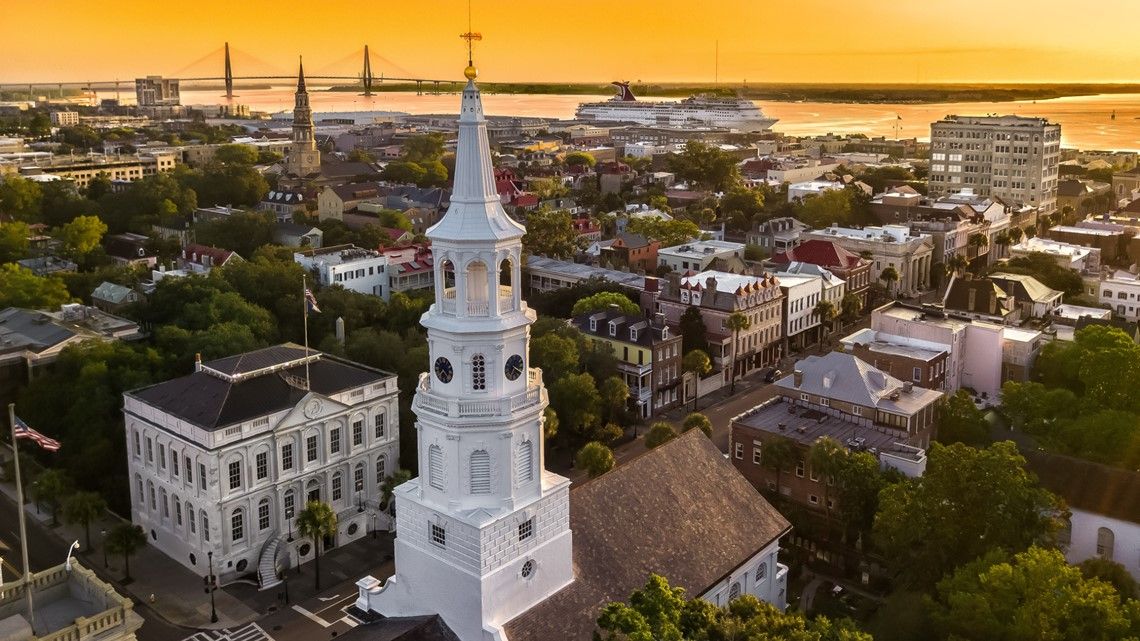


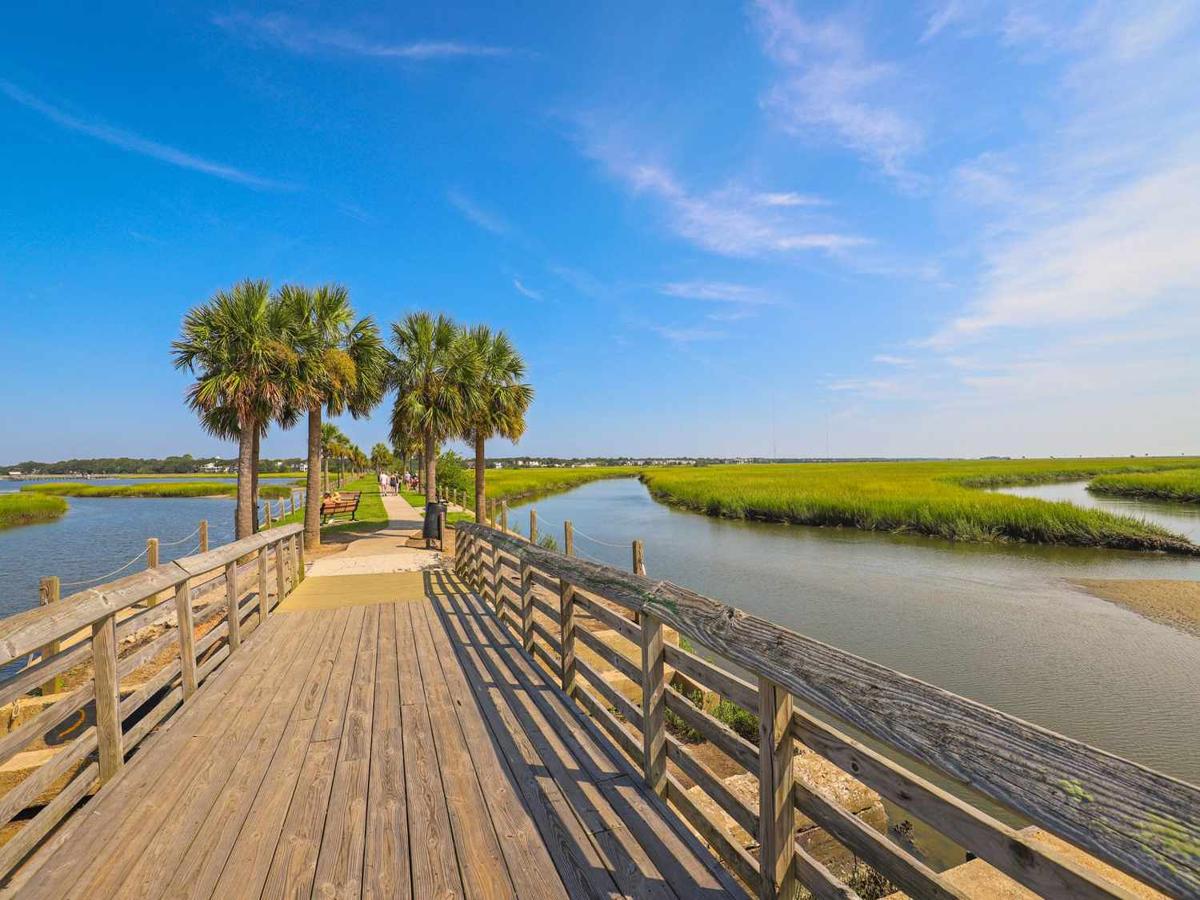
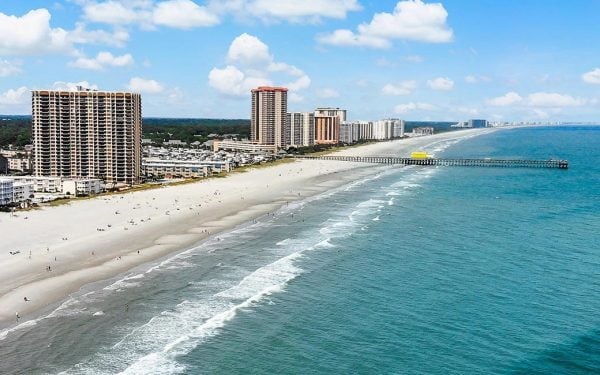

Moving services in South Carolina
Star Van Lines provides local, long-distance, and interstate moving services across South Carolina. We handle packing, loading, transport, and delivery for residential and commercial moves. The state sets two very different jobs in front of a crew, because a move onto Charleston's narrow historic peninsula and a move out in the Upstate I-85 manufacturing belt share almost nothing in how the day actually runs. Every move includes a single coordinator, a trained crew, and a written estimate.
Local moving in South Carolina
Local moves in South Carolina cluster along the I-26 spine and around the three big metros of Greenville, Columbia, and Charleston. A two-person crew runs $150-$184 per hour; three movers run $230-$265. We serve the Upstate around Greenville and Spartanburg, the Midlands around Columbia, and the Lowcountry around Charleston and Mount Pleasant. But the two ends of the state work differently, because a Charleston historic-district move can mean cobblestone streets, parking restrictions, and a shuttle vehicle just to reach the front door, while an Upstate move can run a heavy-freight corridor near BMW Spartanburg. Common in-state lanes include Greenville to Columbia (about 104 miles up I-26 and I-385) and Columbia to Charleston (about 115 miles down I-26), short hauls that price as local moves and usually wrap in a single day.
Long-distance moving from South Carolina
Long-distance demand out of South Carolina runs heavily toward the Sun Belt and the coasts. The dominant lane is South Carolina to California (Columbia to Los Angeles is about 2,388 miles), and the most-requested corridors also include South Carolina to Texas (Greenville to Dallas about 929 miles) and intra-Southeast moves like Charleston to Miami (about 581 miles). We run these as full interstate relocations on I-95, I-26, I-85, and I-20. Because the busiest cross-country lane is so long, your coordinator builds the schedule around summer heat and, on coastal pickups, the Atlantic hurricane calendar.
Packing and storage
We offer full-service packing, partial packing, and self-pack options. Full-service means our crew brings every box and material and packs each room; partial lets you choose which rooms we handle; self-pack is the lowest-cost option. We have 43 warehouse locations nationwide for short-term and long-term storage. But in the Lowcountry, the intense humidity, summer heat, and coastal salt air make climate-controlled storage the safer choice for wood furniture, leather, electronics, and documents held between a move and a later move-in date, since a standard, non-conditioned unit can invite warping, mold, and corrosion over a long humid stretch.
Auto transport and specialty items
We ship vehicles by open or enclosed carrier, and households relocating several cars on a long South Carolina lane often ship them rather than drive each one. We also move pianos, antiques, gun safes, and fine art with specialty crating. Because new South Carolina residents must register a vehicle and pay county property tax within 45 days of moving, coordinating auto transport to land ahead of that deadline matters, and high-value cars exposed to coastal salt air on the Charleston and Myrtle Beach coast often ship enclosed to keep the spray off the finish.
How much does moving in South Carolina cost?
Moving costs in South Carolina depend on whether you're moving across town or across the country. Local moves typically run $150-$184 per hour for a two-person crew with a truck. Long-distance moves start at $690 for a studio and reach $8,913 for a large four-plus-bedroom home, depending on distance, weight, and access at both ends.
Local moving rates
| Crew size | Hourly rate |
|---|---|
| 2 movers + truck | $150-$184 / hour |
| 3 movers + truck | $230-$265 / hour |
| 4 movers + truck | $299-$334 / hour |
Long-distance rates from South Carolina
| Move size | Estimated price range |
|---|---|
| Studio / 1 Bedroom | $690 - $2,243 |
| 2-3 Bedrooms | $1,208 - $4,888 |
| 4+ Bedrooms | $2,070 - $8,913 |
Popular routes and pricing from South Carolina
| Route | Distance | Avg cost (2-3 BR) |
|---|---|---|
| Columbia to Charlotte NC | 92 mi | $1,208 - $1,495 |
| Columbia to Atlanta GA | 213 mi | $1,495 - $1,782 |
| Columbia to Orlando FL | 429 mi | $1,897 - $2,358 |
| Columbia to Dallas TX | 994 mi | $2,875 - $3,507 |
| Columbia to Los Angeles CA | 2,388 mi | $4,025 - $4,888 |
Pricing reflects market averages for moves in and from South Carolina as of June 2026. Your final price depends on inventory weight, packing level, access at pickup and delivery, and scheduling flexibility. Call (855) 822-2722 or use our free quote calculator for an exact estimate.
What affects your moving price
- Shipment weight and volume are the biggest factors on any long-distance move from South Carolina.
- Distance drives the base price. Columbia to Charlotte is 92 miles; Columbia to Los Angeles is 2,388.
- Access at both ends matters. Cobblestone streets and parking limits on Charleston's historic peninsula, or a long rural approach in the Upstate, can all add time or call for a shuttle.
- How much packing you want us to do. Full-service runs more than partial, and self-pack is the lowest option.
- When you move. Summer is peak demand, and it brings the heaviest heat inland and hurricane risk on the coast.
- Add-on services like auto transport, climate-controlled storage, and specialty handling for pianos, gun safes, or artwork carry their own pricing.
Moving routes from South Carolina
Moving to South Carolina: what you should know
A move to South Carolina involves more than logistics. The state runs along an I-26 spine from the manufacturing Upstate down through the Midlands capital at Columbia to the Charleston coast, and the climate, the tax picture, and the 45-day DMV clock all shape how a relocation here actually goes. Below is a quick guide covering cost of living, access and logistics, climate and timing, and the residency rules that affect your move.
What it costs to move to South Carolina
South Carolina's cost of living index is 93.7 (US average = 100, BEA Regional Price Parities 2024), comfortably below the national figure, which is a big part of why people keep arriving. Local moving labor runs $150-$184 per hour for a two-person crew, with the Charleston and Greenville metros at the higher end. Median home value is $259,000 (Census ACS 2020-2024) and median monthly rent is $1,180, while median household income is $69,324. And the tax picture helps the math, because the effective property tax is just 0.49 percent of home value, among the lowest in the country, though new owners have to apply with the county assessor to lock in the 4 percent primary-residence rate.
Access and logistics
South Carolina has a clear interstate grid. I-95 runs the coastal north-south path, while I-26 is the workhorse, carrying the Upstate at Spartanburg and Greenville down through Columbia to the Charleston coast. I-85 forms the Atlanta-to-Charlotte Upstate manufacturing belt past BMW Spartanburg, I-77 links Columbia to Rock Hill and Charlotte, and I-20 cuts east-west through Columbia. In Charleston the hard part is the peninsula, because the narrow historic-district streets and parking restrictions often require a shuttle vehicle and a pre-cleared loading window. In the Upstate the challenge flips to traffic, since the I-85 freight belt around BMW and Greenville stacks up on weekday peaks.
Climate and timing
South Carolina has a humid subtropical climate. Columbia, the central Midlands anchor, sees July average highs near 94 and January average lows around 34, with about 45 inches of rain a year and only about 1.2 inches of snow, so winter road closures are rare. The headline risk is the warm season, not the cold one: Columbia averages roughly 81 days a year at or above 90 degrees, and the coast around Charleston and Myrtle Beach carries Atlantic hurricane and storm-surge risk in the August-to-October peak. Inland flooding is a real threat too, since Columbia took a 1,000-year flood in October 2015. The best windows for a move are spring, March through May, and fall, late September through November, when temperatures are mild, humidity drops, and you are mostly clear of the hurricane peak. Avoid June through August, when heat and humidity top out and demand is highest.
Residency and regulations
South Carolina handles licensing and registration through the South Carolina Department of Motor Vehicles (SCDMV), and the clock is short. New residents with a valid out-of-state license have 45 days to get an SC driver's license or ID, and the out-of-state license has to be surrendered. You also have 45 days to title and register a vehicle, but with a twist: you must pay county property tax to your county treasurer first and bring the paid receipt to the SCDMV, and a one-time $250 Infrastructure Maintenance Fee applies per vehicle. Apply through the SCDMV (dmv.sc.gov) once you are settled. South Carolina requires no periodic safety inspection (the program ended in 1995) and has no emissions or smog testing anywhere in the state, which makes registering an incoming out-of-state car simpler. Online voter registration at scvotes.gov requires an SC driver's license or DMV ID, so update your DMV record first.
What to know before moving to South Carolina
Benefits of moving to South Carolina
0,570,274
Population
$0,324
Median household income
0.7 (US = 100, BEA RPP 2024)
Cost of living index
0/year (approximate)
Days of sunshine
0.21% top rate (2026)
State income tax
+0.8%
Population change 2020-2025
South Carolina is home to about 5.57 million people, and it grew 8.8 percent between 2020 and 2025, far faster than the country as a whole. The economy is anchored by advanced manufacturing, with automotive at BMW, ZF, and Schaeffler and aerospace at Boeing's North Charleston 787 Dreamliner line, alongside Michelin's North America headquarters in Greenville and a deep tourism base on the coast. Median household income is $69,324. The migration story runs strongly inbound: between July 2024 and July 2025 South Carolina gained a net 66,622 residents from domestic migration, the leading factor in total growth of 79,958, which made it the nation's fastest-growing state. The biggest inbound flows come from North Carolina (about 33,200 in 2024), New York (about 18,300), and Florida (about 18,000). And a below-average cost of living is a real draw for households leaving pricier metros.
Is South Carolina a good place to live?
South Carolina offers a low cost of living, a fast-growing job market built on advanced manufacturing, mild winters, and a coastline within easy reach. But the trade-offs are real: summers are hot and humid, the coast carries hurricane and flood risk, and the income tax, while falling, still has a 5.21 percent top rate. Whether it's a good fit depends on how much you value the affordability, the beaches, and the manufacturing jobs against the heat and the coastal weather.
Tax environment
South Carolina has a graduated individual income tax with a top marginal rate of 5.21 percent for 2026, down from a temporary 6.0 percent top rate in 2025 and a 7 percent pre-reform bracket. Income below $30,000 is taxed at 1.99 percent, and income at or above that hits the 5.21 percent rate. The average combined state and local sales tax is about 7.49 percent, on a 6.00 percent state base plus local add-ons. The standout is property tax: the effective rate is just 0.49 percent of home value, among the lowest in the US, helped by a Legal Residence exemption that assesses owner-occupied primary homes at a 4 percent ratio versus 6 percent for other property. There is no estate tax and no inheritance tax, and the gas tax is 28.75 cents per gallon. New homeowners should file the Legal Residence application with the county assessor to secure the 4 percent rate.
Housing market
Median home value in South Carolina is $259,000 (Census ACS 2020-2024), well below the national figure, and median monthly rent is $1,180. Prices vary by region, from the premium Charleston and Mount Pleasant coastal market to far more affordable Midlands and inland towns, where the same budget buys much more house. An owner-occupancy rate of 71.9 percent reflects a market where buying is within reach for a lot of households. Because the price gap between the coast and the interior is wide, where you land matters as much as what you buy.
Job market and economy
South Carolina's economy leans hard on advanced manufacturing, a base few Southern states can match. Where else does a single state pair the world's highest-volume BMW plant with a Boeing 787 line? BMW Manufacturing in the Greer and Spartanburg area is BMW Group's highest-volume plant worldwide by production output, with more than 11,000 jobs, while Boeing South Carolina runs the 787 Dreamliner final assembly line in North Charleston with about 9,059 SC workers. Michelin's North America headquarters sits in Greenville, Prisma Health anchors healthcare across the Upstate and Midlands, and tourism drives the coast. The workforce is growing fast on inbound migration, and the manufacturing cluster keeps pulling engineers, line supervisors, and supplier staff into the Upstate I-85 belt and the Charleston area.
Safety and natural risks
South Carolina faces a coastal-weather hazard mix. The Charleston and Horry County coast carries the highest composite risk, with hurricanes and tropical storms bringing storm surge, plus coastal and inland flooding and tornadoes. The Charleston area also sits in a notable seismic zone, the site of the historic 1886 earthquake, and FEMA's National Risk Index places Charleston County around the 99th percentile for earthquake risk and the 100th for flood and hurricane. If you are buying near the coast or a river floodplain, it is worth lining up flood and, near Charleston, earthquake coverage early, because standard homeowner policies exclude both.
Who thrives in South Carolina?
Sun Belt relocators leaving high-cost states
With a cost of living well below the national average and far below the Northeast, South Carolina draws households trading expensive coastal and Northeastern metros for a lower-cost Southern lifestyle. The state was the nation's fastest-growing in 2025, and our most-requested lanes run from South Carolina toward California, New Jersey, and Maryland, where the take-home gap on the same paycheck is real.
Charleston historic-district homeowners
Households moving into or out of Charleston's historic peninsula face cobblestone streets, narrow lanes, parking restrictions, and older multi-story homes that need shuttle vehicles, careful furniture protection, and a pre-arranged loading window. This is among the most logistically demanding city moves in the state, and it rewards a crew that has run the peninsula before.
BMW and Boeing manufacturing transferees
BMW Manufacturing in Spartanburg, BMW Group's highest-volume plant in the world by output, employs more than 11,000 people, while Boeing's North Charleston campus runs the full 787 Dreamliner line with about 9,059 SC workers. Engineers, line supervisors, and supplier staff relocating into the Upstate I-85 belt or the Charleston area are a steady source of corporate moves.
Columbia government and university families
As the state capital and home to the University of South Carolina, Columbia generates a steady flow of state-government staff, faculty, and student families, sitting at the I-26 and I-20 crossroads in the Midlands. Columbia is also our top South Carolina city for search demand, which reflects heavy in-state and inbound activity. Their moves often run the short I-26 hops to Charleston or Greenville.
Coastal retirees to Myrtle Beach and Charleston
The Grand Strand around Myrtle Beach and the Charleston Lowcountry pull retirees and second-home buyers with mild winters, beaches, and favorable treatment of retirement income. Because these moves often involve coastal estates, they call for humidity-aware packing and climate-controlled handling, and the timing usually steers clear of the August-to-October hurricane peak.
First week after moving to South Carolina: what to do
After your move to South Carolina, several tasks need attention in the first weeks. South Carolina gives new residents 45 days to get a driver's license and 45 days to register a vehicle, and registering a car means paying county property tax first, so handle these early. Here is a prioritized checklist.
- Update your driver license.
You have 45 days to get an SC license or ID through the SCDMV (dmv.sc.gov). Bring proof of identity and South Carolina residency, and be ready to surrender your out-of-state license.
- Register your vehicle.
You have 45 days to title and register, but you must pay county property tax to your county treasurer first and bring the paid receipt to the SCDMV. A one-time $250 Infrastructure Maintenance Fee applies per vehicle, and there is no safety inspection or emissions test to clear.
- Transfer your auto insurance.
South Carolina requires liability coverage, so contact your insurer to re-rate your policy before you register. Premiums vary between the coast and the inland metros.
- Register to vote.
South Carolina offers online registration at scvotes.gov, which requires an SC driver's license or DMV ID, so update your DMV record first. The deadline to register is at least 30 days before an election.
- Update homeowner's or renter's insurance.
Because hurricanes, flooding, and (near Charleston) earthquakes all affect South Carolina, review your coverage. Standard policies exclude flood and earthquake damage, so a home near the coast or a floodplain may need separate policies.
- Forward your mail.
USPS Change of Address is free online at usps.com. Mail forwarding starts within 7-10 business days.
- Transfer medical records.
Contact your current providers before the move and find a new primary care physician near your new home.
- Update school records.
If you have children, request transcripts from the previous district and contact your new one about enrollment. Highly rated districts like Fort Mill in York County and Lexington-Richland Five in the Midlands draw a lot of families, and the school year usually starts in August.
South Carolina at a glance: schools, jobs, and things to do
Schools and universities
Fort Mill School District in York County ranked the top school district in South Carolina in Niche's 2026 rankings, placing 91st of more than 10,000 nationally, with Lexington-Richland School District Five in the Irmo and Chapin area around Columbia also among the best in the state. The University of South Carolina in Columbia is the public research flagship and the largest college in the state, with about 38,532 students. Clemson University anchors the Upstate as a major land-grant research institution with roughly 29,000 students, and the College of Charleston adds a historic public liberal-arts option in the Lowcountry. Because school quality and home prices both vary sharply by district, many families research specific Upstate and Midlands suburbs closely before choosing where to land.
Major employers
BMW Manufacturing in the Greer and Spartanburg area is the marquee employer, BMW Group's highest-volume plant worldwide by production output, with more than 11,000 jobs onsite. Boeing South Carolina runs the 787 Dreamliner final assembly line in North Charleston with about 9,059 workers, and Michelin North America bases its headquarters in Greenville with roughly 10,000 employees. Prisma Health, the state's largest private nonprofit health system, runs across the Upstate and Midlands, and Walmart is the largest single employer statewide in retail. Because advanced manufacturing, healthcare, and coastal tourism drive different corners of the state, job seekers find depth in automotive, aerospace, tire and rubber, healthcare, and hospitality.
Attractions and recreation
The Charleston Historic District, with its 18th-century homes, cobblestone streets, and landmarks, is one of the top US destinations for history and a major relocation draw in its own right. Myrtle Beach anchors the Grand Strand with more than 60 miles of coastline and over 100 golf courses, and Hilton Head Island is a world-class golf and beach resort. Inland, Congaree National Park near Columbia protects the largest intact old-growth bottomland hardwood forest in the southeastern US. And Falls Park on the Reedy in Greenville and the Middleton Place gardens near Charleston round out the signature Upstate and Lowcountry stops.
FAQ
Questions? Look here
Can’t find an answer? Call us
(855) 822-2722 or email
Local moving in South Carolina typically costs $150-$184 per hour for a two-person crew with a truck, or $230-$265 for the three-person crew a three-bedroom home usually needs. At 4-6 hours, that puts a typical three-bedroom local move around $800 to $1,380. Charleston peninsula access and Upstate freight traffic can add time. Call (855) 822-2722 for an itemized estimate.
Long-distance moves from South Carolina start at $690 for a studio and reach about $8,913 for a large four-plus-bedroom home. The final price depends on shipment weight, distance, and access at both ends. A two-to-three-bedroom move from Columbia to Atlanta runs about $1,495 to $1,782, while the cross-country lane to Los Angeles runs higher. Star Van Lines provides written estimates so your price won't change after booking.
Search our USDOT number 4176875 on the FMCSA SAFER website (safer.fmcsa.dot.gov). This federal database confirms our operating authority, MC number 1607491, insurance status, and safety record. Any legitimate interstate mover should be able to provide a verifiable USDOT number.
In South Carolina the charges to ask about are shuttle and long-carry fees for Charleston's historic peninsula where a full-size truck can't reach the door, stair fees for older multi-story homes, and access charges where parking is restricted. We disclose every potential charge in your written estimate before you book, so nothing is a surprise on moving day.
Federal law requires interstate movers to offer two levels: Released Value Protection (free, covering $0.60 per pound per item) and Full Value Protection (paid, covering repair, replacement, or cash settlement at current value). Star Van Lines is fully insured under USDOT #4176875 and can explain both options when you request a quote.
New South Carolina residents have 45 days to get an SC driver's license or ID and 45 days to title and register a vehicle. The out-of-state license must be surrendered when you apply. Before you register a car you must pay county property tax to your county treasurer and bring the paid receipt to the SCDMV, and a one-time $250 Infrastructure Maintenance Fee applies per vehicle. There is no safety inspection and no emissions test anywhere in the state.
Yes. South Carolina taxes motor vehicles as personal property, so you pay county property tax to your county treasurer first, then bring the original paid receipt to the SCDMV to register. New residents also pay a one-time $250 Infrastructure Maintenance Fee per vehicle, which brings the total at entry to roughly $305 once title and plate fees are added. Because the property tax has to clear first, it's worth handling early in your 45-day window.
Yes. South Carolina's cost of living index sits below the national average, well under high-cost states in the Northeast and California, which is a big reason it was the nation's fastest-growing state in 2025. Median home value is $259,000 against far higher coastal and Northeastern figures, and median monthly rent is $1,180. Property tax is also among the lowest in the US at an effective 0.49 percent. Because the gap is real, many of our long-distance lanes run from those high-cost states into South Carolina.
Spring, March through May, and fall, late September through November, are the best windows, with mild temperatures and lower humidity. Avoid the June through August peak heat inland around Columbia, where summers push into the mid-90s with high humidity. For coastal moves to Charleston or Myrtle Beach, also plan around the Atlantic hurricane season, which runs June 1 to November 30 and peaks from August into October, because storms can affect coastal routing and scheduling.
Yes. South Carolina to California is our dominant long-distance lane (Columbia to Los Angeles is about 2,388 miles), and because it is so long, many households ship a vehicle rather than drive it. We move cars by open or enclosed carrier, and for a coastal move to Charleston, enclosed transport is worth considering to keep salt air off the finish. Your coordinator gives you one written estimate covering the household goods and any vehicle on the same order, timed to land ahead of your 45-day registration deadline.
South Carolina has a graduated individual income tax with a top marginal rate of 5.21 percent for 2026, reduced from a temporary 6.0 percent in 2025 and a 7 percent pre-reform bracket. Income below $30,000 is taxed at 1.99 percent, and income at or above $30,000 hits the 5.21 percent rate. The combined state and local sales tax averages about 7.49 percent, and there is no estate or inheritance tax. Because the rate has been falling in recent years, the income-tax picture is more favorable now than it was for earlier arrivals.
They are the two most demanding move types in the state. Charleston's historic peninsula has cobblestone streets, narrow lanes, parking restrictions, and older multi-story homes, so a move there often needs a shuttle vehicle, extra furniture protection, and a pre-cleared loading window. The Upstate I-85 belt around BMW Spartanburg and Greenville carries heavy weekday freight traffic, which affects timing on a manufacturing-corridor move. Because both add steps a typical suburban move doesn't, your coordinator plans the access and the schedule around them upfront.
Ready to Start Your South Carolina Move?
Get a free moving estimate today. No obligation, no pressure.
Call us or fill out the form - we'll get back to you fast.
USDOT #4176875 | MC #1607491 | Licensed & Insured