
Thank you for your feedback!
We will contact you shortly

Free consultation
Enter your phone number and we will call you back for a consultation on any moving and storage services

Florida
Trusted Florida Moving Company - Local & Long Distance
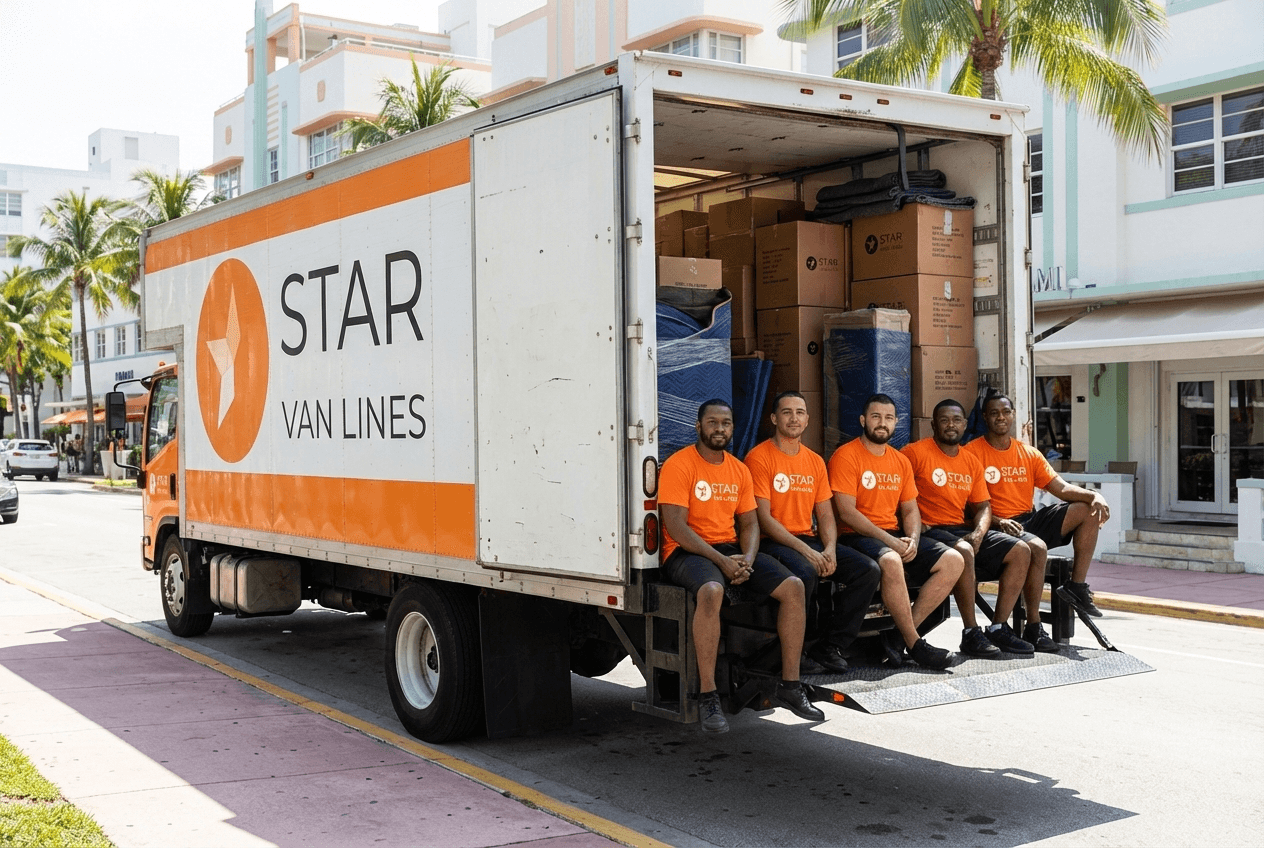
No state pulls in more out-of-state movers than Florida. About 573,876 people arrived from elsewhere in the country in 2024, the largest gross interstate inflow of any state, led by New York, Texas, and California and drawn by zero state income tax and the Sun Belt economy. The traffic runs both ways: roughly 506,200 residents left the same year, for a net gain near 67,600 (2024 ACS), second only to Texas. That volume keeps crews busy on Florida corridors all year long. Star Van Lines is a licensed interstate carrier, USDOT #4176875 and MC #1607491, and we've been moving households into and out of Florida since 2016, from the I-95 Atlantic artery down to Miami and west along I-10 toward Texas.
Our Florida moving services cover packing, loading, transport, delivery, and short-term storage at warehouse locations around the state. Because Florida runs from the Panhandle to the Keys, a ""local"" move can mean a cross-town hop in Tampa or a full-day haul from Jacksonville to Miami down I-95. High-rise condos in Miami and Fort Lauderdale need reserved freight elevators and HOA move-in windows, while gated coastal communities in Naples and Boca Raton enforce certificate-of-insurance rules. We handle all of it with the same coordinator and the same written estimate, from the first call through delivery.
Want an itemized price before moving day? Call (855) 822-2722 or use our online quote calculator. You'll get an estimate that breaks down every line item, so there aren't any surprises when the truck arrives. We're rated 4.0 on Trustpilot, 4.5 on Google, and 4.75 on Facebook across 240+ reviews.

Dennis has 15+ years of experience in interstate moving and has coordinated over 1,000 relocations across the United States.




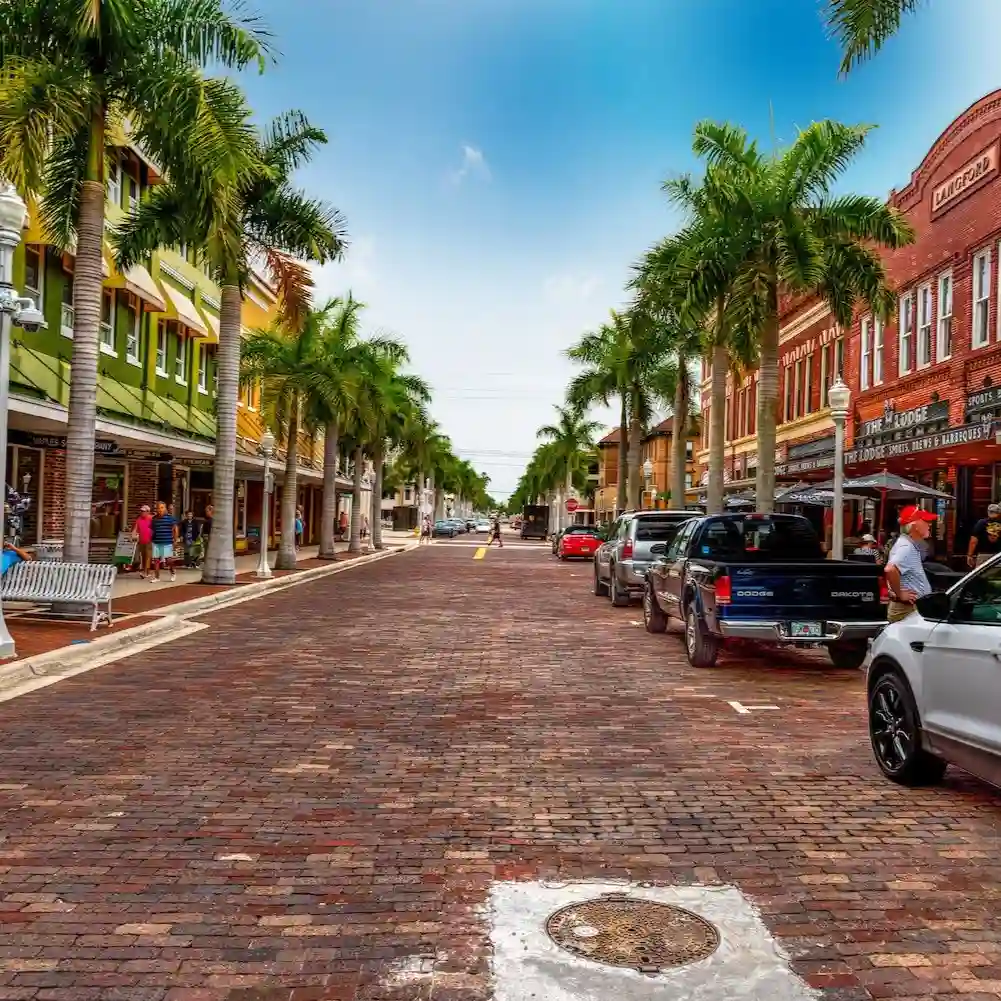
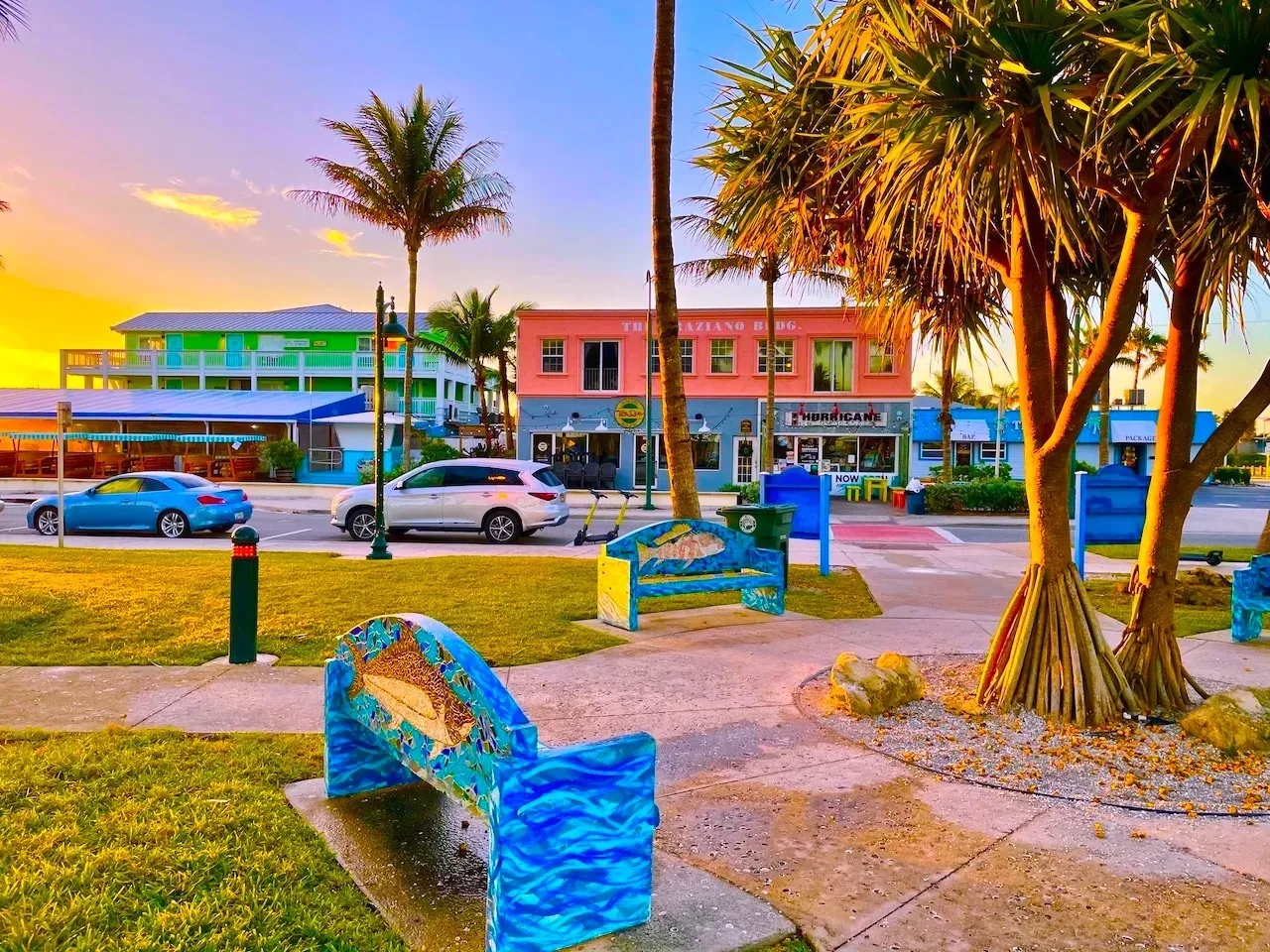



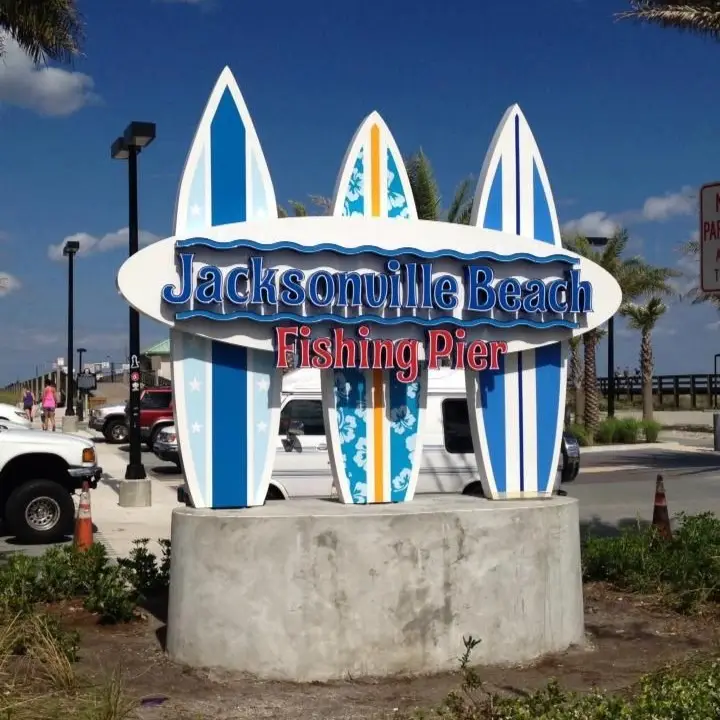


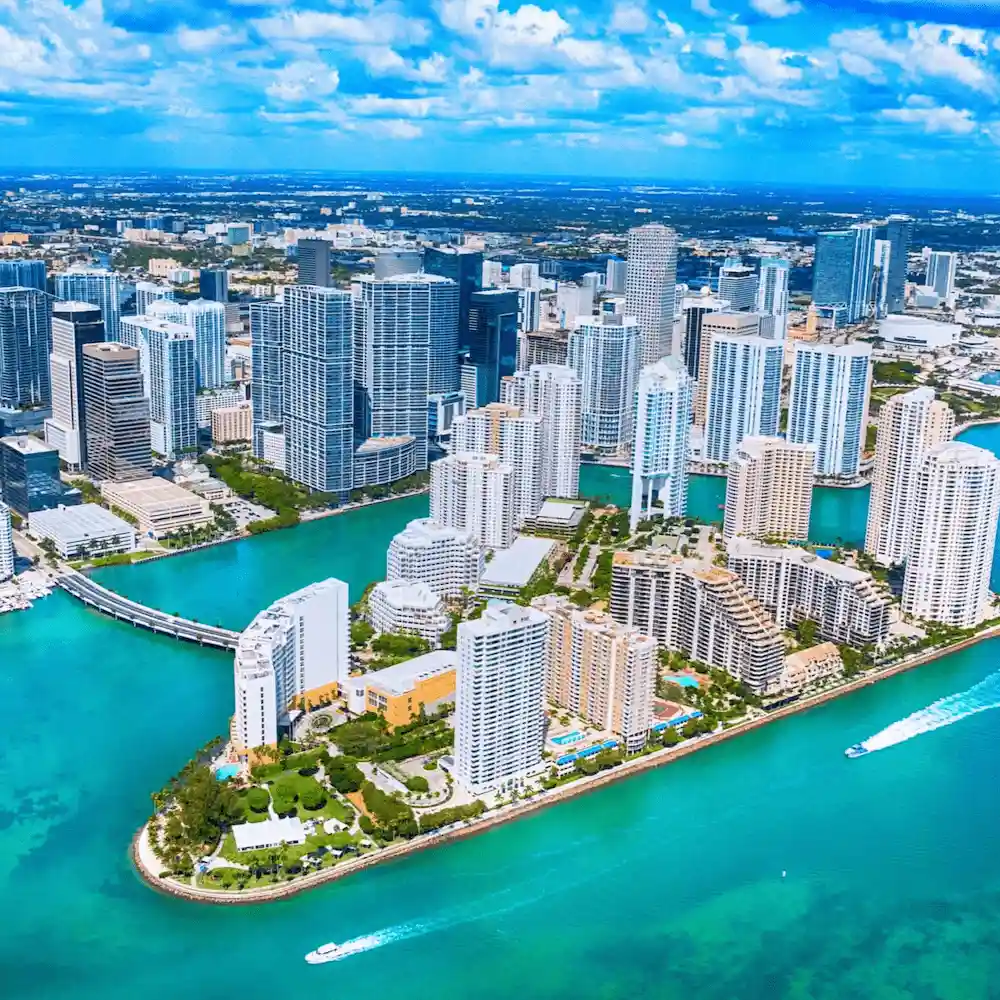
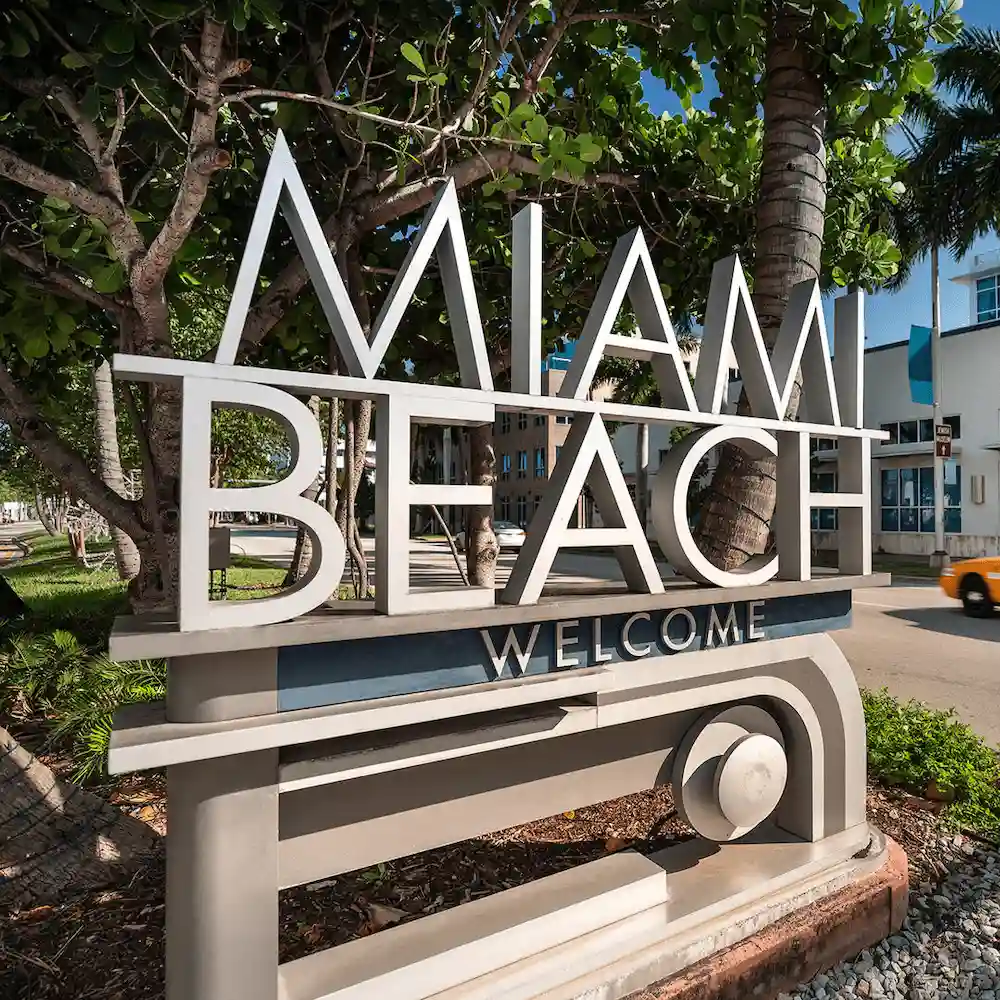



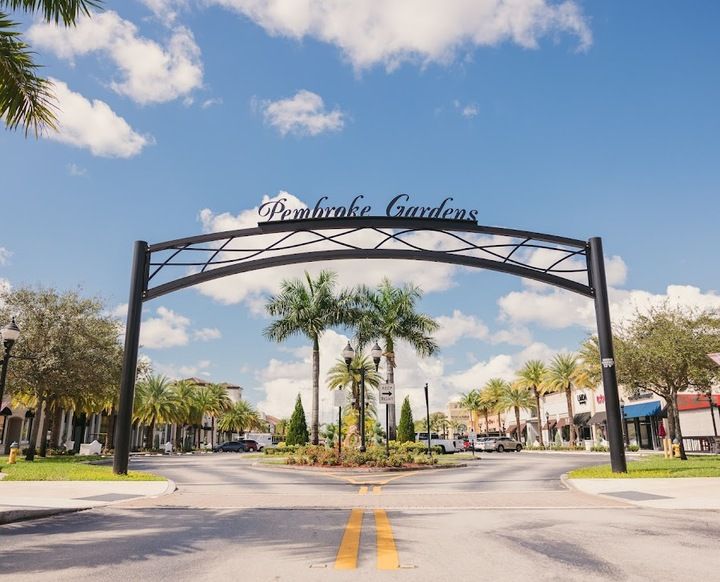

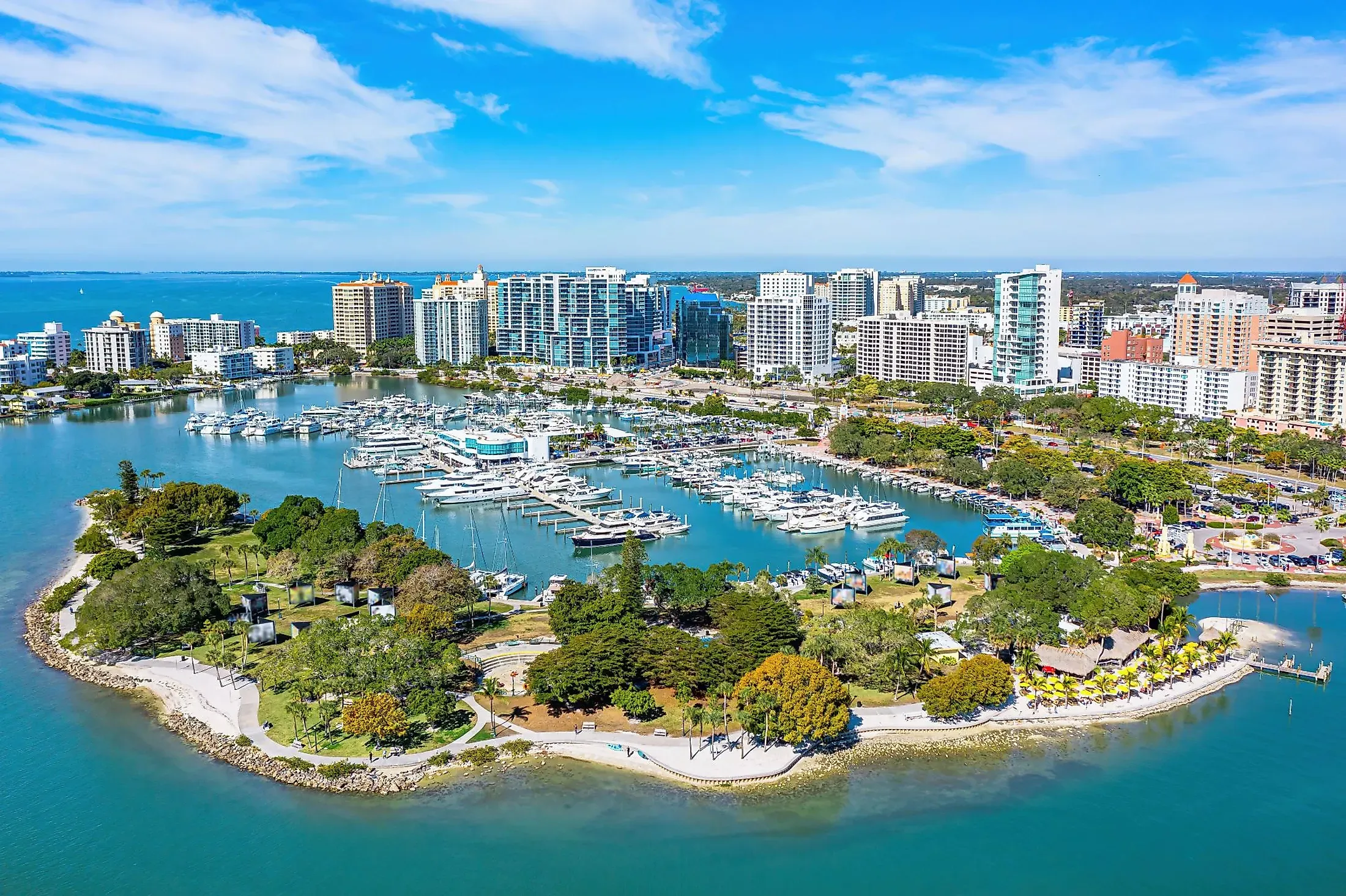

Moving services in Florida
Moving services in Florida
Star Van Lines provides local, long-distance, and interstate moving services across Florida. We handle packing, loading, transport, and delivery for residential and commercial moves. Because the state combines dense coastal high-rises, gated inland communities, and a hurricane season that runs from June through November, every Florida move needs route-specific and weather-aware planning. Every move includes a single coordinator, trained crew, and written estimate.
Local moving in Florida
Local moves within a Florida metro typically run 2-4 hours for a one-bedroom apartment, while moves into a Miami or Tampa high-rise take longer because of freight-elevator reservations and narrow HOA move-in windows. A two-person crew costs $115-$151 per hour; three movers run $141-$181. Heavy in-state lanes include Miami to Orlando and Miami to Tampa along Florida's Turnpike and I-4, each roughly 230 to 280 miles, plus Jacksonville to Miami down I-95. Because these intra-Florida moves fall in the lowest mileage tier, cost is driven mostly by volume, condo access, and elevator reservations rather than distance.
Long-distance moving from Florida
Most long-distance moves from Florida head north to New York and the Northeast or west to California and Texas. Miami to New York City runs about 1,276 miles up I-95, in the 1,000-to-1,500-mile coefficient band. Florida to California is a true cross-country lane at roughly 2,745 miles, and Florida to Texas along I-10 sits in the 1,000-to-1,400-mile range. Because the Atlantic hurricane season can trigger evacuation orders and congestion on I-95, I-75, and Florida's Turnpike from August through October, your coordinator tracks storm forecasts and adjusts load-out windows when a system is developing.
Packing and storage
We offer full-service packing, partial packing, and self-pack options. Full-service means our crew brings all materials and packs every room. Partial lets you choose which rooms we handle. Self-pack is the lowest-cost option. We have 43 warehouse locations nationwide for short-term and long-term storage. Florida's heat and year-round humidity make climate-controlled storage important for wood furniture, leather, electronics, artwork, and documents, which can warp, mildew, or corrode in non-conditioned units. And during the June-to-November hurricane season, storage set back from the coast also reduces flood and wind exposure between your move-out and move-in dates.
Auto transport and specialty items
We ship vehicles via open or enclosed carrier, and most Florida moves pair the household van with auto transport. New residents must title and register a vehicle within 10 days of establishing residency, one of the shorter windows in the country, so coordinating the car to land before that deadline matters. And Florida households also frequently ship boats, golf carts, and motorcycles, which need specialty crating and securement separate from the household-goods van. Because an out-of-state vehicle needs a one-time VIN verification before it can be titled, your coordinator helps you sequence the paperwork.
How much does moving in Florida cost?
Moving costs in Florida depend on whether you're relocating locally or across state lines. Local moves within Florida typically run $115-$151 per hour for a two-person crew with truck. Long-distance moves start at $920 for studio apartments and go up to $7,015 for large homes, depending on distance, weight, and access conditions. The five corridors below, from a 280-mile Miami-to-Tampa hop to a 1,278-mile run to New York, show how much distance moves the price.
Local moving rates
| Crew size | Hourly rate |
|---|---|
| 2 movers + truck | $115-$151 / hour |
| 3 movers + truck | $141-$181 / hour |
| 4 movers + truck | $183-$262 / hour |
Long-distance rates from Florida
| Move size | Estimated price range |
|---|---|
| Studio / 1 Bedroom | $920 - $1,725 |
| 2-3 Bedrooms | $1,610 - $3,852 |
| 4+ Bedrooms | $2,703 - $7,015 |
Popular routes and pricing from Florida
| Route | Distance | Avg cost (2-3 BR) |
|---|---|---|
| Miami to New York | 1,278 mi | $3,162 - $3,852 |
| Miami to Atlanta | 661 mi | $2,243 - $2,760 |
| Miami to Washington DC | 1,052 mi | $2,760 - $3,392 |
| Miami to Tampa | 280 mi | $1,610 - $1,955 |
| Jacksonville to Atlanta | 345 mi | $1,725 - $2,128 |
Pricing reflects market averages for moves in and from Florida as of June 2026. Your final price depends on inventory weight, packing level, access at pickup and delivery, and scheduling flexibility. Call (855) 822-2722 or use our free quote calculator for an exact estimate.
What affects your moving price
- Shipment weight and volume are the biggest factors for any long-distance move from Florida.
- Distance drives the base price. Miami to Tampa is 280 miles; Miami to New York is nearly 1,300.
- Access at both ends matters. Freight-elevator wait times in Miami and Fort Lauderdale high-rises, long carries, stairs, and gated-community checkpoints in Naples and Boca Raton all add time.
- How much packing you want us to do. Full-service runs more than partial, and self-pack is the lowest option.
- When you move. Hurricane season runs June through November, and peak summer heat can affect scheduling, so the dry season from November through April is generally calmer.
- Add-on services like auto transport, climate-controlled storage, and specialty handling for boats, golf carts, and pianos come with their own pricing.
Moving routes from Florida
Moving to Florida: what you should know
A move to Florida involves more than logistics. You're trading state income tax for property insurance, and a northern winter for an Atlantic hurricane season. Below is a quick guide covering cost of living, access and logistics, climate and timing, and residency requirements that affect your move.
What it costs to move to Florida
Florida's cost of living index is 103.4 (US average = 100, BEA RPP 2024), just above the national average, so local moving labor runs close to the US norm. Expect $115-$151 per hour for a two-person crew in the Miami, Tampa, or Orlando metros. Building access adds cost along the coast. Many Miami and Fort Lauderdale condos require a certificate of insurance and a reserved freight elevator, and gated communities in Naples and Boca Raton limit truck access to scheduled windows. Median home value sits at $359,000 (Census ACS 2020-2024), and median monthly rent is $1,669. Although Florida has no state income tax, new owners should budget for homeowners and flood insurance, which is a significant recurring cost given the state's hurricane and storm-surge exposure. Median household income is $74,568.
Access and logistics
Florida's interstate network funnels almost all long-distance traffic onto a few arteries. I-95 runs the Atlantic coast and is the primary Northeast inbound and outbound route. I-75 carries Gulf-coast and Midwest traffic north through Georgia. I-10 crosses the Panhandle east to west toward Texas and the Southwest, I-4 is the Tampa-Orlando-Daytona central spine, and Florida's Turnpike is the Miami-to-Wildwood toll corridor. Coastal moves face their own constraints. High-rise condos in Miami, Fort Lauderdale, and Tampa require reserved freight elevators and strict HOA move-in windows, while gated communities in Naples and Boca Raton enforce certificate-of-insurance and access rules. Because summer humidity and afternoon thunderstorms roll in most days, crews favor early-morning load-outs to keep wood furniture and electronics out of the wet.
Climate and timing
Florida is the Sunshine State for a reason: Miami sees about 249 days with sun a year, summer highs near 91 degrees, and a mild January with lows around 61 (NOAA 1991-2020 normals). But the calendar that matters most for movers is the Atlantic hurricane season, June 1 to November 30, with the highest threat from mid-August through late October. During those weeks, coastal moves can hit short-notice weather delays, and evacuation orders can clog I-95 and I-75. The best window to move is November through April, the dry season after hurricane risk subsides and before peak summer heat and humidity. NOAA's records list 36 billion-dollar tropical cyclone events affecting Florida between 1980 and 2024, so timing a coastal move outside the peak weeks is worth the effort.
Residency and regulations
Florida gives new residents 30 days to get a Florida driver license (Fla. Stat. 322.031) but only 10 days to title and register a vehicle, one of the shorter registration deadlines in the country. The state requires no annual safety inspection and no emissions testing, though an out-of-state vehicle needs a one-time VIN verification before it can be titled. Vehicle insurance must come from a Florida-licensed agent before you register. Because the 10-day clock is tight, coordinate your vehicle paperwork early in the move.
What to know before moving to Florida
Benefits of moving to Florida
0,462,518 (Census V2025)
Population
$0,568
Median household income
0.4 (US = 100, BEA RPP 2024)
Cost of living index
0/year (Miami)
Days of sunshine
0% (no individual income tax)
State income tax
~0,876 in 2024 (largest gross of any state)
Interstate inflow
Florida is home to about 23.5 million people and added 8.9 percent to its population between 2020 and 2025 (Census V2025). The draw is easy to read in the tax code: there's no state income tax, no estate tax, and no tax on Social Security or pension income. Tourism and hospitality anchor the economy, with about 1.33 million people employed in the sector and 143.3 million visitors in 2025, while healthcare and aerospace round out the major industries. The migration math is striking. About 573,876 people moved in from other states in 2024, the largest gross interstate inflow in the country, against roughly 506,200 who left, for a net gain near 67,600 (2024 ACS), second only to Texas.
Is Florida a good place to live?
Florida offers no state income tax, warm winters, and a steady stream of jobs in tourism, healthcare, and aerospace. The trade-offs are real: hurricane risk drives up property and flood insurance, summer heat and humidity are relentless, and fast growth has pushed housing costs well above where they sat a decade ago. Whether it's a good fit depends on your budget, your tolerance for storm season, and how much you value year-round sun.
Tax environment
Florida is one of a handful of states with no individual income tax (Tax Foundation 2026; Florida Department of Revenue), which is the single biggest financial draw for movers from high-tax Northeast states. The average combined state and local sales tax is 7.02 percent (6 percent state plus about 1 percent local, up to 8.5 percent in some counties). The effective property tax rate is 0.78 percent, and the Save Our Homes rule caps annual assessed-value increases on a homestead at 3 percent or the change in CPI, whichever is lower, until the property is sold and reassessed at market value. And there's no estate tax and no inheritance tax. For a household leaving New York or New Jersey, the income-tax savings alone can reshape a monthly budget.
Housing market
Median home value in Florida is $359,000 (Census ACS 2020-2024), and median monthly rent is $1,669. About 67.6 percent of Florida households own their homes. Prices vary widely by market: waterfront South Florida and the Gulf-coast retirement metros run well above the statewide median, while inland and North Florida markets stay closer to it. The bigger budget surprise for many new owners isn't the mortgage. It's insurance. Hurricane and storm-surge exposure makes homeowners and flood coverage a major recurring cost in coastal counties, so it's worth getting quotes before you close.
Job market and economy
Tourism and hospitality anchor Florida's economy, employing about 1.33 million people and drawing 143.3 million visitors in 2025. Walt Disney World near Orlando is the largest single-site employer in the state at roughly 62,000 to 75,000 workers, and Publix, the Lakeland-based and employee-owned grocer, employs about 161,000 people in Florida. Healthcare is the second pillar, led by systems like AdventHealth, and the Space Coast supports aerospace and defense work at Lockheed Martin, L3Harris, and Blue Origin. And Florida's civilian labor force participation rate is 59.3 percent. Because so much hiring sits in tourism, healthcare, and aerospace, job seekers cluster around Orlando, Tampa Bay, and the I-4 corridor.
Safety and natural risks
Florida's dominant natural risks come from the water and the sky: hurricanes and tropical storms, storm surge, and inland flooding, plus severe thunderstorms, extreme heat, and sinkholes. The state's flat coastal geography makes flooding and storm surge the leading hazards. NOAA's records count 36 billion-dollar tropical cyclone events affecting Florida between 1980 and 2024. The practical takeaways for a move are straightforward. Time coastal relocations outside the mid-August-to-late-October peak when you can, carry flood insurance even outside designated flood zones, and watch evacuation routes along I-95 and I-75 during an active storm. And standard homeowners insurance doesn't cover flood, so a separate policy is usually necessary near the coast.
Who thrives in Florida?
Northeast transplants escaping high state income tax
New York led every state sending people to Florida in 2024, about 50,661 movers, with New Jersey and Illinois close behind. These households leave high-tax Northeast metros for Florida's zero state income tax, trading harsh winters for the Atlantic coast. Their moves run long-haul down I-95 and often pair household goods with vehicle transport.
Retirees and snowbirds settling the Gulf and Atlantic coasts
Florida has one of the nation's largest senior populations, with about 21.8 percent of residents aged 65 and over. Retirees relocate full-time or seasonally to Naples, Sarasota, and the Gulf coast for warm winters, no income tax, and no tax on Social Security or pension income. Since many are downsizing from northern family homes, they need careful packing of heirlooms and flexible storage during the transition.
Outbound Floridians heading to New York, Texas, and California
Florida's relocation traffic flows both ways: roughly 506,000 to 515,000 residents left the state in 2024, with New York, Texas, and California the leading destinations. They move for family, job transfers, or housing costs, which keeps long-distance lanes busy back up I-95 and west along I-10.
Working-age professionals chasing Orlando and Tampa job growth
Beyond retirees, Florida pulls in working-age professionals: total employment rose 3.7 percent from 2022 to 2023, with growth clustered around the Orlando tech and tourism economy and the Tampa Bay corridor. These movers come for healthcare, finance, aerospace, and tech roles, often into newer suburbs along I-4, and they need scheduling that fits a tight start date.
Luxury and high-rise condo households in Miami and Boca Raton
South Florida's coastal real estate, with a statewide median home value of $359,000 and far higher in waterfront markets, drives a steady stream of luxury-estate and high-rise condo moves in Miami, Fort Lauderdale, and Boca Raton. These clients need white-glove handling of art and high-value furniture, plus coordination with building management for certificates of insurance, reserved freight elevators, and narrow HOA move-in windows.
First week after moving to Florida: what to do
After your move to Florida, several tasks carry state-specific deadlines, and the vehicle deadline is one of the tightest in the country. New residents have just 10 days to title and register a vehicle and 30 days to get a Florida driver license. Here is a prioritized checklist.
- Get your Florida driver license.
New residents have 30 days to obtain a Florida driver license after establishing residency (Fla. Stat. 322.031). Bring proof of residency and your current out-of-state license to a service center. (flhsmv.gov)
- Title and register your vehicle.
This is the tight one. You have only 10 days to title and register a vehicle in Florida. An out-of-state vehicle first needs a one-time VIN verification (HSMV form 82042 or 82040), which a law enforcement officer, tax collector employee, or notary can complete.
- Line up Florida auto insurance.
Florida requires vehicle insurance from a Florida-licensed agent before you can title and register. Contact your insurer to re-rate your policy, since premiums can shift with the move and Florida has its own minimum coverage rules.
- Register to vote.
Florida offers online voter registration at registertovoteflorida.gov, plus tax collector offices, GoRenew license renewals, and mail or in-person filing with form DS-DE 39 at your county Supervisor of Elections office.
- Set up homeowners and flood insurance.
Florida's hurricane and storm-surge exposure makes property and flood coverage essential, especially near the coast. Standard homeowners policies don't cover flood, so you'll likely need a separate flood policy. Get quotes before you close.
- Forward your mail.
USPS Change of Address is free online at usps.com. Mail forwarding starts within 7-10 business days.
- Transfer medical records.
Contact your current providers before the move and find a new primary care physician in Florida. If you're on employer insurance, confirm your plan's Florida network before booking appointments.
- Update school records.
If you have children, request transcripts from the previous district and contact your new Florida district for enrollment requirements, registration deadlines, and the local school calendar.
Florida at a glance: schools, jobs, and things to do
Schools and universities
For families weighing districts, St. Johns County School District near St. Augustine consistently ranks at or near the top in Florida, with the state's highest math and English proficiency rates. Seminole County Public Schools around Sanford and Sarasota County Schools are also perennial top-rated A districts. The university system runs deep. The University of Florida in Gainesville is the public flagship, with about 55,000 to 56,000 students. The University of Central Florida in Orlando is the largest by enrollment at roughly 70,000 students, and Florida State University in Tallahassee is a major public research university. Because school quality varies by district, families relocating with children should confirm enrollment zones before signing a lease.
Major employers
Walmart is Florida's largest overall employer at about 107,000 workers statewide. Publix Super Markets, the employee-owned grocer headquartered in Lakeland, is the largest Florida-based private employer, with about 161,000 in-state employees. Walt Disney World near Orlando is the largest single-site employer at roughly 62,000 to 75,000, and AdventHealth, headquartered in Altamonte Springs, employs more than 37,000 across Central Florida. Aerospace and defense anchor the Space Coast, where Lockheed Martin, L3Harris, and Blue Origin run major operations. Tourism and hospitality remain the dominant industry, employing about 1.33 million people, with healthcare and aerospace as the fast-growing runners-up.
Attractions and recreation
Florida is the country's theme-park capital. Walt Disney World near Orlando is the largest theme-park destination in the world, with four parks including Magic Kingdom and EPCOT, and Universal Orlando Resort adds Universal Studios Florida, Islands of Adventure, and Epic Universe. On the Space Coast, the Kennedy Space Center Visitor Complex sits at NASA's Atlantic launch site. For the outdoors, Everglades National Park protects 1.5 million acres of subtropical wetland found nowhere else in the continental US, and the beaches run the length of both coasts, from Miami Beach and South Beach to the Florida Keys and Key West. That year-round warm-weather coastline is part of what keeps new residents arriving.
FAQ
Questions? Look here
Can’t find an answer? Call us
(855) 822-2722 or email
Local moving in Florida typically costs $115-$151 per hour for a two-person crew with truck. A standard three-bedroom home usually needs a larger crew and four to six hours, so most local moves land between $450 and $2,300 depending on home size and access. Add-ons like packing, disassembly, and long carries increase the total. Call (855) 822-2722 for an itemized estimate.
Long-distance moves from Florida start at $920 for studio apartments and go up to $7,015 for four-plus-bedroom homes. The final price depends on shipment weight, distance, and access at both ends. Star Van Lines provides written estimates so your price is clear before you book.
Search our USDOT number 4176875 on the FMCSA SAFER website (safer.fmcsa.dot.gov). This federal database confirms our operating authority, MC number 1607491, insurance status, and safety record. Any legitimate interstate mover should be able to provide a verifiable USDOT number.
Common surcharges include freight-elevator wait time and reserved-elevator fees in Miami and Fort Lauderdale high-rises, long-carry charges when the truck can't park close to the door, stair fees, and shuttle fees for gated communities that won't allow a full-size van inside. We disclose every potential charge in your written estimate before you book.
Federal law requires interstate movers to offer two levels: Released Value Protection (free, covers $0.60 per pound per item) and Full Value Protection (paid, covers repair, replacement, or cash settlement at current value). Star Van Lines is fully insured under USDOT #4176875 and can explain both options when you request a quote.
Florida gives new residents 30 days to get a Florida driver license (Fla. Stat. 322.031) and only 10 days to title and register a vehicle. The 10-day vehicle deadline is one of the shortest in the country, so handle the car paperwork first. An out-of-state vehicle also needs a one-time VIN verification before titling, and there's no annual safety inspection or emissions test in Florida.
Yes. Florida has no individual income tax, no estate tax, and no inheritance tax. What you'll pay instead is a 6 percent state sales tax (about 7.02 percent combined with local rates, up to 8.5 percent in some counties), a 0.78 percent effective property tax, and homeowners and flood insurance that runs high near the coast. The Save Our Homes rule caps annual homestead assessment increases at 3 percent until the home is sold.
Florida's cost of living index is 103.4 (US average = 100, BEA RPP 2024), just above the national average but well below the high-cost Northeast metros most inbound movers leave. Median home value is $359,000 and median monthly rent is $1,669 (Census ACS 2020-2024). For a household leaving New York or New Jersey, the absence of a state income tax often offsets Florida's housing and insurance costs.
The best window is November through April, the dry season after hurricane risk fades and before peak summer heat. The Atlantic hurricane season runs June 1 to November 30, with the highest threat from mid-August through late October, when coastal moves can face short-notice weather delays and evacuation traffic on I-95 and I-75. If you have to move during the season, build in schedule flexibility and watch the forecast.
Yes. We move vehicles on open or enclosed carriers, and Florida households often add boats, golf carts, and motorcycles, which need specialty crating separate from the household van. Because new residents must title and register a vehicle within 10 days, your coordinator times the auto transport so the car arrives in step with your paperwork. It's usually more economical to bundle vehicle shipping with your household goods than to book it separately.
They can, which is why climate-controlled storage is worth it for the right items. Year-round humidity and summer heat can warp wood, mildew leather and upholstery, and corrode electronics in a non-conditioned unit. If your delivery date isn't locked in, or you're storing between move-out and move-in, climate-controlled space protects furniture, artwork, and documents. During hurricane season, a facility set back from the coast also lowers flood and wind exposure.
High-rise and gated moves take extra coordination. Many Miami, Fort Lauderdale, and Boca Raton buildings require a certificate of insurance on file, a reserved freight elevator, and a move that fits inside a set HOA window, sometimes only a few hours on a weekday. Gated coastal communities in Naples and Boca Raton add access checkpoints and truck-size limits. Your coordinator handles the building paperwork and schedules the elevator before move day, so the crew isn't left waiting.
Ready to Start Your Florida Move?
Get a free moving estimate today. No obligation, no pressure.
Call us or fill out the form - we'll get back to you fast.
USDOT #4176875 | MC #1607491 | Licensed & Insured