Thank you for your feedback!
We will contact you shortly

Free consultation
Enter your phone number and we will call you back for a consultation on any moving and storage services
What Is Household Moving? Types, Costs and How It Works
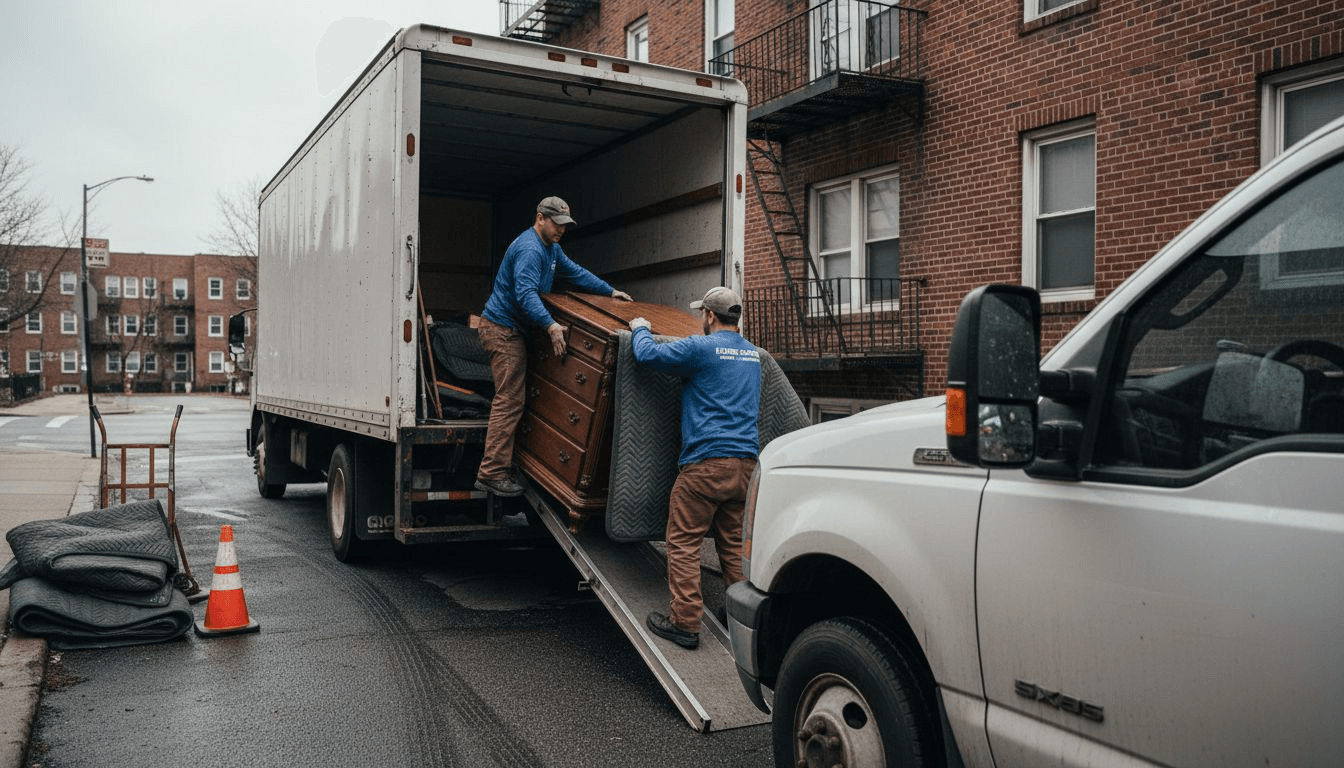
Household moving is the process of transporting personal belongings, furniture, appliances, and other items used in a home from one residence to another. A household move may involve basic loading, transportation, and unloading or include full-service packing, furniture disassembly, storage, unpacking, and special handling.



Household moving is the process of transporting personal belongings, furniture, appliances, and other items used in a home from one residence to another. A household move may involve basic loading, transportation, and unloading or include full-service packing, furniture disassembly, storage, unpacking, and special handling.
The exact moving process depends on the distance, shipment size, building access, services selected, and whether the move takes place within one state or crosses state lines. Understanding these differences can help you compare estimates, choose appropriate protection for your belongings, and avoid unexpected charges.
| Key Point | What You Should Know |
|---|---|
| Household moving | Covers personal property transported between residences |
| Move types | Include local, intrastate, interstate, cross-country, and international moves |
| Pricing | Local moves are often hourly, while interstate pricing considers distance, shipment size, and services |
| Protection | Full Value Protection and Released Value provide different levels of mover liability |
| Regulations | Interstate movers must be registered with the FMCSA, while local requirements vary by state |
What Is Considered a Household Move?
The Federal Motor Carrier Safety Administration defines household goods as personal items and property used, or intended to be used, in a home. These may include furniture, clothing, appliances, electronics, kitchenware, books, decor, and other personal belongings.
A household move usually involves transporting these items from one of the following residential properties:
- A single-family house
- An apartment
- A condominium
- A townhouse
- A dormitory
- A senior living residence
- A temporary residence
- A storage facility connected with a residential move
The terms "household moving" and "residential moving" are often used interchangeably. Commercial moving, however, is a separate service involving offices, stores, warehouses, equipment, documents, and other business property.
A household goods mover may provide transportation only or combine it with packing, inventory preparation, loading, unloading, storage, and specialty moving services.
What Do Household Moving Services Include?
The services included in a household move depend on the mover and the written estimate. Customers may choose basic transportation or request additional help for some or all stages of the relocation.
Common household moving services include:
- Virtual or in-home shipment assessment
- Moving estimate preparation
- Packing materials
- Partial or full packing
- Furniture wrapping and protection
- Furniture disassembly and reassembly
- Loading and unloading
- Household goods transportation
- Shipment inventory
- Short-term or long-term storage
- Unpacking and debris removal
- Special handling for fragile, heavy, or valuable items
Items such as pianos, safes, artwork, antiques, pool tables, and oversized furniture may require additional equipment and trained crews. Customers should identify these belongings before requesting an estimate and discuss any special moving requirements with the company.
Not every service is automatically included. Ask the mover to list packing, storage, stair carries, long carries, shuttle service, appliance handling, and other possible charges in writing.
Types of Household Moves
Household moves are commonly classified according to distance, state boundaries, destination, and property access.
Local Moving
A local move usually takes place within the mover's normal service area and can often be completed in one day. There is no universal federal mileage limit that defines every local move. The exact definition may depend on state regulations and the moving company's service terms.
Local moves are commonly priced according to:
- Number of movers
- Number of labor hours
- Truck and travel time
- Packing services
- Building access
- Additional equipment
Professional local moving services may be useful even for short distances when a move involves stairs, elevators, large furniture, restricted parking, or a tight schedule.
Intrastate Moving
An intrastate move takes place entirely within one state but may cover a significant distance. For example, a move between two cities in California is intrastate as long as the shipment does not cross a state boundary during transportation.
Licensing, estimates, rates, and consumer protection rules for intrastate moves vary by state.
Interstate Moving
An interstate move transports household goods from one state to another. Interstate household goods movers must have the appropriate federal operating authority and be registered with the FMCSA.
Interstate moves normally require more detailed planning because they involve:
- Federal transportation requirements
- Longer delivery windows
- Shipment weight or size
- Route coordination
- Inventory documentation
- Valuation selection
- Possible storage or transfer services
Customers planning an interstate relocation can explore long-distance moving services and request a written estimate based on the belongings and services involved.
Cross-Country Moving
A cross-country move is a long interstate relocation between distant regions of the United States. Although it is not a separate legal category, it usually involves longer transit times, more detailed inventory planning, and a greater possibility of temporary storage.
Apartment and High-Rise Moving
Apartment and high-rise moves may be local, intrastate, or interstate. Their complexity comes from property access rather than distance.
Possible requirements include:
- Elevator reservations
- Certificates of insurance
- Loading dock appointments
- Parking permits
- Restricted moving hours
- Long carries between the truck and residence
- Protection for hallways, elevators, and floors
Confirm the building's moving rules before selecting a date.
International Household Moving
International moves may involve ocean freight, air freight, customs documentation, destination regulations, and longer delivery periods. Pricing is commonly affected by shipment volume, transportation method, destination, customs requirements, and additional services.
How Does the Household Moving Process Work?
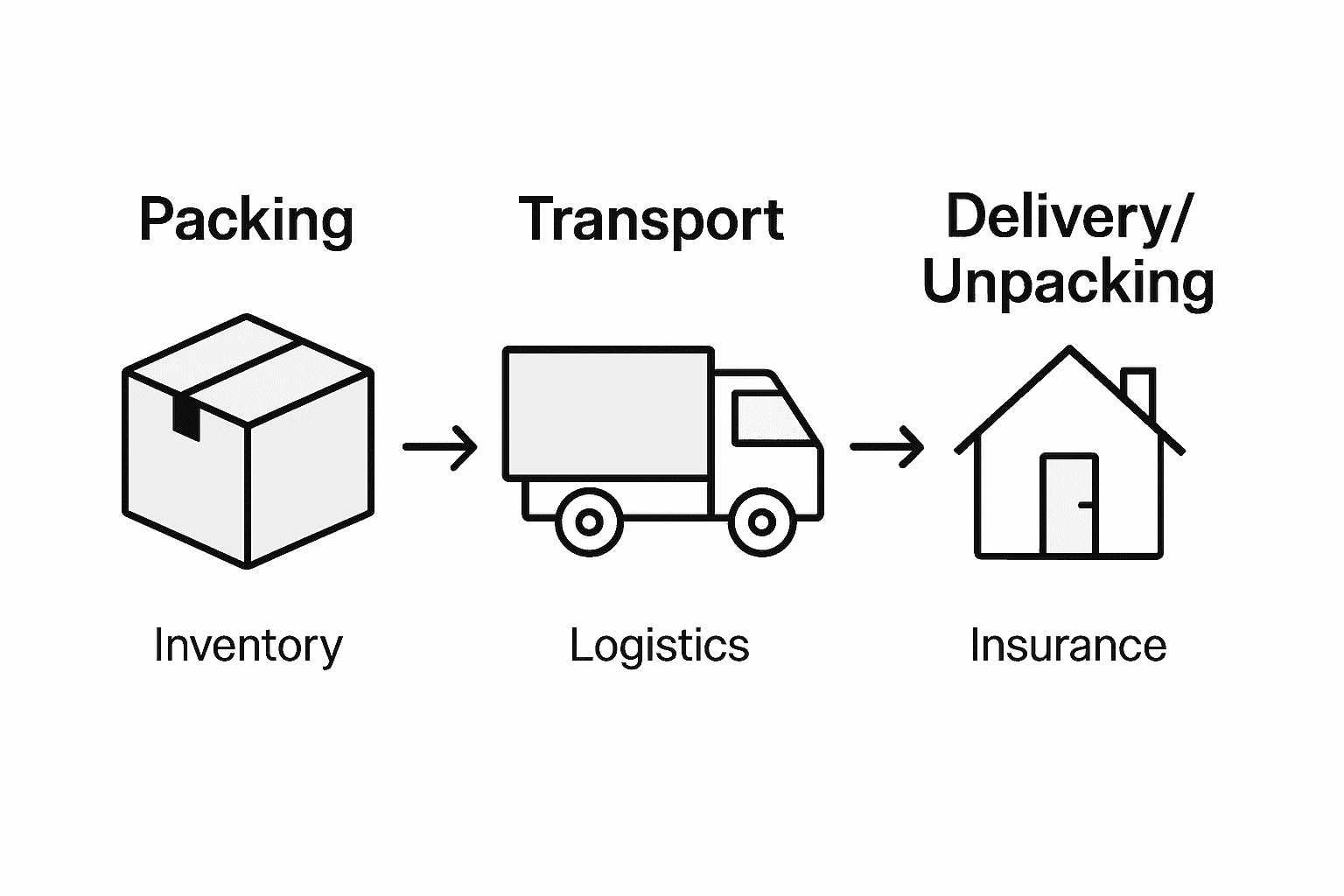
A professionally organized household move generally follows several stages.
1. Create a Household Inventory
Begin by listing the furniture, boxes, appliances, electronics, and specialty items that need to be moved. An accurate inventory helps the mover determine the required crew, truck space, equipment, and services.
This is also a good time to sell, donate, recycle, or discard belongings you no longer need.
2. Request a Moving Estimate
Provide complete information about:
- Origin and destination addresses
- Home size
- Inventory
- Stairs and elevators
- Parking and loading access
- Packing requirements
- Storage needs
- Oversized or fragile items
- Preferred moving dates
You can use the Star Van Lines moving cost calculator to prepare an initial estimate. The final price should be confirmed through a written estimate based on the actual details of the move.
3. Review the Estimate and Services
Check whether the estimate is binding or non-binding and confirm which services are included. Ask about possible charges for stairs, elevators, long carries, packing materials, storage, shuttle trucks, waiting time, and specialty items.
A binding estimate applies to the items and services listed in the agreement. Adding belongings or requesting extra services can change the final price.
4. Pack and Label the Shipment
Customers may pack their own belongings or hire professionals. Each box should be labeled with its destination room and general contents.
Fragile items require suitable wrapping, cushioning, and strong containers. Important documents, medication, jewelry, cash, keys, and irreplaceable personal items should normally remain with the customer.
5. Prepare the Home for Moving Day
Before the crew arrives:
- Clear hallways and entrances
- Reserve elevators
- Arrange parking
- Disconnect approved appliances
- Keep children and pets away from loading areas
- Separate items that should not be loaded
- Photograph valuable belongings
- Review the inventory and paperwork
6. Load and Transport the Household Goods
The moving crew protects furniture, organizes the shipment, and loads the truck according to weight distribution and handling requirements.
For interstate moves, customers should receive and review the bill of lading, inventory, valuation selection, and other required documentation before transportation begins.
7. Inspect the Shipment at Delivery
At the destination, compare delivered items with the inventory and inspect furniture, boxes, and appliances for visible damage or missing pieces.
Record any problems on the delivery paperwork and follow the mover's written claims procedure when necessary.
How Are Household Moving Costs Calculated?
There is no single price for every household move. The cost depends on how the move is organized and which services are requested.
| Cost Factor | How It Affects the Price |
|---|---|
| Move type | Local and interstate moves use different pricing structures |
| Shipment size | More belongings require more labor and truck space |
| Distance | Longer routes increase transportation costs |
| Labor | Crew size and working time affect local moving prices |
| Packing | Materials and professional packing add to the cost |
| Access | Stairs, elevators, long carries, and limited parking may increase labor |
| Specialty items | Pianos, safes, artwork, and oversized furniture require additional handling |
| Storage | Temporary or long-term storage creates additional charges |
| Moving date | Availability and demand can affect pricing |
Local household moves are often charged by the hour. Interstate moving prices are commonly influenced by shipment weight or size, distance, selected services, access conditions, and the mover's tariff.
Avoid relying on a generic online average as the final price. A detailed written estimate based on your inventory and addresses will provide a more useful calculation.
Full Value Protection vs. Released Value
Moving valuation is frequently called "moving insurance," but the terms are not identical. For interstate moves, federal rules require movers to offer two levels of liability.
Full Value Protection
Under Full Value Protection, the mover is responsible for the replacement value of lost or damaged goods in the shipment. Depending on the circumstances and the mover's terms, the mover may:
- Repair the damaged item
- Replace it with a comparable item
- Offer a cash settlement for repair or current replacement value
Items of extraordinary value may need to be declared separately. Customers should request written information about deductibles, coverage limits, exclusions, and the claims process.
Released Value
Released Value is provided at no additional charge but offers minimal protection. The mover's responsibility is limited to no more than $0.60 per pound per article.
For example, if a television weighing 25 pounds is lost or destroyed, the maximum compensation under Released Value would be $15, regardless of the television's actual value.
Customers selecting Released Value must confirm that choice on the bill of lading or moving contract. Separate third-party moving insurance may also be available, but it is different from the mover's valuation responsibility.
Additional information is available in the FMCSA liability and protection guide.
Legal Requirements for Household Movers
Federal and state requirements depend on where the shipment is transported.
Interstate household goods movers must be registered with the FMCSA and have an active USDOT number. Customers can use the FMCSA Registered Mover Database to review registration status, operating authority, company information, complaints, and available safety information.
Movers operating entirely within one state are generally regulated by state or local authorities. Licensing requirements can differ considerably, so customers should check with the appropriate state agency.
Before booking an interstate move, verify:
- The mover's legal business name
- USDOT number
- Interstate operating authority
- Whether the company is a carrier or broker
- Physical business address
- Written estimate terms
- Valuation options
- Cancellation policy
- Claims procedure
A moving broker arranges transportation but does not transport the shipment using its own crew and truck. Confirm whether you are working directly with a household goods carrier or with a broker before signing an agreement.
Customers moving between states should also receive the FMCSA publication "Your Rights and Responsibilities When You Move."
How to Choose a Household Moving Company
Do not select a mover based only on the lowest advertised price. Compare the scope of service, company credentials, estimate terms, and customer feedback.
Use this checklist when evaluating household movers:
- Verify federal or state registration
- Confirm whether the company is a mover or broker
- Request a written estimate
- Provide a complete inventory
- Compare equivalent services
- Review valuation options
- Ask about additional charges
- Read recent moving company reviews
- Avoid large cash deposits
- Never sign incomplete documents
- Keep copies of estimates, inventories, and contracts
Be cautious if a company provides an unusually low estimate without reviewing the shipment, refuses to provide registration information, requests payment through an untraceable method, or asks you to sign blank paperwork.
Common Household Moving Mistakes
Many moving problems begin before moving day. Careful preparation can reduce delays, disputes, and unexpected expenses.
Underestimating the Shipment
Leaving furniture, boxes, storage areas, garages, or outdoor equipment off the inventory can lead to an incorrect estimate and insufficient truck space.
Comparing Prices Without Comparing Services
One estimate may include packing, materials, stairs, and furniture assembly while another covers only loading and transportation. Compare the complete service package rather than the total alone.
Ignoring Building Access
Elevator restrictions, loading dock schedules, parking rules, and long walking distances can affect both timing and cost.
Confusing Valuation With Insurance
Do not assume that every damaged item will automatically be reimbursed at its purchase price. Review the selected valuation option and declare high-value items when required.
Failing to Verify the Mover
For interstate moves, check the company's USDOT number and operating authority. For intrastate moves, verify the applicable state license.
Packing Prohibited Items
Movers may refuse hazardous materials such as gasoline, propane, fireworks, ammunition, paint, chemicals, and certain batteries. Policies for plants, food, medication, and other sensitive items vary, so request a prohibited-items list in advance.
Plan Your Household Move With Star Van Lines
A successful household move begins with an accurate inventory, a clearly defined service plan, and a written estimate. Understanding the difference between local, intrastate, and interstate moving can help you choose the correct mover and protection for your belongings.
Star Van Lines provides household moving solutions for local and long-distance relocations. Depending on your needs, the moving plan may include packing, loading, transportation, unloading, storage coordination, and special handling.
Use the moving cost calculator to begin planning your budget or contact Star Van Lines for an estimate based on your inventory, addresses, access conditions, and preferred moving date.
Frequently Asked Questions
What is the difference between household moving and residential moving?
Household moving and residential moving generally describe the same process: transporting personal belongings from one residence to another. "Household goods moving" is also used in federal regulations when discussing professional carriers that transport personal property for customers.
What is included in household moving services?
Services may include an estimate, packing materials, packing, furniture protection, loading, transportation, unloading, unpacking, storage, and furniture assembly. The exact services depend on the written estimate, so customers should confirm what is included before booking.
How far in advance should I book household movers?
Booking four to eight weeks in advance is generally advisable. More time may be needed during summer, at the end of the month, around holidays, or for interstate and cross-country moves. Complex relocations involving storage, high-rise access, or specialty items should also be scheduled earlier.
Are all household movers regulated by the FMCSA?
No. The FMCSA regulates interstate household goods movers. Companies operating entirely within one state are usually regulated by state or local authorities. Interstate customers should verify the mover's USDOT number and operating authority through the FMCSA database.
How are local household moves priced?
Local moves are commonly priced by the hour. The final amount may depend on crew size, total labor time, travel time, home access, packing, materials, and specialty items. Pricing rules vary by state and moving company.
How are interstate household moves priced?
Interstate pricing is commonly affected by shipment weight or size, transportation distance, selected services, access conditions, storage, and the mover's tariff. An accurate inventory and written estimate are necessary for a reliable price comparison.
What items will household movers not transport?
Most movers prohibit hazardous materials such as gasoline, propane, fireworks, paint, and certain chemicals. Policies for food, plants, medication, valuables, and batteries vary. Ask the moving company for its prohibited-items list before packing.
What should I check before signing a moving contract?
Verify the company's registration, confirm whether it is a carrier or broker, review the inventory, check all included services, understand possible additional charges, select a valuation option, and read the cancellation and claims policies. Never sign blank or incomplete documents.
Related Moving Resources


Artur Shakhnazarov
PR Manager
Love Doing PR for my Company