Thank you for your feedback!
We will contact you shortly

Free consultation
Enter your phone number and we will call you back for a consultation on any moving and storage services
How to Ship a Car Safely When Moving to Another State
Moving to another state involves more than packing boxes and loading furniture. You also need to decide how your vehicle will reach your new home. Driving it yourself may be practical for a shorter move, but professional car shipping can save time, reduce mileage, and simplify a long-distance relocation.
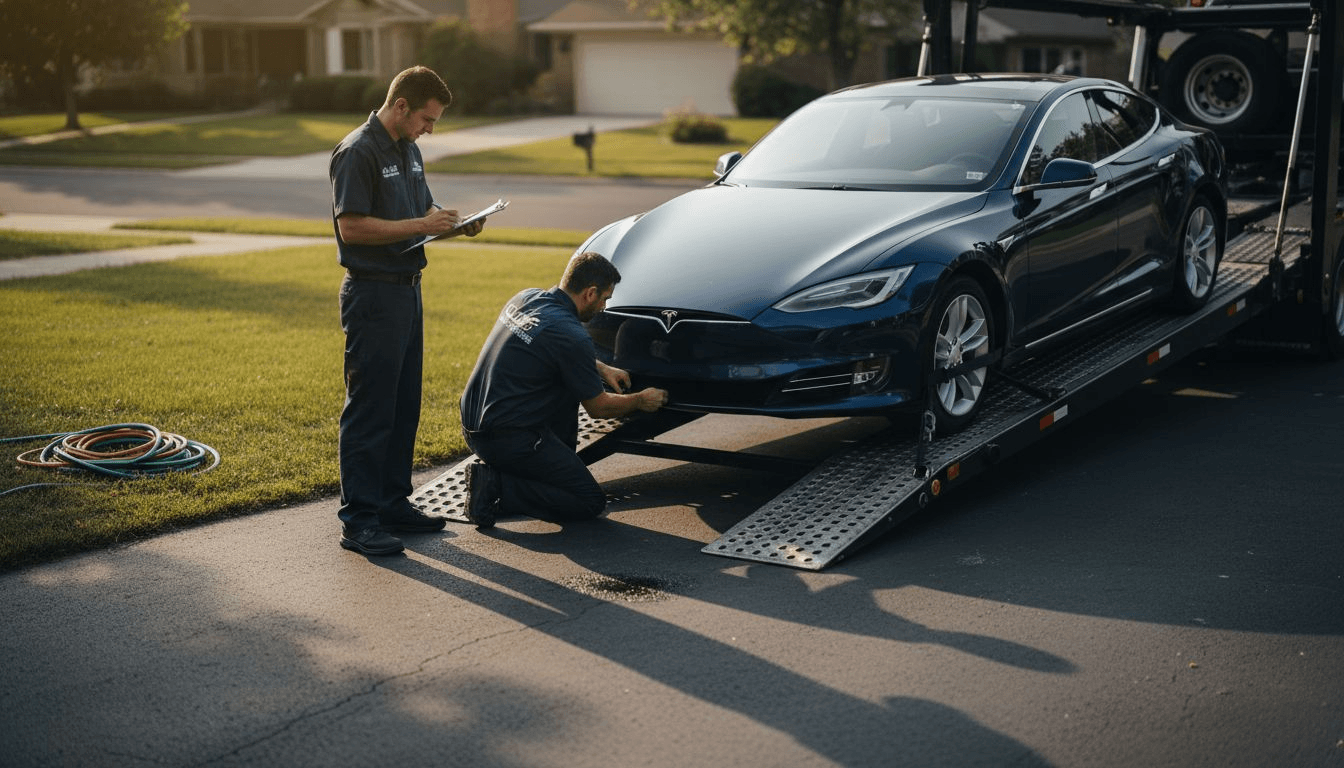


Moving to another state involves more than packing boxes and loading furniture. You also need to decide how your vehicle will reach your new home. Driving it yourself may be practical for a shorter move, but professional car shipping can save time, reduce mileage, and simplify a long-distance relocation.
The safest approach is to understand who will transport your vehicle, compare open and enclosed carriers, verify licensing and insurance, prepare the car correctly, and document its condition before pickup.
If you are planning a household move and need help transporting your vehicle, explore the car shipping services available through Star Van Lines Movers.
How Interstate Car Shipping Works
Interstate car shipping generally follows six steps:
- Request a quote based on the pickup location, destination, vehicle details, and preferred transport method.
- Review the estimated price, pickup window, delivery window, insurance information, and payment terms.
- Confirm whether you are booking directly with a motor carrier or through a broker.
- Prepare the vehicle and document its condition.
- Inspect the car with the driver at pickup and sign the Bill of Lading.
- Inspect the vehicle again at delivery before signing the final paperwork.
A moving company may transport the vehicle using its own equipment or coordinate transportation with a qualified auto carrier. Ask who will physically handle the car and request the carrier's identifying information before pickup.
Professional coordination can be especially useful when car shipping is part of a larger interstate or long-distance move. It allows the household shipment and vehicle transportation timelines to be planned together, even if they are handled by different trucks or carriers.
Moving Company, Broker, or Carrier: Who Handles Your Car?
The terms moving company, broker, and carrier are often used interchangeably, but they describe different roles.
Moving company
A moving company primarily handles household goods. It may also offer vehicle transportation, either directly or through a separate auto transport provider.
Auto transport broker
A broker arranges transportation between the customer and an authorized motor carrier. The broker normally does not load, drive, or take possession of the vehicle.
Motor carrier
The motor carrier physically transports the vehicle. Its driver is generally responsible for pickup, loading, securement, transit, delivery, and the vehicle condition report.
Before booking, ask:
- Are you the carrier or the broker?
- Which company will physically transport my vehicle?
- When will I receive the carrier's USDOT and operating authority information?
- Who should I contact during transit?
- Who handles a damage claim if something goes wrong?
Knowing these roles helps you understand who is responsible at every stage of the shipment.
Open vs. Enclosed Car Shipping
Most customers choose between open and enclosed auto transport.
| Feature | Open transport | Enclosed transport |
|---|---|---|
| Trailer type | Open multi-vehicle carrier | Covered trailer |
| Cost | Usually lower | Usually higher |
| Availability | Widely available | More limited |
| Weather exposure | Exposed to normal road and weather conditions | Protected from direct weather and road debris |
| Best for | Standard daily-use vehicles | Luxury, classic, exotic, modified, or high-value vehicles |
| Scheduling | Usually more flexible | May require additional lead time |
Open car transport
Open transport is the standard option for most passenger vehicles. Several cars are loaded onto an open trailer, allowing carriers to divide operating costs among multiple customers.
The vehicle remains exposed to rain, dust, insects, and normal road conditions. However, open transport is widely used and can be a practical choice for a standard car.
Enclosed car transport
Enclosed transport places the vehicle inside a covered trailer. It provides additional protection from weather, road debris, and public exposure.
This option may be appropriate when shipping:
- a classic or collector car;
- a luxury or exotic vehicle;
- a restored automobile;
- a car with low ground clearance;
- a modified or custom-painted vehicle;
- a vehicle whose value may exceed standard coverage limits.
Enclosed shipping reduces exposure, but it does not eliminate every transportation risk. Inspection documentation and appropriate insurance remain important.
Door-to-Door vs. Terminal-to-Terminal Shipping
Door-to-door shipping
With door-to-door service, the carrier collects and delivers the vehicle as close as legally and safely possible to the requested addresses.
A large car carrier may not be able to enter:
- narrow residential streets;
- gated communities;
- roads with low bridges or tree branches;
- streets with weight restrictions;
- congested downtown areas;
- locations without safe loading space.
In these cases, the driver may arrange a nearby parking lot or another accessible meeting point.
Terminal-to-terminal shipping
Terminal-to-terminal shipping requires the customer to leave and collect the vehicle at designated facilities. It may sometimes reduce transportation costs, but storage charges and additional travel can offset the savings.
Terminal service is also less widely available than door-to-door transport. Confirm terminal locations, operating hours, storage policies, and pickup deadlines before selecting this option.
How Much Does It Cost to Ship a Car to Another State?
There is no universal flat rate for interstate car shipping. Many standard shipments may cost approximately $600 to $2,000 or more, while long cross-country routes, enclosed trailers, oversized vehicles, and expedited service can exceed that range.
Use these figures only as general planning estimates. The final price depends on the details of the shipment and current carrier availability.
The primary pricing factors include:
Distance and route
Longer distances usually increase the total price. However, the rate per mile may decrease on longer, frequently traveled routes.
Shipping between major cities can cost less than transporting a vehicle to or from a remote area because carriers are more likely to have other vehicles moving along popular routes.
Vehicle size and weight
A large SUV, pickup truck, or van occupies more trailer space and adds more weight than a compact car. This can increase the price.
Vehicle condition
An inoperable vehicle may require a winch or other loading equipment. Always disclose whether the car can:
- start;
- steer;
- roll;
- brake under its own control.
An inaccurate description may cause delays or additional charges at pickup.
Open or enclosed transport
Enclosed transport normally costs more because fewer vehicles fit inside the trailer and specialized equipment may be required.
Season and carrier availability
Rates can increase during periods of high demand, including summer moving season and popular seasonal relocation routes.
Pickup and delivery flexibility
A flexible pickup window gives the transport provider more opportunities to match your vehicle with an available carrier. Expedited pickup or a narrow delivery requirement generally costs more.
Vehicle modifications
Lift kits, oversized tires, roof racks, lowered suspension, and other modifications may affect loading and trailer space. Provide accurate measurements and photos when requesting a quote.
How Long Does Interstate Car Shipping Take?
Transit time depends on mileage, traffic, weather, driver hours, route demand, pickup accessibility, and the number of scheduled stops.
As a general planning estimate:
| Route type | Estimated transit time after pickup |
|---|---|
| Short interstate route | Approximately 1-3 days |
| Medium-distance route | Approximately 3-6 days |
| Cross-country route | Approximately 7-10 days |
| Remote or difficult route | May require additional time |
Pickup and delivery windows are different from exact appointment times. Carriers must account for traffic, weather, inspections, mechanical problems, and earlier customer stops.
Do not schedule an important appointment immediately after the estimated delivery date. Keep a backup transportation plan in case the carrier arrives later than expected.
How to Prepare Your Car for Shipping
Correct preparation reduces delays and makes it easier to identify any transportation-related damage.
1. Wash the exterior
A clean vehicle makes scratches, dents, chips, and paint damage easier to see during inspection.
2. Photograph the vehicle
Take clear, date-stamped photos from multiple angles, including:
- front and rear;
- both sides;
- roof;
- wheels;
- windshield and windows;
- existing scratches, dents, and paint damage;
- odometer;
- fuel level.
Keep the original image files until the shipment and any potential claim are complete.
3. Remove personal belongings
Auto transport coverage generally does not protect personal property left inside the vehicle. Loose items can move during transit, damage the interior, add weight, or violate the carrier's policy.
Remove:
- electronics;
- documents;
- cash and valuables;
- toll transponders;
- removable GPS devices;
- child seats;
- loose accessories;
- garage door openers;
- personal luggage.
If a carrier allows limited personal property, request the rules and weight limit in writing.
4. Leave only a small amount of fuel
A partially filled tank is normally sufficient for loading and unloading while keeping vehicle weight lower. Follow the carrier's specific fuel-level instructions.
5. Check for leaks and mechanical issues
Tell the carrier about fluid leaks, weak brakes, steering problems, low ground clearance, or other conditions that could affect loading.
6. Secure removable parts
Retract or remove antennas, fold mirrors when possible, close convertible tops, and secure spoilers, roof racks, and custom accessories.
7. Disable alarms
Deactivate alarm systems or provide clear instructions for turning them off.
8. Keep the vehicle accessible
Provide the keys required to start, steer, unlock, and operate the car. Do not leave unnecessary house or office keys attached.
Vehicle Inspection and the Bill of Lading
The Bill of Lading is one of the most important documents in the shipping process. It can serve as:
- the transportation receipt;
- a summary of shipment terms;
- a vehicle condition report;
- proof of pickup and delivery;
- supporting evidence for a damage claim.
At pickup, inspect the vehicle with the driver. Make sure all existing damage is recorded before signing.
At delivery:
- Inspect the car in good lighting.
- Compare it with your pickup photos and condition report.
- Check the body, windows, roof, wheels, mirrors, and undercarriage where visible.
- Start the vehicle and look for warning lights or obvious operational problems.
- Record any new damage on the Bill of Lading before signing.
- Take photographs immediately.
- Request a copy of the signed delivery paperwork.
Signing an unmarked delivery receipt may make a later claim more difficult.
Licensing, Operating Authority, and Insurance
A USDOT number identifies a registered transportation company and can be used to review certain safety and company information. However, a USDOT number alone does not necessarily prove that a company has the operating authority required for a specific for-hire interstate service.
Operating authority is commonly associated with an MC, FF, or MX number and determines the type of transportation activity a company is permitted to perform. Brokers and carriers have different registrations and responsibilities.
Before shipping your vehicle:
- Obtain the legal name of the broker and carrier.
- Request the USDOT and MC numbers when applicable.
- Verify whether the operating authority is active.
- Confirm whether the company is listed as a broker or carrier.
- Request an insurance certificate.
- Review the coverage limit, exclusions, deductible, and claim procedure.
- Confirm whether coverage applies per vehicle or per shipment.
Insurance requirements vary by company type, operating authority, cargo, and vehicle. Cargo coverage is not universally mandated for every property carrier, so customers should never assume that a vehicle is fully protected without reviewing the actual policy and contract.
You can verify a carrier or broker through the FMCSA Licensing and Insurance system. FMCSA also explains the distinctions between motor carriers and brokers.
Common Car Shipping Mistakes to Avoid
Choosing the lowest quote without verification
An unusually low estimate may not include all charges or may be difficult to match with an available carrier. Compare the full terms, not only the initial price.
Confusing an estimate with a guaranteed price
Ask whether the quote is binding and what circumstances may change the total. Vehicle size, condition, route changes, personal items, and expedited service may affect pricing.
Not identifying the actual carrier
If you book through a broker, request the carrier's details before pickup. Do not rely only on the broker's registration or insurance information.
Skipping the vehicle inspection
Without detailed pickup documentation, proving that damage occurred during transportation may be difficult.
Leaving valuables inside the car
Personal belongings may be restricted and are usually not protected by auto transport cargo coverage.
Expecting an exact delivery time
Long-distance transportation involves variables that cannot always be predicted. Treat delivery dates as estimates unless the contract explicitly guarantees them.
Failing to read the cancellation policy
Check deposit terms, cancellation deadlines, refund conditions, rescheduling fees, and what happens if a carrier is not assigned.
What to Do If Your Car Is Damaged During Shipping
If you discover new damage at delivery:
- Do not sign an unmarked Bill of Lading.
- Describe the damage clearly on the delivery paperwork.
- Take detailed photographs and video.
- Keep copies of the pickup and delivery condition reports.
- Notify the carrier and broker immediately.
- Request written claim instructions.
- Obtain repair estimates if required.
- Keep all emails, messages, receipts, and contracts.
Follow the deadline stated in the shipping agreement. Waiting too long or signing paperwork that confirms damage-free delivery can complicate the claim.
Coordinate Your Household Move and Car Shipping
Managing household goods and vehicle transportation separately can create scheduling conflicts. Coordinating both services through an experienced relocation provider can make it easier to plan pickup windows, delivery expectations, temporary transportation, and communication.
Star Van Lines Movers provides professional car shipping solutions for customers planning interstate and long-distance relocations. Our team can help you compare available transport options, understand the shipping process, and coordinate your vehicle transportation with the rest of your move.
Request a personalized quote based on your route, vehicle, preferred shipping method, and moving schedule.
Frequently Asked Questions
What is the safest way to ship a car to another state?
Both open and enclosed carriers can transport vehicles safely when the carrier is properly registered, insured, and experienced. Enclosed transport provides additional protection from weather and road debris, making it a common choice for high-value, classic, exotic, or modified vehicles.
How much does it cost to ship a car to another state?
Many interstate car shipments may cost approximately $600 to $2,000 or more. Distance, route, vehicle size, condition, season, transport method, and carrier availability determine the final price.
How long does it take to ship a car across the country?
Many cross-country shipments take approximately 7-10 days after pickup. Pickup and delivery scheduling may add additional time, especially for remote locations or during high-demand periods.
Is open or enclosed car shipping better?
Open transport is more widely available and usually costs less. Enclosed transport offers additional protection and is generally better suited to classic, exotic, luxury, restored, or high-value vehicles.
Can I leave personal items inside my car?
Many carriers restrict personal property inside transported vehicles. Items left in the car may not be covered by cargo insurance. Remove valuables and ask the carrier for its written policy before pickup.
How much fuel should I leave in the vehicle?
Leave only enough fuel for loading and unloading, unless the carrier provides different instructions. A partially filled tank is normally sufficient and helps reduce transportation weight.
What documents do I need to ship a car?
Requirements vary, but you may need identification, vehicle registration, proof of ownership or authorization, booking confirmation, insurance information, and the Bill of Lading. Ask the provider about route-specific requirements before pickup.
How can I verify an auto transport company?
Check the company's legal name, USDOT number, operating authority, broker or carrier status, and insurance information through FMCSA. Make sure the company listed in the contract matches the entity you verified.
What happens if my car is damaged during transportation?
Document the damage on the Bill of Lading before signing, take photographs, notify the carrier and broker immediately, and follow the claim procedure stated in the contract.
Does door-to-door shipping mean the carrier will come directly to my house?
The carrier will normally get as close as legally and safely possible. Narrow streets, low branches, parking restrictions, and limited turning space may require pickup or delivery at a nearby accessible location.


Artur Shakhnazarov
PR Manager
Love Doing PR for my Company