Thank you for your feedback!
We will contact you shortly

Free consultation
Enter your phone number and we will call you back for a consultation on any moving and storage services
Employee Relocation Steps for Smooth Moves Across the US
Over one million Americans move for work each year, yet even seasoned companies can struggle with the details of employee relocation. Each American relocation brings a unique combination of costs, logistics, and adjustment challenges that can directly impact job satisfaction and productivity. This guide reveals the essential steps to building a seamless relocation plan, helping your business manage budgets, minimize stress, and support employee transitions from start to finish.



Over one million Americans move for work each year, yet even seasoned companies can struggle with the details of employee relocation. Each American relocation brings a unique combination of costs, logistics, and adjustment challenges that can directly impact job satisfaction and productivity. This guide reveals the essential steps to building a seamless relocation plan, helping your business manage budgets, minimize stress, and support employee transitions from start to finish.
| Key Point | Explanation |
|---|---|
| 1. Assess Relocation Needs and Budget | Conduct a needs assessment and create a budget to cover all potential relocation expenses |
| 2. Create a Detailed Moving Timeline | Develop a structured timeline with specific dates for tasks to minimize disruption |
| 3. Secure Professional Moving Services | Request quotes from experienced moving services to ensure proper handling |
| 4. Implement Employee Support Systems | Establish onboarding and support for smooth adaptation |
| 5. Conduct Post-Move Review | Address concerns and gather feedback for future relocations |
Step 1: Assess Relocation Needs and Set a Budget
Planning an employee relocation requires strategic thinking and meticulous financial preparation. Your initial goal is understanding the full scope of moving expenses while creating a realistic budget.
Start by conducting a needs assessment that evaluates the employee’s living situation, family considerations, and job requirements. Determine whether the relocation is temporary or permanent, as this directly affects financial planning.
Carefully analyze direct moving expenses such as transportation, packing services, and estimated costs using a professional moving cost calculator to establish a reliable baseline budget.
Typical relocation budgets range from $5,000 to $25,000, depending on distance and complexity. Break expenses into categories: transportation, housing, travel, professional services, and miscellaneous costs.
Typical Employee Relocation Expenses
| Expense Category | Typical Costs (USD) | Business Impact |
|---|---|---|
| Transportation | $2,000–$6,000 | Major direct cost |
| Temporary Housing | $1,000–$4,000 | Supports adjustment |
| Travel Allowance | $500–$2,000 | Covers employee trips |
| Professional Services | $1,000–$5,000 | Smooth logistics |
| Miscellaneous | $500–$2,000 | Covers unexpected needs |
Pro tip: Always include a 10% contingency buffer.
Step 2: Coordinate Moving Logistics and Timeline
Coordinating logistics transforms your relocation plan into action. The goal is a clear, structured timeline that minimizes disruption.

Create a detailed moving checklist that outlines tasks such as packing dates, transportation, workspace preparation, and equipment transfer. Industry experts from the Star Van Lines Movers blog recommend using a multi-week timeline broken into manageable stages.
Confirm moving dates early, complete all insurance and inventory documentation, and maintain continuous communication with movers, HR, and management.
Pro tip: Use a shared digital folder for all relocation documents.
Step 3: Secure Packing and Transportation Services
Professional packing and transportation services are critical for protecting employee belongings and maintaining schedules.
Request quotes from multiple professional packing and unpacking services that specialize in corporate relocations. Evaluate movers based on insurance coverage, experience, handling of sensitive equipment, and storage options.
Coordinate phased packing to allow the employee to remain productive. Ensure electronics and important documents receive extra protection and tracking.
Pro tip: Maintain a detailed inventory with serial numbers and estimated values.
Step 4: Support Employee Integration and Settling In
A successful relocation goes beyond moving boxes — it focuses on employee well-being and productivity.
Implement a structured onboarding and integration plan with regular check-ins during the first 30–90 days. According to recommendations from the Star Van Lines Movers blog, personalized welcome packages and local orientation resources significantly improve adjustment outcomes.
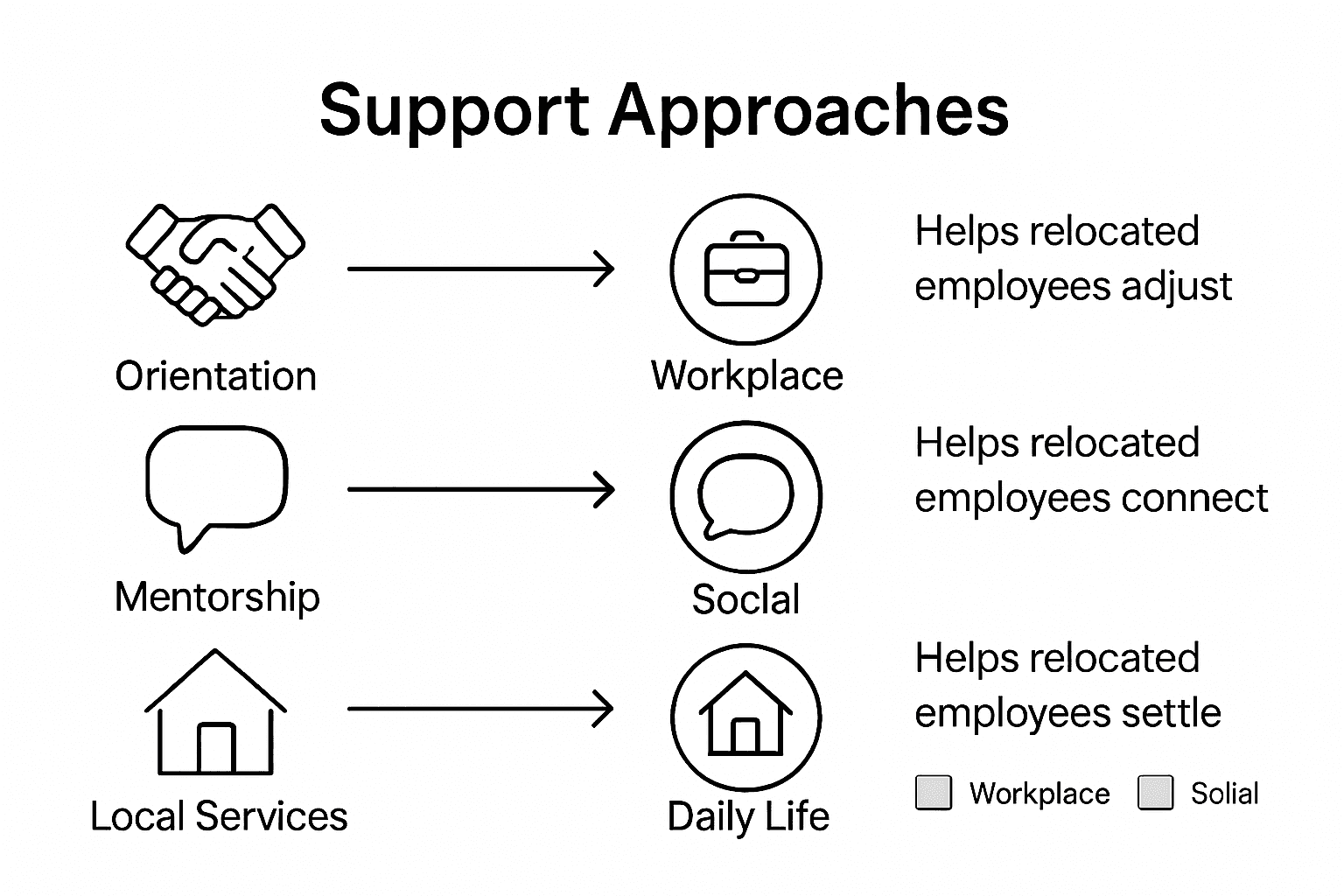
Employee Integration Support Comparison
| Support Approach | Focus Area | Benefit |
|---|---|---|
| Onboarding Sessions | Professional adaptation | Faster productivity |
| Local Orientation | Community integration | Easier settling |
| Mentorship Program | Social support | Reduced stress |
| Regular Check-ins | Ongoing communication | Faster issue resolution |
Pro tip: Create a customized 90-day integration checklist.
Step 5: Verify Completion and Address Final Concerns
The final step ensures the relocation process is fully complete and successful.
Schedule a review meeting within two weeks of move completion. Experts from the Star Van Lines Movers blog recommend collecting structured feedback to identify improvement opportunities.
Confirm that reimbursements are processed, documentation is complete, and any unresolved issues are addressed promptly. Maintain follow-up communication to support long-term integration.
Pro tip: Use a standardized post-relocation survey.
Make Your Employee Relocation Seamless With Expert Moving Solutions
Employee relocation involves budgeting, logistics, packing, timelines, and emotional support. Without professional coordination, these challenges can slow business operations.
Star Van Lines Movers provides end-to-end corporate relocation services, including insured transportation, professional packing, and precise scheduling. Use the moving cost calculator to plan your budget confidently.
Let Star Van Lines Movers guide your employee relocation from planning to settling in.
Frequently Asked Questions
What are the initial steps for employee relocation?
Begin by assessing relocation needs and creating a detailed budget.
How can I coordinate moving logistics effectively?
Use a structured timeline, checklist, and ongoing communication.
What should I consider when selecting packing services?
Focus on experience, insurance coverage, and handling of sensitive items.
How can I support an employee’s integration?
Offer onboarding plans, mentorship, and local orientation support.
How do I verify relocation completion?
Conduct a final review and gather employee feedback.
Recommended


Artur Shakhnazarov
PR Manager
Love Doing PR for my Company