Thank you for your feedback!
We will contact you shortly

Free consultation
Enter your phone number and we will call you back for a consultation on any moving and storage services
Why Hire Licensed Movers in California
Moving within California often means juggling schedules, packing up years of memories, and worrying about the safety of your belongings. For homeowners, the choice between professional movers can shape the entire experience. Knowing the difference between unlicensed operators and a truly licensed mover helps protect your valuables and ensures every step meets state standards. With strict insurance requirements and legal safeguards in place, **licensed movers** offer the peace of mind and reliability you deserve for a smooth, stress-free relocation.
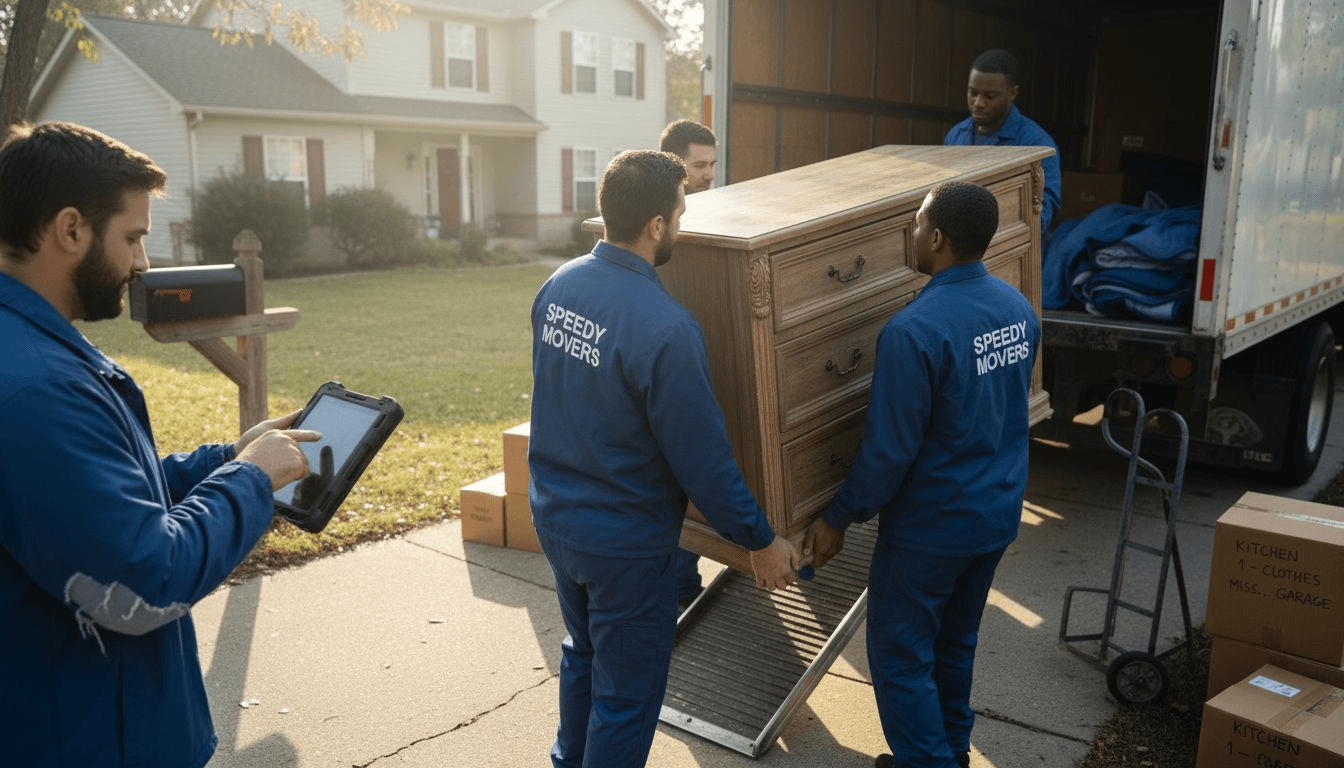


Hiring licensed movers in California gives you something an unusually low quote cannot: a clear contract, regulatory oversight, defined liability, and a way to file a complaint if something goes wrong. A license does not guarantee a damage-free move, but it confirms that the company is authorized to transport household goods and must follow applicable state or federal rules.
The license you need to verify depends on the route:
- For a move entirely within California, check the mover through the California Bureau of Household Goods and Services (BHGS).
- For a move from California to another state, check the mover through the Federal Motor Carrier Safety Administration (FMCSA).
- If a company handles both types of moves, it may need both state and federal authorization.
Before signing a contract, confirm the mover's legal name, license status, insurance information, written estimate, and responsibility for your belongings.
What Is a Licensed Moving Company?
A licensed moving company is legally authorized to transport household goods for payment. To receive and maintain that authority, the business must meet the requirements established by the agency regulating its type of move.
Depending on the route, a licensed mover may be required to:
- Maintain an active state or federal registration
- Carry required liability and cargo coverage
- Provide written estimates and moving documents
- Follow rules governing rates, contracts, claims, and delivery
- Maintain qualified drivers and registered vehicles
- Give customers information about their rights
- Participate in applicable complaint or dispute-resolution procedures
Licensing creates accountability. If a registered mover violates applicable regulations, customers can report the company to the appropriate agency. An unlicensed operator works outside this framework, which may make recovering money or resolving a claim significantly more difficult.
California Intrastate vs. Interstate Moving Licenses
California moves are not all regulated in the same way. The destination determines which license and database you should check.
| Type of move | Example | Primary regulator | What to verify |
|---|---|---|---|
| Intrastate move | Los Angeles to San Diego | California BHGS | Active household mover license or permit |
| Interstate move | Los Angeles to Phoenix | FMCSA | USDOT number and household goods operating authority |
| Move into California | Las Vegas to Los Angeles | FMCSA and applicable California requirements | Federal registration and any required state authorization |
| International move | California to another country | FMCSA and other transportation authorities | Carrier, broker, freight forwarder, and shipping credentials |
The important point is that a USDOT number and a California household mover license are not interchangeable. A company may be authorized for interstate transportation without being authorized to perform every type of intrastate move within California.
Licensing Requirements for Moves Within California
Household movers operating within California are licensed and regulated by the Bureau of Household Goods and Services. Consumers can use the BHGS license search to confirm whether a mover is authorized to operate and whether its status is active.
For moves within California, a legitimate mover should provide clear documentation before loading begins. This generally includes:
- The mover's legal business name and license information
- A written estimate based on a visual inspection of the goods
- A written agreement describing the requested services
- A "Not to Exceed" price
- Information about customer rights and available protection
- Written change orders for additional services requested later
The "Not to Exceed" amount is especially important. It establishes the maximum charge for the services listed in the agreement. If you request additional services, such as packing extra items or using a shuttle because a large truck cannot access the property, the mover may issue a written change order.
A mover should not use a change order simply because it underestimated the original job. Review every change carefully and do not sign blank or incomplete documents.
Federal Requirements for Interstate Movers
An interstate move crosses a state line. For example, moving from California to Nevada, Arizona, Oregon, or Texas is an interstate move regulated at the federal level.
Interstate household goods movers must be registered with the FMCSA and have a USDOT number. However, finding a USDOT number on a website or truck is not enough. You should confirm that:
- The USDOT number belongs to the same legal company named in your estimate
- The registration status is active
- The company is authorized to transport household goods
- The mover is listed as a carrier, broker, or freight forwarder
- Required insurance filings are current
- Contact information matches the company's website and documents
You can check this information through the FMCSA Registered Mover Database.
Interstate movers must also provide customers with the federal publication Your Rights and Responsibilities When You Move and explain the available levels of liability protection.
Mover vs. Broker: Know Who Is Handling Your Move
A moving carrier and a moving broker perform different roles.
A carrier owns or operates the trucks and physically transports your belongings. A broker arranges transportation with a separate carrier. Brokers do not necessarily provide the crew or truck that arrives at your home.
Before booking, ask:
- Are you the carrier or a broker?
- What is your legal company name?
- What is your USDOT number?
- Which carrier will transport my shipment?
- Will the carrier's name appear in my contract?
- Who will handle a damage or loss claim?
- Can the job be reassigned to another company?
If a broker cannot identify the carrier or avoids explaining who will perform the move, do not pay a deposit until you receive complete written information.
How to Verify a Moving Company's License
A professional-looking website, online advertisement, or branded truck does not prove that a mover is properly licensed. Complete these checks before signing an agreement.
1. Determine Whether the Move Is Intrastate or Interstate
If both the origin and destination are in California, start with BHGS. If the shipment crosses a state line, check FMCSA registration and operating authority.
2. Ask for the Legal Business Name
The name used in advertising may be different from the company's registered legal name. Request the complete legal name, license or permit number, USDOT number, physical address, and telephone number.
3. Search the Official Database
For a California move, use the BHGS household mover license search. For an interstate move, use the FMCSA mover database.
Confirm that the database record matches the information provided by the company.
4. Check the Type of Operating Authority
For interstate moves, an active USDOT number alone does not confirm that the company can transport household goods. The FMCSA record should show the appropriate household goods authority.
Also determine whether the company is registered as a carrier or broker. This tells you whether it plans to perform the move or arrange it through another business.
5. Review Insurance and Complaint Information
Check available insurance filings, complaint information, and safety records. A complaint does not automatically mean a company is unreliable, especially if it handles a large number of moves, but repeated patterns deserve closer attention.
6. Compare the Registration With Your Contract
The legal name and identifying numbers in the official database should match the estimate, bill of lading, and other moving documents. Be cautious if the company uses several unrelated names or asks you to pay a different business.
What Licensed Movers Should Provide Before the Move
Licensing is only one part of selecting a moving company. Before moving day, you should also receive and review the documents governing the service.
Depending on the type of move, these may include:
- A written estimate
- An inventory of the shipment
- An order for service
- A bill of lading
- A "Not to Exceed" price for a California intrastate move
- Information about liability protection
- A tariff or explanation of applicable charges
- Pickup and delivery windows
- Cancellation and deposit terms
- Claim instructions
- Contact information for the mover or broker
Do not sign documents containing blank fields. Keep copies of everything you sign, including electronic documents, emails, inventories, photographs, receipts, and change orders.
Full Value Protection vs. Released Value Protection
For interstate moves, Full Value Protection and Released Value Protection are levels of carrier liability. They are not the same as traditional insurance policies purchased from an insurance company.
Full Value Protection
Under Full Value Protection, the mover is generally responsible for the replacement value of lost or damaged goods in the shipment. Depending on the circumstances and the terms of the agreement, the mover may:
- Repair the damaged item
- Replace it with a comparable item
- Pay the cost of repair
- Offer a cash settlement based on replacement value
Full Value Protection may include a deductible and specific exclusions. Items worth more than $100 per pound, such as jewelry, antiques, artwork, or collectibles, should be identified in writing before the move. Failure to declare high-value items can limit the mover's liability.
Released Value Protection
Released Value Protection is available at no additional charge, but it provides minimal protection. Under federal rules for interstate moves, the mover's liability is limited to no more than $0.60 per pound per article.
For example, if a 30-pound television is damaged, the maximum compensation under Released Value Protection may be only:
30 pounds x $0.60 = $18
The item's purchase price does not determine compensation under this option.
| Liability option | Additional cost | How compensation is calculated | Best suited for |
|---|---|---|---|
| Full Value Protection | Usually yes | Repair, replacement, or settlement under the contract | Customers who want broader protection |
| Released Value Protection | No | Up to $0.60 per pound per article | Customers who knowingly accept minimal protection |
| Third-party moving insurance | Varies | Based on the separate insurance policy | Customers seeking additional coverage |
Before choosing, ask for the terms in writing. You may also want to check whether your homeowners or renters insurance covers belongings during a move.
Benefits of Hiring Licensed Movers
A valid license does not guarantee perfect service, but it provides important protections that are generally unavailable when hiring an unlicensed operator.
Regulatory Accountability
Licensed movers must comply with the rules of the agency overseeing the move. Customers have an official channel for reporting suspected violations.
Written Pricing
Legitimate movers provide written estimates and explain how charges are calculated. This makes it easier to compare companies and identify unexpected fees.
Defined Liability
The contract should explain what happens if an item is lost or damaged, how to submit a claim, and which liability option applies.
Identifiable Business Information
A licensed mover can be connected to a legal name, address, registration number, insurance filing, and operating authority.
Professional Moving Procedures
Established moving companies typically use trained crews, appropriate equipment, inventory procedures, protective materials, and documented loading and delivery processes.
If you need help with packing, a licensed mover can also coordinate professional packing and unpacking services as part of the written estimate.
Warning Signs of an Unlicensed or Rogue Mover
Price matters, but the lowest estimate can become the most expensive option if the mover adds fees, damages property, or refuses to deliver the shipment.
Watch for these warning signs:
- The company refuses to provide a license or USDOT number
- The registration belongs to another business
- The mover has no verifiable physical address
- The company answers the phone with a generic phrase instead of its business name
- The quote is significantly lower than every competing estimate
- The mover offers a price without inspecting the shipment
- A large cash deposit is required before the move
- The company asks you to sign blank or incomplete documents
- The contract does not identify the carrier
- The mover arrives in an unmarked or unrelated rental truck
- The company will not explain liability protection
- The price changes after the truck is loaded without an agreed written change
- The mover threatens to withhold the shipment unless you pay unexpected charges
One warning sign may have a reasonable explanation. Several warning signs together should be treated as a reason to stop and verify the company again.
Risks of Hiring Unlicensed Movers
Hiring an unlicensed mover can leave you with fewer practical options if a dispute occurs. Common risks include:
- Damage without clearly defined compensation
- Missing or stolen belongings
- Unexpected charges
- No valid insurance information
- Informal or incomplete contracts
- Difficulty identifying the responsible company
- Limited access to regulatory complaint procedures
- Delayed delivery or withheld goods
- Workers arriving without appropriate training or equipment
An unlicensed operator may still be legally responsible for misconduct, but enforcing your rights can be more complicated when the business has no valid registration, reliable address, or documented contract.
Licensed Movers vs. Other Moving Options
| Moving option | Regulatory oversight | Liability protection | Who handles the work | Customer responsibility |
|---|---|---|---|---|
| Licensed moving carrier | State or federal oversight | Defined by contract and applicable rules | Professional moving crew | Review documents and prepare for pickup |
| Moving broker | Federal oversight for interstate brokerage | Depends on the assigned carrier | A separate carrier performs the move | Verify both broker and carrier |
| Unlicensed mover | Little or no verified oversight | Unclear or undocumented | Unknown or informal crew | High financial and practical risk |
| Rental truck | Vehicle rental agreement | Limited to selected rental coverage | Customer drives and manages the move | Packing, loading, driving, unloading, and claims |
| Friends and family | No commercial oversight | Usually none | Personal helpers | Full responsibility for injuries and damage |
For many households, licensed professional movers provide the best balance of convenience, accountability, and protection. Customers planning a short relocation can review local moving services, while moves crossing state lines require an authorized interstate moving company.
Choose a Verified Moving Company for Your California Move
Before hiring any mover, verify its credentials instead of relying only on advertising, reviews, or price. Confirm which company will transport your belongings, check its license in the appropriate official database, and read every document before signing.
Star Van Lines provides moving services for customers relocating to, from, and across California. For interstate household goods transportation, Star Van Lines LLC is registered under USDOT 4176875 and MC-1607491. You can verify the company's current federal status through the FMCSA SAFER database.
Explore our California moving services or use the moving cost calculator to request an estimate based on your route, inventory, and service requirements.
Frequently Asked Questions
How do I know if a mover is licensed in California?
For a move entirely within California, search for the company through the Bureau of Household Goods and Services. Confirm that the business name, license number, address, and status match the information in your moving documents.
Do California movers need a USDOT number?
A USDOT number is required for interstate household goods moves. For moves conducted entirely within California, state licensing requirements apply. Some companies perform both intrastate and interstate moves and therefore maintain both types of authorization.
Is an active USDOT number enough to verify an interstate mover?
No. Confirm that the USDOT number is active, belongs to the company in your contract, and includes authority to transport household goods. You should also check whether the business is a carrier or broker and review its available insurance and complaint information.
Are licensed movers fully insured against all damage?
Not necessarily. Licensing and insurance are related but different. The mover should carry required coverage, while your compensation for lost or damaged household goods depends on the liability option, contract terms, declared value, exclusions, and circumstances of the claim.
What is the difference between Full Value Protection and Released Value Protection?
Full Value Protection generally makes an interstate mover responsible for repairing, replacing, or settling the replacement value of lost or damaged goods under the contract. Released Value Protection limits liability to no more than $0.60 per pound per article and is provided at no additional charge.
Does hiring a licensed mover guarantee that nothing will be damaged?
No mover can guarantee that an accident will never happen. Licensing provides regulatory oversight, documented responsibility, required procedures, and a clearer claim process if loss or damage occurs.
What should I do if a mover raises the price on moving day?
Ask for a written explanation and review the original estimate. For a California intrastate move, additional services should be documented through a written change order. Do not sign a blank or inaccurate change order, and keep copies of all documents and communications.
Where can I report a moving company?
Complaints about California household movers can be submitted to BHGS. Complaints involving interstate movers or brokers can be filed through the FMCSA's National Consumer Complaint Database.


Artur Shakhnazarov
PR Manager
Love Doing PR for my Company