
Thank you for your feedback!
We will contact you shortly

Free consultation
Enter your phone number and we will call you back for a consultation on any moving and storage services

Maine
Maine Long-Distance Moving Company
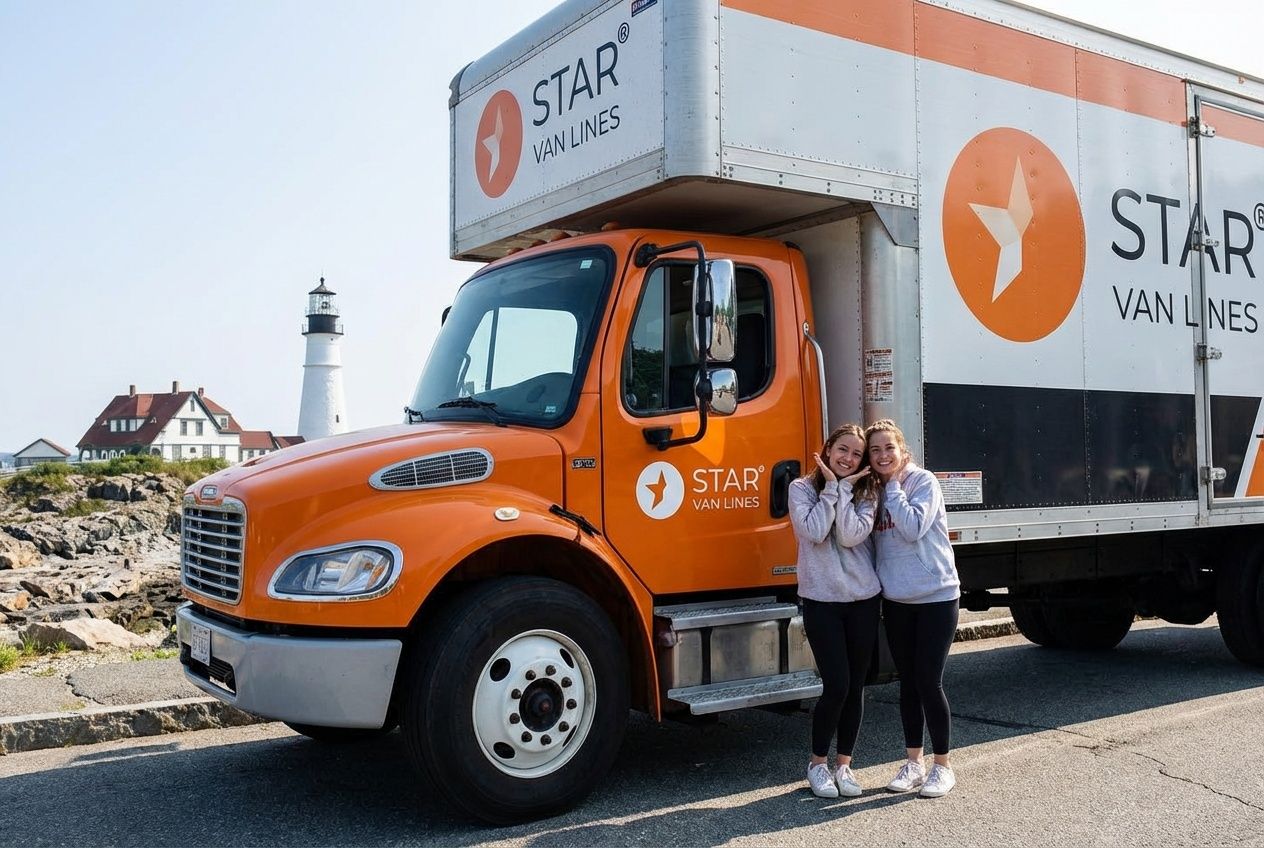
Maine is the most forested state in the nation, with 89 percent of its land in woods, and the least densely populated state east of the Mississippi at about 44 people per square mile. A Maine move often means routing crews far past the last paved cul-de-sac, onto two-lane US-1 or Route 2, to reach a single home Down East or up in Aroostook County. Star Van Lines is a USDOT-licensed interstate carrier (USDOT #4176875, MC #1607491) that handles local and long-distance moves across all of Maine. Because the state runs long and thin, we have been working its corridors since 2016, from the Maine Turnpike north to the coastal reach of US-1.
Our Maine moving services cover packing, loading, transport, delivery, and short-term storage at warehouse locations nationwide. The single biggest long-distance demand here is the coast-to-coast haul: Los Angeles to Portland runs about 3,094 road miles, a full cross-country relocation. Closer to home, a move from Portland to Bangor covers roughly 130 miles, much of it past the dense southern metros and into the North Woods. We handle both with the same coordinator and the same written estimate, from the first inventory through delivery day.
How much will a move to Maine cost? Call (855) 822-2722 or use our online quote calculator. You'll get an itemized estimate that breaks down every line item, so there aren't any surprises on moving day. We're rated 4.0 on Trustpilot, 4.5 on Google, and 4.75 on Facebook across 240+ reviews.

Dennis has 15+ years of experience in interstate moving and has coordinated over 1,000 relocations across the United States.

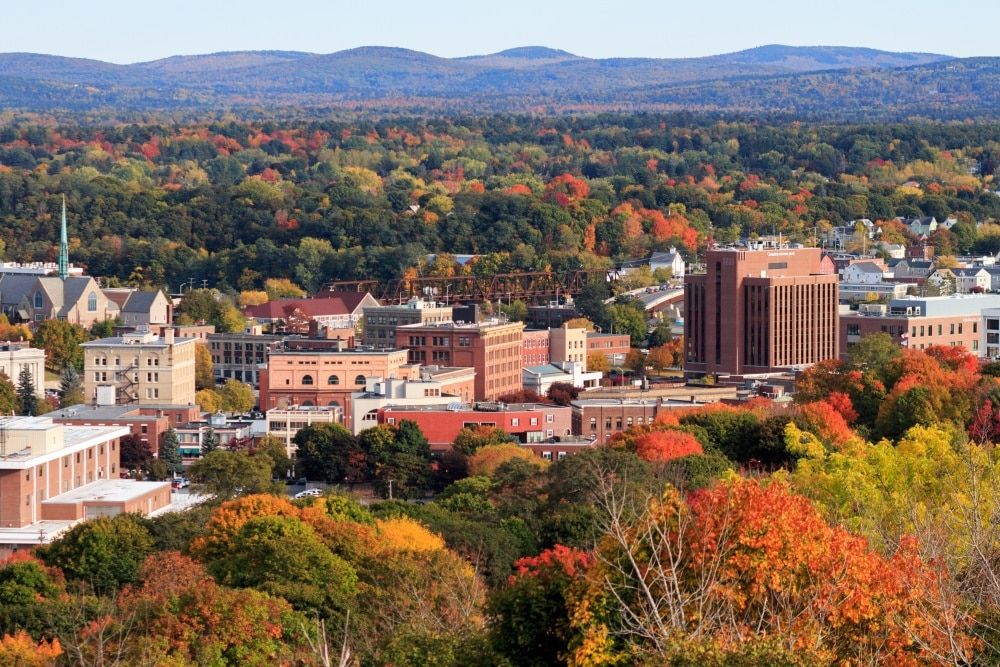


Moving services in Maine
Star Van Lines provides local, long-distance, and interstate moving services across Maine. We handle packing, loading, transport, and delivery for residential and commercial moves. Maine's geography sets the terms here, because the coast, the inland lakes, and the deep northern forest each ask something different of a crew. Every move includes a single coordinator, a trained crew, and a written estimate.
Local moving in Maine
Local moves in Maine ride the I-95 and I-295 spine and the coastal US-1. A two-person crew runs $150-$311 per hour; three movers run $224-$466. We serve the Portland-South Portland area, the Lewiston-Auburn and Bangor metros, and the long line of coastal and Down East towns between them. Older parts of Portland, Kennebunkport, and Belfast have narrow historic streets, cobblestone blocks, and tight stairwells that sometimes need a shuttle or a smaller truck. And inland, steep unpaved camp roads near the lakes can be hard for a large trailer to reach after rain or snow.
Long-distance moving from Maine
Long-distance moves from Maine split into two patterns. The dominant lane is the California coast-to-coast haul, about 3,094 miles from Los Angeles to Portland, which sits in the top distance band. The other heavy corridors run to the Southeast, with Florida around 1,400 miles, plus the short New England hop to Massachusetts or New Hampshire. We run regular loads down the Turnpike toward the mid-Atlantic and coordinate the long western hauls as full interstate relocations. Because Maine winters bring nor'easters and ice storms that can close I-95 for a day, your coordinator watches the forecast and builds flexibility into any December-through-March schedule.
Packing and storage
We offer full-service packing, partial packing, and self-pack options. Full-service means our crew brings every box and material and packs each room; partial lets you choose which rooms we handle; self-pack is the lowest-cost option. We have 43 warehouse locations nationwide for short-term and long-term storage. But in Maine, the swing from snowy, sub-freezing winters to warm, damp coastal summers means climate-controlled storage is the safer choice for wood furniture, electronics, and documents held between a move and a later move-in date.
Auto transport and specialty items
We ship vehicles by open or enclosed carrier, and on a haul as long as the California-to-Maine lane many people ship a car rather than drive it. We also move pianos, antiques, and large workshop equipment with specialty crating. Maine adds its own seasonal cargo, from boats and snowmobiles to camp gear bound for lakeside and Down East properties, and those items need careful handling alongside a standard auto-transport order.
How much does moving in Maine cost?
Moving costs in Maine track the state's slightly-below-average cost of living. Local moves typically run $150-$311 per hour for a two-person crew with a truck. Long-distance moves start at $805 for a studio and reach $9,430 for a large four-plus-bedroom home, depending on distance, weight, and how far off the main road the address sits.
Local moving rates
| Crew size | Hourly rate |
|---|---|
| 2 movers + truck | $150-$311 / hour |
| 3 movers + truck | $224-$466 / hour |
| 4 movers + truck | $299-$621 / hour |
Long-distance rates from Maine
| Move size | Estimated price range |
|---|---|
| Studio / 1 Bedroom | $805 - $2,358 |
| 2-3 Bedrooms | $1,438 - $5,175 |
| 4+ Bedrooms | $2,415 - $9,430 |
Popular routes and pricing from Maine
| Route | Distance | Avg cost (2-3 BR) |
|---|---|---|
| Portland to Hartford | 201 mi | $1,438 - $1,782 |
| Portland to Detroit | 806 mi | $2,530 - $3,105 |
| Portland to Charlotte | 934 mi | $2,760 - $3,392 |
| Portland to Orlando | 1,387 mi | $3,335 - $4,082 |
| Portland to Los Angeles | 3,094 mi | $4,255 - $5,175 |
Pricing reflects market averages for moves in and from Maine as of June 2026. Your final price depends on inventory weight, packing level, access at pickup and delivery, and scheduling flexibility. Call (855) 822-2722 or use our free quote calculator for an exact estimate.
What affects your moving price
- Shipment weight and volume are the biggest factors on any long-distance move from Maine.
- Distance drives the base price. Portland to Hartford is 201 miles; Portland to Los Angeles is 3,094.
- Access at both ends matters. Down East and Aroostook addresses sit far off I-95, and narrow coastal streets or unpaved camp roads can call for a shuttle.
- How much packing you want us to do. Full-service runs more than partial, and self-pack is the lowest option.
- When you move. Summer is peak demand, while deep winter and the spring mud season slow access on rural roads.
- Add-on services like auto transport, climate-controlled storage, and specialty handling for boats, snowmobiles, or pianos carry their own pricing.
Moving routes from Maine
Moving to Maine: what you should know
A move to Maine involves more than logistics. With roughly 44 people per square mile spread across 17.5 million acres of forest, Maine is the emptiest, greenest state east of the Mississippi, and the oldest by median age, and all three facts shape how and why people move here. Below is a quick guide covering cost of living, access and logistics, climate and timing, and the residency rules that affect your move.
What it costs to move to Maine
Maine's cost of living index is 97.1 (US average = 100, BEA RPP 2024), a little below the national figure. Local moving labor reflects a smaller market, with a two-person crew running $150-$311 per hour. Building access in Maine is less about elevators and more about reach: a coastal historic street or a long inland camp road can call for a shuttle or extra crew time. Median home value is $296,600 (Census ACS 2020-2024) and median monthly rent is $1,139, while median household income is $74,733. Although housing has climbed in recent years, 74.3 percent of Maine households own their homes, one of the higher ownership rates in the country.
Access and logistics
Maine's road network funnels onto a few key routes. I-95 and the Maine Turnpike form the north-south spine from Kittery to Houlton, I-295 splits off near Scarborough toward Portland and the Midcoast, and US Route 1 runs the full coast through Portland, Brunswick, Belfast, and Bangor and on Down East. US Route 2 crosses east to west, and US Route 201 climbs toward the Quebec line. Beyond those, Down East and northern Aroostook addresses sit far off the Interstate, so the last leg often runs on two-lane roads with long detours to one rural drop. Peninsula and ferry-served communities limit large-truck access and need trip planning around tides and road postings. And in winter, that planning gets even tighter.
Climate and timing
Maine has cool, comfortable summers with average highs near 81 degrees in Portland and cold winters with January lows around 13. The state gets about 48 inches of precipitation and 68.7 inches of snow a year, with roughly 200 days that see at least some sun. But the headline weather risks are winter and water: nor'easters, blizzards, and ice storms in the cold months, plus coastal storm surge and river flooding the rest of the year. The best window for a Maine move is late May through early October, after the ground firms up and before snow. Avoid the late-March-to-April mud season, when frost heaves and unpaved drives turn soft, and plan deep-winter moves with room for storms.
Residency and regulations
New Maine residents have 30 days to get a Maine driver license and 30 days to register a vehicle. Apply through the Maine Bureau of Motor Vehicles (maine.gov/sos/bmv) once you are settled. Registration runs through your town office first, because you pay the annual municipal excise tax there before you get plates. Maine requires an annual safety inspection for every registered vehicle, and an emissions test applies only in Cumberland County. Titling follows a rolling 25-year rule, so as of January 1, 2026 a title is required for model year 2001 or newer.
What to know before moving to Maine
Benefits of moving to Maine
0,414,874
Population
$0,733
Median household income
0.1 (US = 100, BEA RPP 2024)
Cost of living index
0% (most forested US state)
Forest cover
0.80%-9.15% (progressive)
State income tax
about 0 per square mile (least dense east of the Mississippi)
Population density
Maine is home to about 1.4 million people, spread thin across the Portland, Lewiston-Auburn, and Bangor metros and a long coast and forested interior. The economy leans on healthcare, tourism, marine and shipbuilding trades, and forestry. Median household income is $74,733, and the cost of living index of 97.1 keeps that income close to the national average. The migration story points inward: Census estimates put Maine's net migration at about +10,525 for the year ending July 1, 2024, split roughly between international arrivals and domestic movers, with Massachusetts and New Hampshire the largest neighboring exchanges. And the state's population grew 3.8 percent between 2020 and 2025, a notable gain for a state that spent decades near flat.
Is Maine a good place to live?
Maine offers a coast-and-forest life with strong community ties, four real seasons, and more open space than anywhere else in the East. But the trade-offs are real: winters are long and snowy, the population skews older, and rural living means dirt roads and longer drives to services. Whether it's a good fit depends on how much you value quiet and landscape over big-city convenience.
Tax environment
Maine's income tax is progressive, running from 5.8 percent up to a top rate of 9.15 percent on income over one million dollars, a bracket that took effect for 2026 (Tax Foundation 2026; Maine Revenue Services). The state sales tax is 5.5 percent, and because Maine has no local sales taxes, that is also the combined rate, on the lower side nationally. Property taxes run about 0.98 percent of home value, and a statewide Homestead Exemption trims taxable value for owners of a year or more. Maine also levies an estate tax, which matters for some higher-net-worth movers.
Housing market
Median home value in Maine is $296,600 (Census ACS 2020-2024), and median monthly rent is $1,139. Prices have risen sharply since 2020, especially in Greater Portland and the Midcoast, where demand from out-of-state buyers is strongest. And that pressure shows up first in the Portland market. A high ownership rate of 74.3 percent reflects a settled, owner-heavy market. And many of the homes that change hands sit on the coast or on acreage rather than in dense subdivisions, which shapes both price and access.
Job market and economy
Maine's economy is anchored by healthcare. The State of Maine is the largest single employer at about 22,000 to 23,000 workers, while MaineHealth and its Maine Medical Center in Portland lead the private side. Hannaford Supermarkets is headquartered in Scarborough, and General Dynamics Bath Iron Works builds Navy ships in Bath with about 6,700 workers, the state's largest single-site manufacturer. Tourism, fishing, and forestry round out the picture. The labor force participation rate is 61.6 percent, reflecting the state's older population, and 36.2 percent of adults hold a bachelor's degree or higher. But healthcare carries the economy.
Safety and natural risks
Flooding and winter storms are Maine's defining hazards. Nor'easters and ice storms can knock out power and close roads for days, coastal storm surge threatens the long Atlantic shoreline, and river and ice-jam flooding hit inland towns. If you are buying near the coast or a river, flood-zone awareness matters for both insurance and where you store belongings during a staged move.
Who thrives in Maine?
California long-haul transplants
The single biggest long-distance demand into and out of Maine is the California lane, about 3,094 road miles each way. These movers are leaving high-cost West Coast metros for Maine's lower density, four-season living, and coastal lifestyle, and they need a carrier comfortable with a multi-week, full-country interstate haul.
Retirees and near-retirees
Maine has the oldest population in the country, with a median age near 44.8 years and about 23 percent of residents age 65 or older. Many incoming moves are retirees settling into coastal or lakeside homes for a quieter, lower-density retirement, often downsizing from a larger family home in another state.
Down East and rural homesteaders
In the most forested and least densely populated state east of the Mississippi, a real share of movers are heading to woodland and Down East properties far from I-95. Because those addresses sit at the end of two-lane US-1 or Route 2, they need a mover willing to run the last leg to a single remote drop, sometimes by shuttle truck.
Coastal second-home and seasonal owners
Maine's long Atlantic coastline draws owners moving furnishings into seasonal and second homes in towns like Kennebunkport, Belfast, and the Midcoast. These moves cluster in late spring and summer, often involve narrow historic streets and tight access, and call for careful scheduling around the warm, busy season.
Greater Portland professionals and students
Portland, Lewiston, and Bangor anchor Maine's job and education centers, drawing professionals, healthcare workers, and students into apartments and starter homes. These shorter in-state and regional New England moves often involve walk-up units and tight downtown parking in Portland's historic core.
First week after moving to Maine: what to do
After your move to Maine, several tasks need attention in the first weeks. Maine gives new residents 30 days for both a driver license and vehicle registration, and the registration runs through your town office, so it pays to start early. Here is a prioritized checklist.
- Update your driver license.
Maine gives new residents 30 days to get a Maine license. Bring your current license and proof of Maine residency to a Bureau of Motor Vehicles branch. (maine.gov/sos/bmv)
- Register your vehicle.
You have 30 days to register, and the process starts at your town office, where you pay the annual municipal excise tax before you get plates. Maine requires an annual safety inspection, and an emissions test applies only if you register in Cumberland County.
- Transfer your auto insurance.
Contact your insurer to re-rate your policy for Maine before you register. Rural roads and winter driving affect premiums, and Maine has its own minimum liability requirements.
- Register to vote.
Maine offers online registration at registertovote.sos.maine.gov, plus registration in person at your town office, at any BMV branch, and on Election Day.
- Update homeowner's or renter's insurance.
Because flooding and winter storms are Maine's leading hazards, review flood and storm coverage carefully. Standard policies don't cover flood damage, so a coastal or riverfront home may need a separate flood policy.
- Forward your mail.
USPS Change of Address is free online at usps.com. Mail forwarding starts within 7-10 business days.
- Transfer medical records.
Contact your current providers before the move and find a new primary care physician. MaineHealth and Central Maine Healthcare cover much of the southern and central state.
- Update school records.
If you have children, request transcripts from the previous district and contact your new one about enrollment and deadlines. Maine's school year usually starts in late August or early September.
Maine at a glance: schools, jobs, and things to do
Schools and universities
Falmouth Public Schools, Yarmouth Schools, and the RSU 51 district covering Cumberland and North Yarmouth are among the strongest in the state, all in the Greater Portland area. The University of Maine in Orono is the state's land-grant flagship and only research university. Maine is also known for its private liberal arts colleges, anchored by the Colby-Bates-Bowdoin group: Bowdoin College in Brunswick, Bates College in Lewiston, and Colby College in Waterville. Because Maine's school districts are small, quality varies widely from town to town, so it pays to research the specific district before choosing a community.
Major employers
The State of Maine is the largest single employer, with about 22,000 to 23,000 workers across healthcare, education, and public safety. MaineHealth and its Maine Medical Center in Portland lead the private and healthcare side, while Hannaford Supermarkets is headquartered in Scarborough. General Dynamics Bath Iron Works in Bath, with about 6,700 employees, is the state's largest single-site manufacturer, building destroyers for the Navy. Because Maine's economy leans on healthcare, the trades, and tourism, job seekers in those fields find the steadiest opportunities.
Attractions and recreation
Acadia National Park on Mount Desert Island drew more than four million visitors in 2025 and includes Cadillac Mountain, one of the first places to see sunrise in the country for much of the year. Portland Head Light in Cape Elizabeth, dating to 1791, is Maine's oldest lighthouse and one of the most photographed in the United States. Mount Katahdin in Baxter State Park is the state's highest peak and the northern end of the Appalachian Trail. Portland's walkable Old Port anchors the dining and arts scene, and Bar Harbor and the coastal lighthouse trail round out a long list of reasons people move here.
FAQ
Questions? Look here
Can’t find an answer? Call us
(855) 822-2722 or email
Local moving in Maine typically costs $150-$311 per hour for a two-person crew with a truck, or $224-$466 for the three-person crew a three-bedroom home usually needs. At 4-6 hours, that puts a typical three-bedroom local move around $780 to $2,430 once crew size and access are factored in. Coastal stairs and long rural driveways can add time. Call (855) 822-2722 for an itemized estimate.
Long-distance moves from Maine start at $805 for a studio and reach about $9,430 for a large four-plus-bedroom home. The final price depends on shipment weight, distance, and access at both ends. The dominant lane, Los Angeles to Portland, covers about 3,094 miles, while a Portland-to-Hartford move runs much shorter. Star Van Lines provides written estimates so your price won't change after booking.
Search our USDOT number 4176875 on the FMCSA SAFER website (safer.fmcsa.dot.gov). This federal database confirms our operating authority, MC number 1607491, insurance status, and safety record. Any legitimate interstate mover should be able to provide a verifiable USDOT number.
In Maine the charges to ask about are long-carry fees when a truck can't park near the door, shuttle fees when a full-size trailer can't reach a Down East or camp-road address, and stair fees for coastal walk-up units. We disclose every potential charge in your written estimate before you book, so nothing is a surprise on moving day.
Federal law requires interstate movers to offer two levels: Released Value Protection (free, covering $0.60 per pound per item) and Full Value Protection (paid, covering repair, replacement, or cash settlement at current value). Star Van Lines is fully insured under USDOT #4176875 and can explain both options when you request a quote.
New Maine residents have 30 days to get a Maine driver license and 30 days to register a vehicle. Registration starts at your town office, where you pay the annual municipal excise tax before you receive plates, and Maine requires an annual safety inspection. If you register in Cumberland County, an emissions test is part of that inspection.
Yes. Maine charges an annual municipal excise tax that you pay at your town office, and it is a required step before you can title and register a vehicle you bring into the state. Because the amount is based on the vehicle's age and value, it helps to budget for it before you arrive, and to plan an auto-transport delivery so the car is on hand within the 30-day window.
Maine's income tax runs from 5.8 percent up to 9.15 percent on income over one million dollars, while the sales tax is a flat 5.5 percent with no local add-on. For most households relocating from California, the day-to-day sales tax is lower, while the income picture depends on your bracket. Property tax runs about 0.98 percent of home value, with a Homestead Exemption for primary residents.
Late May through early October is the best window, when the ground is firm and roads are clear. Avoid late March into early May, Maine's mud season, when frost heaves and thawing dirt roads turn soft and make unpaved drives hard for a heavy truck. Deep winter, from December through February, brings heavy snow and ice that slow loading, so build in flexibility if you must move then.
The drive from Los Angeles to Portland is about 3,094 miles, a true coast-to-coast relocation in the top distance band. Pricing follows distance, shipment weight, and access, and because the haul is long, many people pair it with vehicle transport rather than driving a car across the country. Your coordinator gives you one written estimate covering the household goods and any car on the same order.
Yes. Much of Maine sits well off the Interstate, and we plan rural moves around that reality. When a full-size trailer can't safely reach a Down East, island, or Aroostook address, we run the last leg on two-lane US-1 or Route 2, or use a shuttle vehicle, and we route around tides and seasonal road postings. The remote drop is part of the plan, not a surprise.
For most goods, yes. Maine swings from snowy, sub-freezing winters to warm, humid coastal summers, so unheated storage risks freeze-thaw stress and moisture damage to wood furniture, electronics, and documents. Climate-controlled units that hold steady temperature and humidity are the safer choice for anything held between a move and a later move-in date, especially near the coast.
Ready to Start Your Maine Move?
Get a free moving estimate today. No obligation, no pressure.
Call us or fill out the form - we'll get back to you fast.
USDOT #4176875 | MC #1607491 | Licensed & Insured