
Thank you for your feedback!
We will contact you shortly

Free consultation
Enter your phone number and we will call you back for a consultation on any moving and storage services

Maryland
Professional Maryland Movers for Local & Interstate Moves
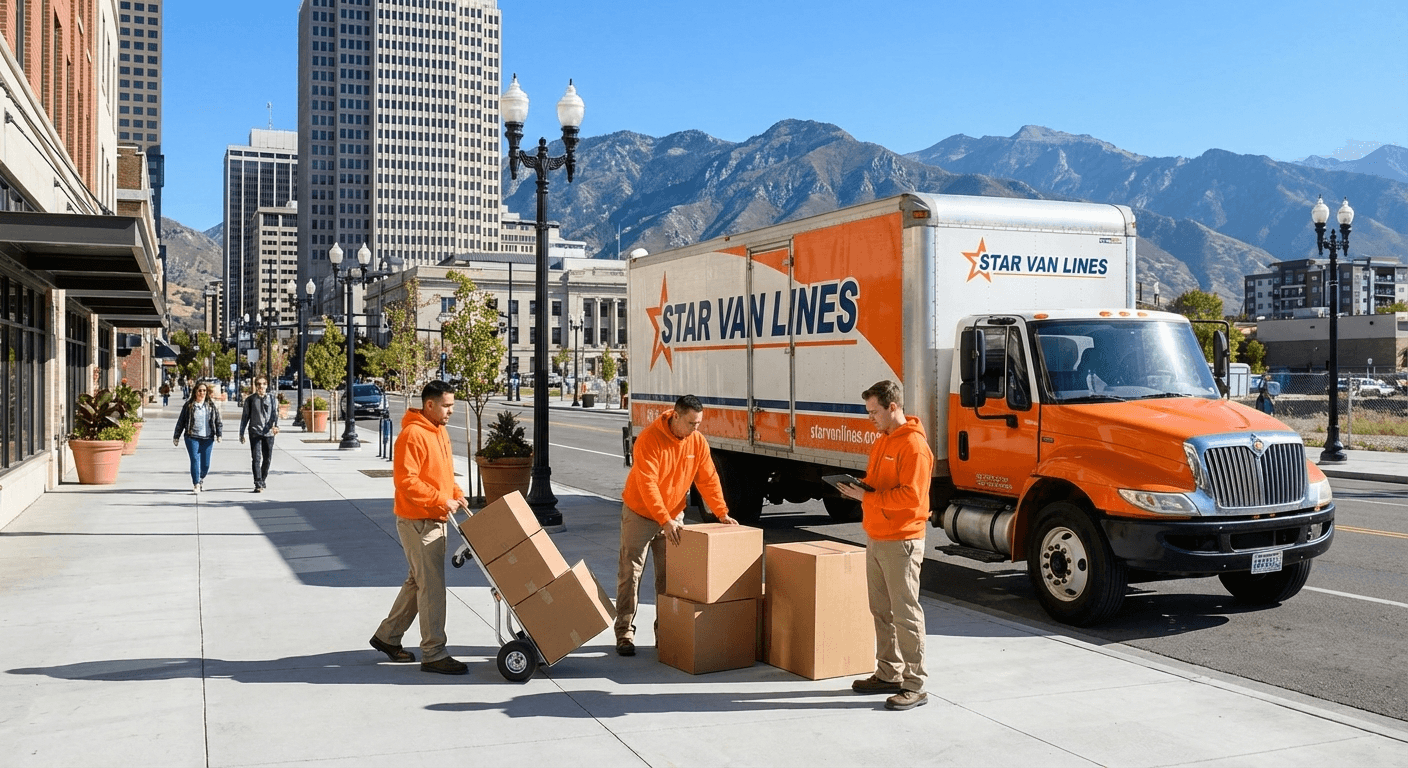
Few states pull as much through them as Maryland. The I-95 corridor threads the whole state between Washington and Philadelphia, and the Port of Baltimore is the nation's No. 1 gateway for roll-on, roll-off cargo and one of the top auto-handling ports in the country, so the region almost never sits still. Star Van Lines is a USDOT-licensed interstate carrier (USDOT #4176875, MC #1607491) that runs local and long-distance moves across all of Maryland, from Baltimore City and the Inner Harbor out to the Bethesda-Rockville biotech belt, the DC suburbs along the Capital Beltway, and the Bay shore around Annapolis. Because the state sits at the center of the Mid-Atlantic, where federal jobs, defense, and a deep research economy keep people arriving and leaving, we have worked both directions on that flow since 2016.
Our Maryland moving services cover packing, loading, transport, delivery, and short-term storage at warehouse locations nationwide. A move from Baltimore to New York covers about 187 miles up I-95. A move from Baltimore to Orlando runs about 888 miles down the eastern seaboard. We handle both with the same coordinator and the same written estimate, and in Maryland the variable that bites is usually access, since a rowhouse block in Baltimore City or a tight street near the Annapolis City Dock asks more of a crew than the mileage ever does.
Wondering what your Maryland move will run? Call (855) 822-2722 or use our online quote calculator. You'll get an estimate that breaks down every line item, so there aren't any surprises on moving day. We're rated 4.0 on Trustpilot, 4.5 on Google, and 4.75 on Facebook across 240+ reviews.

Dennis has 15+ years of experience in interstate moving and has coordinated over 1,000 relocations across the United States.




Moving services in Maryland
Star Van Lines provides local, long-distance, and interstate moving services across Maryland. We handle packing, loading, transport, and delivery for residential and commercial moves. Maryland sets two very different jobs in front of a crew, because a Baltimore City rowhouse move and a new single-family move out in a Howard County subdivision share almost nothing in how the day actually runs. Every move includes a single coordinator, a trained crew, and a written estimate.
Local moving in Maryland
Local moves in Maryland cluster on Baltimore, the DC suburbs, and the towns filling in between them. A two-person crew runs $173-$345 per hour; three movers run $213-$518. Heavy local lanes run Baltimore to Annapolis, Baltimore to the Bethesda-Rockville-Silver Spring tech and biotech belt, and Baltimore to Frederick and Columbia. But these short hops work differently from a long haul, because a rowhouse on a narrow Baltimore or Annapolis street can mean permit parking, a long carry, and stair work with no truck access at the door, while a suburban move near the Capital Beltway runs into HOA rules and chronic I-95 and Beltway congestion. And that congestion changes the plan, since crews load early or off-peak to get out ahead of the rush around Baltimore and the DC suburbs.
Long-distance moving from Maryland
Long-distance demand out of Maryland runs heaviest from Baltimore. The busiest lanes head south to Raleigh (about 300 miles down I-95) and Atlanta (about 676 miles via I-85), north to Boston (about 398 miles up the Northeast corridor) and New York (about 187 miles), and far south to Orlando (about 888 miles). We run these corridors on I-95 and I-85 as full interstate relocations. Because so many Maryland households leave for Virginia, the Carolinas, Georgia, and income-tax-free Florida, your coordinator stages long-haul equipment and locks the schedule early on these multi-state lanes.
Packing and storage
We offer full-service packing, partial packing, and self-pack options. Full-service means our crew brings every box and material and packs each room; partial lets you choose which rooms we handle; self-pack is the lowest-cost option. We have 43 warehouse locations nationwide for short-term and long-term storage. But in Maryland the humid-subtropical summers make climate-controlled storage the safer choice for wood furniture, upholstery, electronics, and documents, since late-summer relative humidity sits around 75 percent and the state gets roughly 45 inches of rain a year, which can warp, mildew, and crack goods held in a standard unit between a move-out and a later move-in.
Auto transport and specialty items
We ship vehicles by open or enclosed carrier, and households relocating two or three cars on a long Maryland lane often ship them rather than drive each one. We also move pianos, antiques, gun safes, and fine art with specialty crating. Maryland sits well for vehicle relocation, because the Port of Baltimore is the nation's No. 1 roll-on, roll-off port and one of the busiest auto-handling gateways in the country, but a car coming in still has to clear Maryland's one-time used-vehicle safety inspection and, in covered counties, the VEIP emissions test before it can be titled and registered. New residents have 60 days to title and register a vehicle, so we time door-to-door auto transport to a customer's registration window.
How much does moving in Maryland cost?
Moving costs in Maryland depend on whether you're crossing town or crossing the country. Local moves typically run $173-$345 per hour for a two-person crew with a truck. Long-distance moves start at $805 for a studio and reach $5,980 for a large four-plus-bedroom home, depending on distance, weight, and access at both ends.
Local moving rates
| Crew size | Hourly rate |
|---|---|
| 2 movers + truck | $173-$345 / hour |
| 3 movers + truck | $213-$518 / hour |
| 4 movers + truck | $293-$690 / hour |
Long-distance rates from Maryland
| Move size | Estimated price range |
|---|---|
| Studio / 1 Bedroom | $805 - $1,495 |
| 2-3 Bedrooms | $1,438 - $3,277 |
| 4+ Bedrooms | $2,358 - $5,980 |
Popular routes and pricing from Maryland
| Route | Distance | Avg cost (2-3 BR) |
|---|---|---|
| Baltimore to New York | 187 mi | $1,438 - $1,725 |
| Baltimore to Raleigh | 300 mi | $1,667 - $2,012 |
| Baltimore to Boston | 398 mi | $1,840 - $2,300 |
| Baltimore to Atlanta | 676 mi | $2,300 - $2,818 |
| Baltimore to Orlando | 888 mi | $2,703 - $3,277 |
Pricing reflects market averages for moves in and from Maryland as of June 2026. Your final price depends on inventory weight, packing level, access at pickup and delivery, and scheduling flexibility. Call (855) 822-2722 or use our free quote calculator for an exact estimate.
What affects your moving price
- Shipment weight and volume are the biggest factors on any long-distance move from Maryland.
- Distance drives the base price. Baltimore to New York is 187 miles; Baltimore to Orlando is 888.
- Access at both ends matters. Permit parking and stair-carries on Baltimore and Annapolis rowhouse blocks, HOA truck rules in the DC suburbs, or a Beltway-side approach with no easy curb space can all add time or call for a shuttle.
- How much packing you want us to do. Full-service runs more than partial, and self-pack is the lowest option.
- When you move. Summer is peak demand, and the August-to-October Atlantic hurricane-remnant season can bring heavy rain and disrupt scheduling.
- Add-on services like auto transport, climate-controlled storage, and specialty handling for pianos, gun safes, or artwork carry their own pricing.
Moving routes from Maryland
Moving to Maryland: what you should know
A move to Maryland involves more than logistics. The state packs a port city, a federal-research belt, and a Bay shoreline into a small footprint, so the same budget buys a Bethesda condo near the Metro or a five-bedroom house in a Carroll County subdivision, and access at the door often matters more than the miles on the road. Below is a quick guide covering cost of living, access and logistics, climate and timing, and the residency rules that affect your move.
What it costs to move to Maryland
Maryland's cost of living index is 104.959 (US average = 100, BEA RPP 2024), about 5 percent above the national figure, so newcomers should budget for a higher baseline. Local moving labor runs $173-$345 per hour for a two-person crew, with Baltimore and the DC suburbs at the higher end. Median home value is $419,900 (Census ACS 2019-2024) and median monthly rent is $1,705, while median household income is $103,678, among the highest in the country. But the line that surprises newcomers is the tax mix, because Maryland stacks a graduated state income tax on top of a separate county or Baltimore City local income tax, so two layers come out of the same paycheck.
Access and logistics
Maryland's road network bends around Baltimore and the DC suburbs. I-95 runs north and south as the Northeast corridor spine, threading Baltimore between Washington and Philadelphia, while I-695 rings Baltimore as the Beltway and I-495 wraps the DC suburbs as the Capital Beltway. I-270, the "DNA Alley" biotech corridor, runs northwest toward Frederick, I-70 crosses east and west into western Maryland and the Midwest, and I-83 heads north from Baltimore into Pennsylvania. In Baltimore City and Annapolis, the hard part is the door, since rowhouse blocks mean narrow streets, permit parking, and stair-carries with no truck access at the curb. Out in the suburbs and the Bay towns, the challenge flips to Beltway timing and HOA rules, because chronic congestion on I-95 and the Capital Beltway forces early or off-peak load windows.
Climate and timing
Maryland summers are hot and humid, with Baltimore July highs near 89 and about 34 days a year at or above 90, and winters are cold, with January lows around 25. The state gets about 45 inches of rain and 19.3 inches of snow a year, and snow concentrates in January and February, when Nor'easters can ice over I-95, I-83, and I-70. The headline risks are seasonal: humid heat and frequent thunderstorms in midsummer, Atlantic hurricane-season remnants from August into October that bring heavy rain and wind, and coastal and inland flooding around the Chesapeake Bay and the Atlantic shore. The best window for a move is mid-September through November or April and May, when the air is milder and drier and demand is lighter. But avoid July and August, when the heat and humidity peak, and watch January and February for snow and ice.
Residency and regulations
Maryland routes driver licensing and vehicle work through one agency: the Motor Vehicle Administration (MVA), part of the Maryland Department of Transportation. New residents must convert an out-of-state driver license to a Maryland license within 60 days of becoming a resident (an out-of-state CDL within 30 days), and they must title and register an out-of-state vehicle within 60 days as well. Apply through the MVA (mva.maryland.gov) once you are settled, and note that missing the 60-day titling deadline forfeits the tax credit for titling tax paid in another state. Maryland requires a one-time used-vehicle safety inspection at a certified station before a used out-of-state vehicle can be titled, but there is no recurring annual safety inspection. The VEIP emissions test is biennial and applies in 14 jurisdictions, including Anne Arundel, Baltimore City, Baltimore, Calvert, Carroll, Cecil, Charles, Frederick, Harford, Howard, Montgomery, Prince George's, Queen Anne's, and Washington counties.
What to know before moving to Maryland
Benefits of moving to Maryland
0,265,347
Population
$0,678
Median household income
0.959 (US = 100, BEA RPP 2024)
Cost of living index
0 sunny days/year (approximate)
Days of sunshine
0.00% to 6.50% (graduated) plus local
State income tax
+0.4%
Population change 2020-2025
Maryland is home to about 6.27 million people, and it grew 1.4 percent between 2020 and 2025, a slow gain held up by international migration and the DC-federal belt while residents leave for nearby states. The economy is anchored by the federal government, defense, and aerospace, with Fort Meade (home to the NSA and U.S. Cyber Command) the single largest employer at over 50,000, alongside the Johns Hopkins University and Health System as the largest private employer and the National Institutes of Health in Bethesda. Median household income is $103,678, among the highest in the nation, and 43.4 percent of adults hold a bachelor's degree or higher. The migration story runs outbound on net: Maryland had a net domestic outflow of 18,509 residents in 2024 (Census PEP), an improvement from 32,748 in 2023, with the most newcomers arriving from Virginia, Pennsylvania, and New York. And the deep federal and biotech job base is a real draw for scientists, engineers, and defense workers.
Is Maryland a good place to live?
Maryland offers one of the highest median household incomes in the country, a deep federal and research job market, and easy reach to Washington, Baltimore, and the Chesapeake Bay. But the trade-offs are real: the cost of living sits about 5 percent above average, home prices clear $419,000, and the two-layer income tax takes a state cut and a county cut from the same paycheck. Whether it's a good fit depends on how much you value the paycheck math and the job market against high housing costs and a stacked tax bill.
Tax environment
Maryland runs a graduated state income tax from 2.00 percent to 6.50 percent, with a new top 6.50 percent bracket added by the Budget Reconciliation and Financing Act of 2025 on income over $1,000,000 for single filers and $1,200,000 for joint filers. The distinctive feature is the second layer, because every county and Baltimore City levy a local "piggyback" income tax of roughly 2.25 percent to 3.30 percent on top of the state rate, with 3.30 percent the highest local rate for tax year 2026. The sales tax is a flat 6.00 percent statewide with no local add-on, which keeps it simple at the register. Maryland is also one of the few states that levies both a state estate tax and a separate inheritance tax, while the effective property-tax rate is moderate at about 0.92 percent of home value.
Housing market
Median home value in Maryland is $419,900 (Census ACS 2019-2024), well above the national figure, and median monthly rent is $1,705. Prices vary sharply by region, from the premium close-in neighborhoods of Bethesda and Montgomery County to far more affordable homes in Carroll County, western Maryland, and the Eastern Shore, where the same budget buys much more house. An owner-occupancy rate of 67.6 percent reflects a market where ownership stays within reach for many families even at high prices. Because so much demand lands in the DC-adjacent suburbs and the Baltimore commuter belt, where you settle in the metro matters as much as what you buy.
Job market and economy
Maryland runs an economy built on the federal government, defense, and research. The Department of Defense employs over 400,000 workers in the state, and 15 of the nation's top 20 aerospace and defense firms have a presence, with Lockheed Martin headquartered in Bethesda. Fort Meade anchors cyber and intelligence work around the NSA and U.S. Cyber Command, while the NIH and Johns Hopkins drive a life-sciences cluster of more than 350 federal, academic, and private research centers. And the I-270 "DNA Alley" corridor in Montgomery County pulls biotech and pharma talent from across the country. Because the sector mix spans defense, intelligence, biotech, and higher education, the job market holds steady across cycles.
Safety and natural risks
Maryland faces a Mid-Atlantic hazard mix led by water and winter weather. Coastal flooding and storm surge threaten the Chesapeake Bay and Atlantic shoreline, and Atlantic tropical systems such as Hurricane Sandy in 2012 have driven major coastal flooding, while inland rivers flood from heavy rain and Nor'easters can drop heavy snow and ice across the I-95 corridor. Baltimore City ranks among the higher-risk jurisdictions on the FEMA National Risk Index. If you are buying near the Bay, a tidal river, or a floodplain, it is worth lining up flood coverage early, since standard homeowner policies usually exclude flood damage.
Who thrives in Maryland?
Federal-agency and biotech relocators
Bethesda and Rockville anchor one of the densest federal-research clusters in the country, with the NIH and the FDA among the region's largest federal employers, and Montgomery County's I-270 "DNA Alley" corridor drawing scientists and engineers nationwide. They relocate for grant-funded posts and pharma jobs, and many need flexible delivery windows tied to start dates and lease turnovers rather than a bargain rate.
Military and defense PCS families
Fort Meade hosts the NSA and U.S. Cyber Command, while Aberdeen Proving Ground and the Naval Academy in Annapolis round out a large defense footprint. Service members and contractors move in and out on permanent-change-of-station orders with hard report dates, so they need precise scheduling and crews used to on-base access and inventory paperwork, often arriving from another base across the country.
DC-corridor commuters trading the city for the suburbs
Workers tied to Washington jobs frequently settle in Silver Spring, Bethesda, Columbia, or the I-270 suburbs for more space and schools while staying within Capital Beltway reach of the District. These households move out of DC and Virginia apartments into Maryland single-family homes and want movers fluent in Beltway timing and suburban HOA or permit rules.
High-cost-of-living households heading to lower-tax states
With a median home value over $419,000, a graduated state income tax topping out at 6.50 percent in 2026, and a local county piggyback income tax of 2.25 percent to 3.30 percent on top, many families relocate outbound to Virginia, North Carolina, Georgia, and income-tax-free Florida. These are among the heaviest long-distance lanes in our Maryland book, and they call for transparent multi-state pricing because the budget spans two tax systems.
Annapolis and Bay-area buyers moving into historic and waterfront homes
Annapolis and the Chesapeake Bay shoreline draw buyers into older rowhouses, historic estates, and waterfront properties with tight streets, narrow doorways, and stairs. These moves often involve antiques, pianos, and other specialty items that need protective handling, and the humid Bay climate makes climate-controlled storage the safe choice for anything waiting between closings.
First week after moving to Maryland: what to do
After your move to Maryland, several tasks need attention in the first weeks. Maryland gives new residents 60 days to convert an out-of-state driver license and 60 days to title and register a vehicle, so the registration clock is the one to watch. Here is a prioritized checklist.
- Register your vehicle.
You have 60 days to title and register your out-of-state vehicle with the Maryland Motor Vehicle Administration (mva.maryland.gov). Bring proof of ownership, insurance, and a Maryland address, and get the one-time used-vehicle safety inspection done first, since a valid certificate is required before titling.
- Update your driver license.
New residents have 60 days to convert to a Maryland license through the MVA (an out-of-state CDL within 30 days). Bring proof of identity, residency, and your out-of-state license, and book an appointment early because MVA offices in the Baltimore and DC-suburb areas stay busy.
- Transfer your auto insurance.
Maryland requires liability coverage, so contact your insurer to re-rate your policy before you register. Premiums vary widely between Baltimore City, the DC suburbs, and the smaller counties.
- Register to vote.
Maryland offers online registration through the State Board of Elections at elections.maryland.gov, and you can also register at the MVA when you handle your license. Same-day registration is available at a voting center during early voting and on election day.
- Update homeowner's or renter's insurance.
Because coastal and inland flooding, Atlantic storm remnants, and Nor'easters all affect Maryland, review your coverage. Standard policies usually exclude flood damage, so a home near the Bay, a tidal river, or a floodplain may need a separate flood policy.
- Forward your mail.
USPS Change of Address is free online at usps.com. Mail forwarding starts within 7-10 business days.
- Transfer medical records.
Contact your current providers before the move and find a new primary care physician near your new home.
- Update school records.
If you have children, request transcripts from the previous district and contact your new one about enrollment. Howard County and Montgomery County rank among the state's best districts, and the school year usually starts in late August.
Maryland at a glance: schools, jobs, and things to do
Schools and universities
Howard County Public Schools, based in Ellicott City, ranks among the top districts in Maryland, with Montgomery County Public Schools in Rockville (the state's largest, at about 160,554 students) and Carroll County Public Schools in Westminster close behind among the best. The University of Maryland, College Park is the public research flagship, founded in 1856 with about 31,133 undergraduates. The Johns Hopkins University in Baltimore is a top private research school and the state's largest private employer, and the United States Naval Academy in Annapolis anchors the federal service academies. Because school quality and home prices both vary sharply by county, many families research specific districts closely before choosing where to land.
Major employers
Maryland hosts one of the largest federal and research employment bases in the country. Fort George G. Meade is the single largest employer, with over 50,000 workers tied to the NSA and U.S. Cyber Command. The Johns Hopkins University and Health System is the largest private employer, supporting about 149,000 jobs statewide, while the National Institutes of Health in Bethesda remains one of the state's largest federal research employers and Lockheed Martin is headquartered in Bethesda. Because defense, intelligence, biotech, healthcare, and higher education all run deep here, job seekers find opportunities across very different industries between Baltimore, the DC suburbs, and the I-270 corridor.
Attractions and recreation
The Inner Harbor and the National Aquarium in Baltimore are the state's most-visited draws, and nearby Fort McHenry National Monument is the birthplace of the Star-Spangled Banner. The Ocean City Boardwalk and beaches anchor the Atlantic shore, while Annapolis pairs the historic City Dock with the U.S. Naval Academy. And Assateague Island National Seashore, home to wild horses along the Chesapeake Bay coast, spreads across a protected barrier island that families return to year after year.
FAQ
Questions? Look here
Can’t find an answer? Call us
(855) 822-2722 or email
Local moving in Maryland typically costs $173-$345 per hour for a two-person crew with a truck, or $213-$518 for the three-person crew a three-bedroom home usually needs. At 4-6 hours, that puts a typical three-bedroom local move around $740 to $2,700. Rowhouse permit parking and stair-carries in Baltimore and Annapolis, plus Beltway congestion in the DC suburbs, can add time. Call (855) 822-2722 for an itemized estimate.
Long-distance moves from Maryland start at $805 for a studio and reach about $5,980 for a large four-plus-bedroom home. The final price depends on shipment weight, distance, and access at both ends. A two-to-three-bedroom move from Baltimore to Raleigh runs about $1,667 to $2,012, while the longer lane to Orlando runs higher. Star Van Lines provides written estimates so your price won't change after booking.
Search our USDOT number 4176875 on the FMCSA SAFER website (safer.fmcsa.dot.gov). This federal database confirms our operating authority, MC number 1607491, insurance status, and safety record. Any legitimate interstate mover should be able to provide a verifiable USDOT number.
In Maryland the charges to ask about are long-carry and stair fees for Baltimore and Annapolis rowhouses, permit-parking and shuttle fees when a full-size truck can't reach a narrow street or a gated suburb, and elevator fees for DC-suburb high-rises. We disclose every potential charge in your written estimate before you book, so nothing is a surprise on moving day.
Federal law requires interstate movers to offer two levels: Released Value Protection (free, covering $0.60 per pound per item) and Full Value Protection (paid, covering repair, replacement, or cash settlement at current value). Star Van Lines is fully insured under USDOT #4176875 and can explain both options when you request a quote.
New Maryland residents must convert an out-of-state driver license to a Maryland license within 60 days of becoming a resident, and they must title and register an out-of-state vehicle within 60 days as well (an out-of-state CDL must be converted within 30 days). The Maryland Motor Vehicle Administration handles both the license and the registration, so plan a single trip if you can. Missing the 60-day titling deadline forfeits the tax credit for titling tax paid in another state.
Maryland requires a one-time used-vehicle safety inspection at a certified station before a used out-of-state vehicle can be titled, but there is no recurring annual safety inspection. The VEIP emissions test is separate and biennial, and it applies in 14 jurisdictions, including Anne Arundel, Baltimore City, Baltimore, Montgomery, Prince George's, Howard, and Washington counties, among others. If you settle in a rural Eastern Shore or western Maryland county outside the program, no emissions test is required.
Maryland's cost of living index is about 104.959 (US = 100), roughly 5 percent above average, with a median home value of $419,900 and median rent of $1,705. The distinctive cost is the two-layer income tax, because a graduated state tax from 2.00 percent to 6.50 percent stacks with a county or Baltimore City local ""piggyback"" tax of 2.25 percent to 3.30 percent on the same income. Median household income is high at $103,678, but newcomers from low-tax or no-income-tax states should budget for both layers from day one.
Mid-September through November is the best window, with milder, drier air after the summer peak, and April and May are also favorable before the humid season. Avoid July and August, when Baltimore highs near 89 and late-summer humidity around 75 percent make load-outs slow and hard on heat-sensitive items. Watch January and February too, when Nor'easters can drop heavy snow and ice over I-95, I-83, and I-70.
Yes. We ship vehicles by open or enclosed carrier on any Maryland lane, and the state is well-served for auto relocation because the Port of Baltimore is the nation's No. 1 roll-on, roll-off port and one of the busiest auto-handling gateways in the country. That logistics depth doesn't change your paperwork, though, since a car coming into Maryland still has to clear the one-time used-vehicle safety inspection and, in covered counties, the VEIP emissions test before it can be titled and registered.
Federal grant posts, NIH and Johns Hopkins research jobs, and military permanent-change-of-station orders all run on hard report-for-duty or start dates, so the schedule has to be locked rather than loose. We build firm pickup and delivery windows around those dates, coordinate on-base access at Fort Meade or Aberdeen and lease turnovers in Bethesda and Rockville, and stage the move so your household goods land when you do. Booking early on these corridor lanes protects the date during peak summer demand.
Yes. The U.S. Army Corps of Engineers restored the Fort McHenry Federal Channel to its full operating dimensions, and the port is fully operational again after the March 2024 collapse. For households, the bridge collapse mainly changed local traffic patterns around the harbor rather than moving service itself, so our crews route around the rebuilt corridor as normal. Auto and ro-ro cargo are moving through the port again, which keeps Maryland well-served for vehicle relocation.
Ready to Start Your Maryland Move?
Get a free moving estimate today. No obligation, no pressure.
Call us or fill out the form - we'll get back to you fast.
USDOT #4176875 | MC #1607491 | Licensed & Insured