Thank you for your feedback!
We will contact you shortly

Free consultation
Enter your phone number and we will call you back for a consultation on any moving and storage services
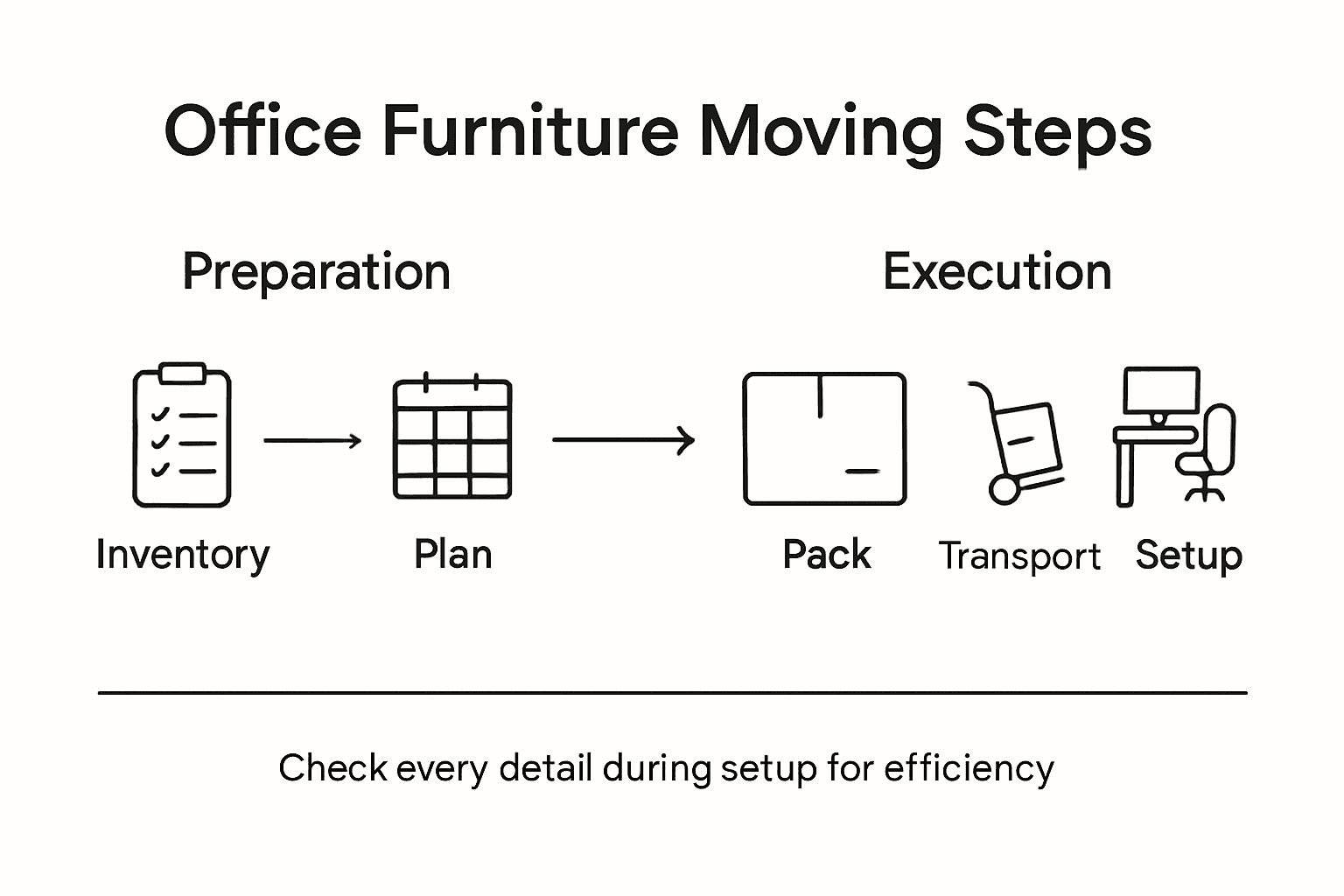
Master the Office Furniture Moving Workflow Efficiently
Nearly 60 percent of American office moves lose valuable work hours due to poor planning and rushed furniture assessments. If you manage a midsize team, even small mistakes can disrupt productivity far longer than expected. Getting every desk, chair, and cabinet from point A to point B smoothly matters to your company’s bottom line. This guide delivers practical steps for American office managers and HR professionals who want less chaos and more confident control during every stage of furniture relocation.



Nearly 60 percent of American office moves lose valuable work hours due to poor planning and rushed furniture assessments. If you manage a midsize team, even small mistakes can disrupt productivity far longer than expected. Getting every desk, chair, and cabinet from point A to point B smoothly matters to your company’s bottom line. This guide delivers practical steps for American office managers and HR professionals who want less chaos and more confident control during every stage of furniture relocation.
Quick Summary
| Key Point | Explanation |
|---|---|
| 1. Document All Office Furniture | Create a detailed inventory to identify items to move, replace, or discard, preventing surprises on moving day. |
| 2. Assign a Move Coordinator | Designate a central contact person 1 to 3 months prior to the move to streamline communication and tracking. |
| 3. Use a Detailed Packing System | Label and track all packed items with a unique system to ensure nothing is lost and simplifies unpacking. |
| 4. Plan Transportation in Advance | Coordinate transportation requests and unloading strategies to safeguard items and ensure smooth logistics. |
| 5. Verify Placement and Safety | Methodically check furniture arrangement to comply with safety standards and enhance workspace efficiency. |
Step 1: Assess Office Furniture and Create Inventory
Moving your office furniture requires a strategic approach that begins with a comprehensive assessment of everything you currently own. Your goal in this critical first step is to create a detailed inventory that will guide your entire moving workflow and help you understand exactly what needs to be relocated.
Start by walking through each workspace and systematically documenting every piece of furniture. Grab a clipboard or digital spreadsheet and record specifics for each item: type of furniture (desk, chair, filing cabinet), dimensions, condition, and current location. Pay special attention to condition details. Is a chair slightly worn? Mark that down. Are file cabinets functional and lockable? Note their status. This meticulous documentation prevents surprises during moving day and helps you decide what should be moved, replaced, or discarded.
As you conduct your inventory, consider practical logistics. The University of Toronto recommends sorting items and planning for potential disposal. Some furniture might be candidates for campus swap programs or donation. Missouri State University suggests emptying all furniture and securing items by locking cabinets and removing keys. This protects sensitive documents and ensures a smooth moving process. Your detailed inventory becomes more than just a list it transforms into a strategic planning document that will save time, reduce stress, and potentially cut moving costs.
Pro tip: Create a color coded spreadsheet with categories like “Move”, “Donate”, and “Discard” to streamline your furniture assessment and make quick decisions about each piece of office equipment.
Step 2: Coordinate Staff and Schedule Moving Timeline
Successful office relocations demand strategic staff coordination and precise timeline management. Your objective in this critical step is to create a comprehensive moving schedule that minimizes workplace disruption and ensures everyone understands their role in the transition.
Begin by identifying a dedicated move coordinator who will serve as the central communication point for your entire organization. Southern Methodist University recommends selecting this contact 1 to 3 months before the actual move date. This person will be responsible for distributing move guides, communicating critical details, and tracking progress. Calculate your moving timeline to establish realistic milestones and allocate sufficient time for each phase of the relocation process.
Break down the timeline into clear stages: preparation, packing, actual moving day, and post move setup. Communicate these stages transparently with all staff members to set clear expectations.
Practical timeline planning requires flexibility and anticipation of potential challenges. Michigan Technological University suggests providing 2 to 3 weeks advance notice for moves involving multiple rooms or specialized equipment. Recognize that furniture moves are typically considered non critical and might face unexpected delays from scheduled events, weather conditions, or infrastructure limitations like elevator service interruptions. Build buffer time into your schedule and communicate potential contingencies to your team.
Pro tip: Create a shared digital calendar or project management tool where all staff can track moving milestones and understand their specific responsibilities during the relocation process.
Step 3: Disassemble and Pack Office Furniture Safely
Safely disassembling and packing office furniture requires methodical planning and attention to detail. Your primary goal is to protect valuable equipment while ensuring a smooth and organized moving process that minimizes potential damage and loss.
Start by preparing your workspace for disassembly. Missouri State University recommends completely emptying all desks, storage cabinets, bookcases, and file cabinets before moving. Remove all contents and thoroughly clean each piece of furniture. Take special care to lock cabinets and remove keys to maintain security during transportation. Professional packing strategies can help you systematically break down larger furniture pieces.
Carefully document each furniture component as you disassemble it labeling screws, bolts, and small parts in clearly marked plastic bags. Take photographs of complex furniture configurations before disassembly to help with reassembly at the new location.
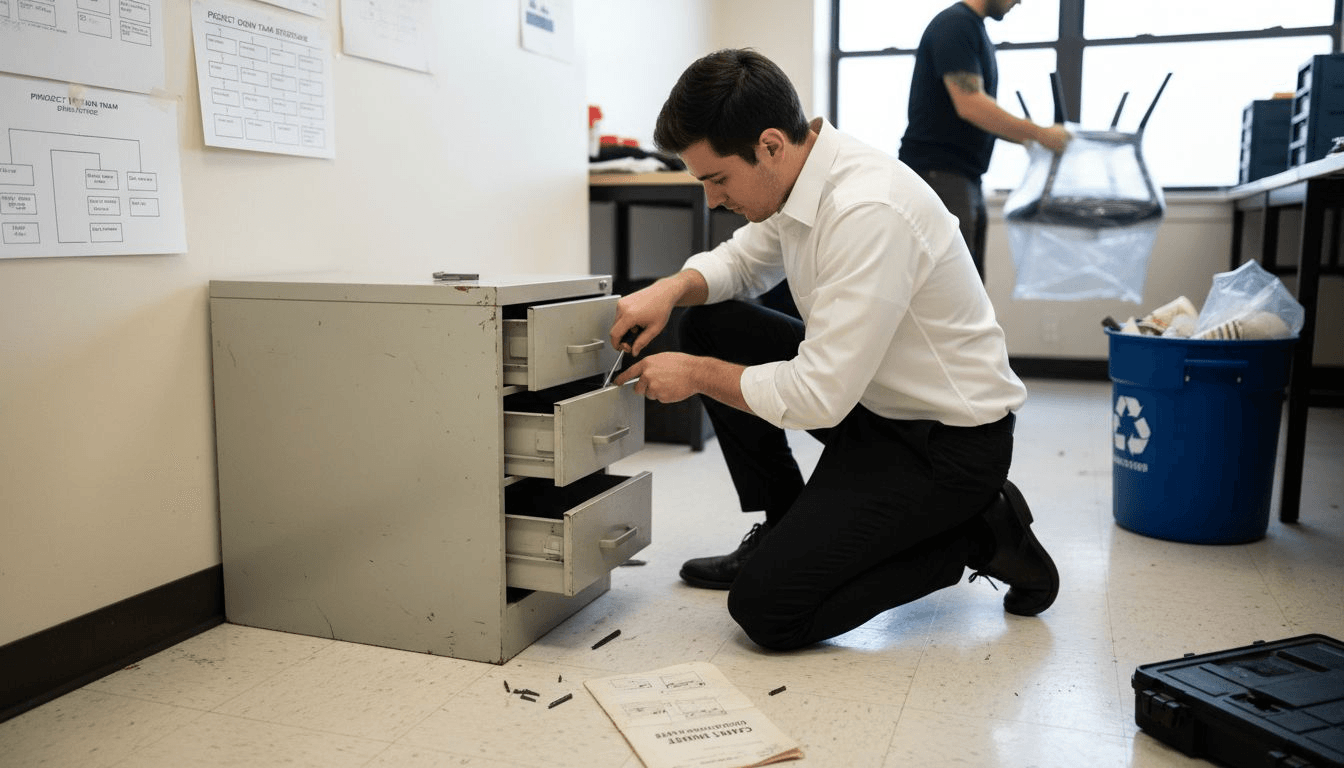
Following Southern Methodist Universitys guidance, obtain appropriate moving crates and cartons specifically designed for office equipment. Label all items meticulously including wall mounted equipment and cubicle components. Create a detailed inventory tracking system where each box and furniture piece is numbered and corresponding contents are documented.
Pro tip: Create a digital spreadsheet with a unique tracking number for each packed item that cross references its contents, original location, and destination placement to streamline your moving process.
Digital vs. Manual Tracking Methods
| Method | Main Advantage | Drawback |
|---|---|---|
| Digital Tracking | Real-time updates for teams | Requires tech access for all staff |
| Manual Tracking | Simplicity and low cost | Higher risk of errors and lost items |
Step 4: Transport and Unload Furniture at New Location
Transporting and unloading office furniture represents the most critical phase of your moving workflow where careful planning meets precise execution. Your primary objective is to safely transfer all furniture and equipment from the original workspace to the new location while minimizing potential damage and disruption.
Prepare for transportation by coordinating specialized moving requirements. Michigan Technological University recommends submitting detailed work requests at least 2 to 3 weeks in advance, recognizing that complex moves may encounter scheduling challenges. Trusted local movers can help streamline the transportation process, particularly for larger or more delicate office equipment.
Pay special attention to specialized items like technology infrastructure. Missouri State University emphasizes that computers, printers, fax machines, and copiers should be handled by dedicated Information Technology personnel to ensure proper handling and setup.
Upon arrival at the new location, implement a systematic unloading process. Start by confirming the inventory against your previously created tracking list. Carefully inspect each item for potential damage during transit. Prioritize reassembling critical workstations and technology infrastructure first.
Pro tip: Designate a staging area near the new location entrance where furniture can be temporarily placed and inspected before final placement.
Step 5: Inspect Setup and Confirm Furniture Placement
The final stage of your office furniture move involves meticulously verifying every detail of your new workspace configuration. Your goal is to ensure all furniture is perfectly positioned, functional, and aligned with both operational requirements and safety standards.
Begin a comprehensive inspection by methodically checking each furniture placement against your original layout plan. Loughborough University stresses the critical importance of maintaining clear exit routes and emergency access paths during your setup. Ask the Star Van Lines Movers about specific placement recommendations if you encounter any challenging configuration scenarios.
Verify that workstations, desks, and communal areas provide sufficient space for comfortable movement. Measure walking corridors and ensure no furniture obstructs potential emergency evacuation routes. Check that electrical outlets, network ports, and communication infrastructure are accessible and properly aligned with each workstation.
Southern Methodist University recommends a systematic approach to final placement verification. Test all movable components like drawer slides, chair wheels, and adjustable desk mechanisms. Conduct a walkthrough with key team members to gather immediate feedback on the new layout.
Pro tip: Create a digital floor plan with exact furniture measurements and placement coordinates for future reconfigurations.
Key Office Furniture Moving Tips by Stage
| Moving Stage | Key Focus | Practical Benefit |
|---|---|---|
| Inventory and Assessment | Document all items | Reduces lost or missed furniture |
| Staff Coordination & Timeline | Assign coordinator, schedule | Minimizes workflow interruptions |
| Safe Packing | Label and protect equipment | Prevents costly damage and loss |
| Transport & Unloading | Systematic unloading process | Accelerates new office setup |
| Final Placement Inspection | Check layout and safety | Maximizes productivity and safety |
Simplify Your Office Furniture Move with Trusted Expertise
Moving office furniture demands precise planning, careful coordination, and trusted execution to avoid costly damage and workplace disruption. If you found yourself overwhelmed by assessing inventories, scheduling timelines, or safely packing valuable equipment the article covered, know that expert support is just a click away.
Star Van Lines Movers specializes in professional commercial relocation services tailored to your unique needs, helping you manage every step from disassembly to final placement with confidence and ease.
Experience peace of mind with our punctual teams, comprehensive insurance coverage, and proven packing methods designed to protect your office assets.

Take control of your office move today by contacting Star Van Lines Movers. Visit our homepage to book a free consultation or explore detailed packing and unpacking solutions crafted specifically for commercial clients.
Frequently Asked Questions
How can I effectively assess and inventory my office furniture before a move?
Start by walking through each workspace and documenting each item, including its type, dimensions, condition, and current location. Use a clipboard or digital spreadsheet to create a detailed inventory.
What should I consider when coordinating staff for an office move?
Identify a dedicated move coordinator to act as the central communication point for your team and establish a comprehensive moving schedule.
How can I safely disassemble and pack office furniture?
Empty all drawers and cabinets, clean each piece, document components, and label all parts for organized reassembly.
What is the best process for transporting furniture to a new location?
Coordinate special requirements 2 to 3 weeks in advance and confirm inventory upon arrival at the new location.
How do I inspect and confirm furniture setup after the move?
Check placements against your layout plan, test movable components, and ensure all safety standards are met.
Recommended


Artur Shakhnazarov
PR Manager
Love Doing PR for my Company