Thank you for your feedback!
We will contact you shortly

Free consultation
Enter your phone number and we will call you back for a consultation on any moving and storage services
Commercial Relocation: How to Minimize Office Downtime and Risks
A commercial relocation can interrupt customer service, internal communication, sales, and access to critical systems. The real cost of an office move is therefore not limited to packing, transportation, and labor. Every hour employees cannot work may affect revenue, deadlines, and customer satisfaction.
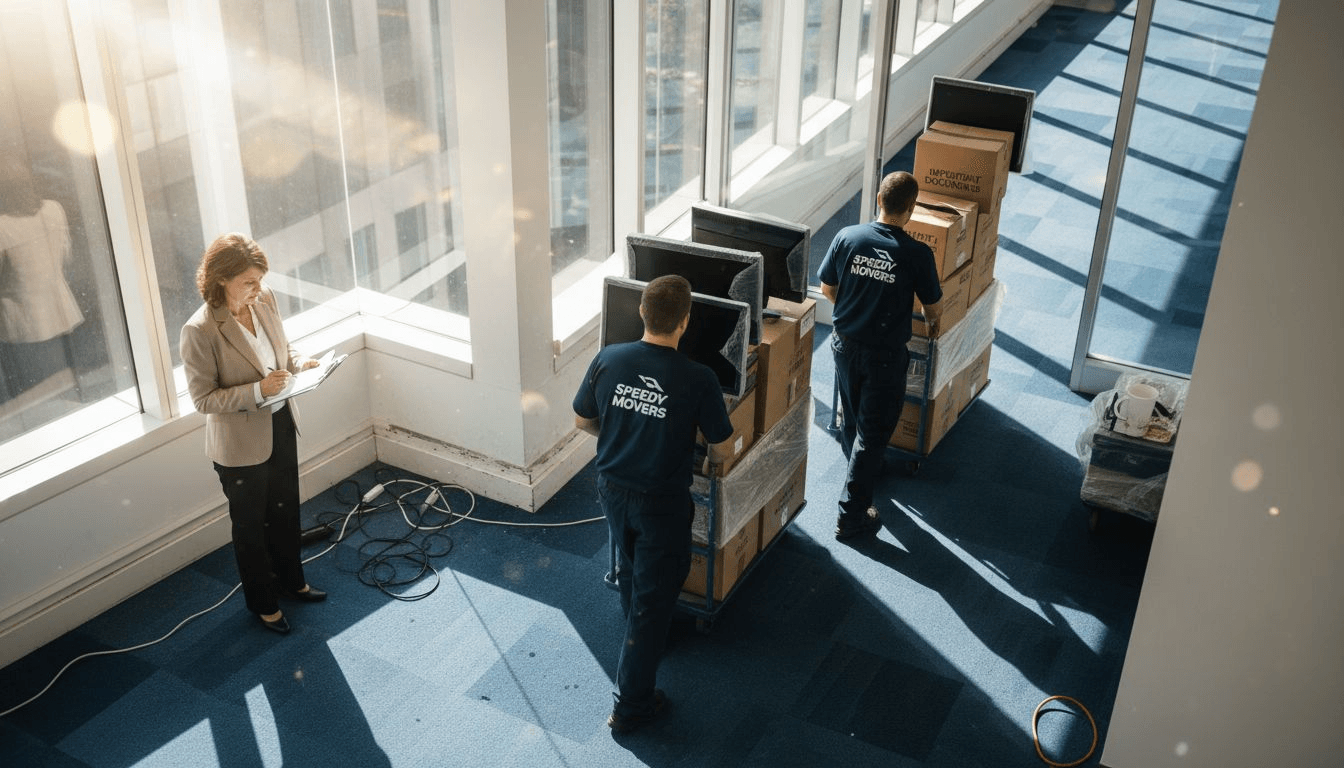


A commercial relocation can interrupt customer service, internal communication, sales, and access to critical systems. The real cost of an office move is therefore not limited to packing, transportation, and labor. Every hour employees cannot work may affect revenue, deadlines, and customer satisfaction.
The best way to minimize office downtime is to treat the relocation as a business continuity project. That means planning the physical move, IT transition, employee communication, and recovery process together. This guide explains how to organize a commercial move while keeping essential operations running.
Why Office Downtime Is a Major Relocation Risk
Office downtime occurs when employees cannot access the equipment, information, facilities, or systems required to perform their work. During a commercial relocation, this can happen because of:
- Delayed internet installation
- Unavailable servers or cloud systems
- Missing or incorrectly labeled equipment
- Incomplete workstations
- Poor communication with employees
- Limited access to the new building
- Delivery or elevator scheduling problems
- Damage to computers and office equipment
- Unclear responsibilities on moving day
Some disruption may be unavoidable, but most downtime can be reduced through advance planning, phased execution, and system testing.
Businesses should identify which operations must remain available throughout the move. Customer support, sales, order processing, payroll, IT, security, and other essential functions may require additional resources or temporary arrangements.
Build a Business Continuity Plan Before the Move
A business continuity plan explains how the company will continue operating while its office, equipment, and employees are in transition.
Start by identifying critical departments and systems. For each one, determine:
- How long it can remain unavailable
- Which employees must continue working
- What equipment and information they need
- Whether they can work remotely
- Which temporary systems can be used
- Who is responsible for resolving problems
Set a realistic downtime target. Some businesses may be able to pause operations for a weekend, while others need customer service and digital systems to remain available throughout the relocation.
Assign one commercial relocation coordinator to manage the overall project. Larger businesses should also appoint representatives from IT, human resources, facilities, finance, security, and each major department.
Commercial Relocation Timeline
The time needed to plan an office move depends on company size, distance, building requirements, and IT complexity. A small local office may need several weeks, while a headquarters, warehouse, or multi-location relocation may require several months.
| Time Before the Move | Priority Tasks |
|---|---|
| 8-12 weeks | Select the location, create a budget, appoint a relocation coordinator, and request moving estimates |
| 6-8 weeks | Inventory assets, confirm the floor plan, review building requirements, and plan the IT transition |
| 4-6 weeks | Book movers, reserve elevators and loading areas, and notify vendors and employees |
| 2-4 weeks | Label equipment, test internet access, prepare backups, and finalize department schedules |
| 1 week | Confirm access, packing, transportation, employee instructions, and emergency contacts |
| Moving day | Track inventory, supervise loading and unloading, and prioritize critical workstations |
| First 24-48 hours | Test systems, resolve employee issues, inspect equipment, and confirm full operations |
Large or technically complex relocations should begin earlier, especially when new construction, server rooms, specialized equipment, or interstate transportation is involved.
How to Minimize Office Downtime During a Commercial Move
Move in Phases
A phased relocation prevents the entire company from going offline at the same time. Departments can move according to operational importance, floor, location, or technical requirements.
Non-critical departments can be moved first and used as a test group. The relocation team can then identify problems before transferring customer-facing or revenue-generating departments.
A phased approach also allows part of the workforce to remain at the old office while another group becomes operational at the new location.
Schedule the Move Outside Peak Hours
Whenever possible, schedule packing, loading, transportation, and installation during:
- Evenings
- Weekends
- Holidays
- Seasonal periods with lower business activity
An off-hours move can reduce employee disruption, but it still requires careful IT testing. A weekend schedule is only effective if employees can access their systems and workstations when they return.
Use Temporary Remote Work
Remote work can help maintain productivity while furniture and equipment are being moved. Employees should receive advance instructions regarding:
- Remote access
- Login credentials
- Communication platforms
- Data security
- Working hours
- IT support contacts
- Return-to-office dates
Test remote access before the relocation begins. Employees should not discover missing permissions or login problems on moving day.
Maintain a Short Overlap Between Locations
If the budget and lease conditions allow, keep access to both offices for a short transition period. This gives the company time to:
- Install and test equipment
- Verify internet and phone systems
- Move departments in stages
- Resolve building access problems
- Recover missing items
- Return to the old office if a critical issue occurs
Parallel access can be especially useful for businesses that cannot tolerate an unexpected interruption.
Prioritize Essential Equipment
Not every desk, chair, file, or device needs to be operational immediately. Create a priority inventory that identifies the equipment required during the first business day.
Priority items may include:
- Servers and network equipment
- Customer service computers
- Payment terminals
- Phones and headsets
- Printers used for critical documents
- Security and access control systems
- Department-specific equipment
- First-day office supplies
Pack these items separately and mark them clearly. They should be loaded in an order that allows them to be unloaded and installed first.
IT Relocation Checklist
IT failures are among the most disruptive commercial relocation risks. Internet access, servers, phone systems, employee accounts, and security infrastructure should be addressed before physical furniture placement.
Audit the Current IT Infrastructure
Create an inventory of:
- Computers and monitors
- Servers
- Routers and switches
- Printers and scanners
- Phone systems
- Security equipment
- Software licenses
- Cables and peripherals
- Backup devices
- Specialized hardware
Determine what will be moved, replaced, upgraded, stored, or securely disposed of.
Activate Internet and Utilities in Advance
Do not wait until moving day to arrange internet service. Confirm installation dates with providers and test connectivity at the new office before employees arrive.
Check:
- Internet speed and stability
- Wi-Fi coverage
- Phone service
- Power availability
- Network ports
- Server room cooling
- Backup power
- Security and access systems
When uninterrupted connectivity is essential, prepare a temporary backup connection.
Back Up Business Data
Complete and verify backups before disconnecting any equipment. Critical data should not depend on a single server or physical storage device being transported.
The IT team should document:
- Backup completion
- Data recovery procedures
- System administrators
- Emergency access credentials
- Recovery priorities
- Vendor support contacts
A backup is only useful if the company can restore the data. Test the recovery process before the move.
Label and Document Equipment
Assign a unique identification number to every workstation and important device. Labels can include:
- Employee or department
- Inventory number
- Destination room
- Destination desk
- Priority level
- Handling instructions
Photograph complex cable connections and server configurations before disassembly. Keep cables, adapters, and peripherals with the equipment they support.
Test Systems Before Employees Return
Complete a structured test of the new office, including:
- Employee logins
- Internet access
- Internal networks
- Cloud platforms
- Phones and video conferencing
- Printers
- Shared drives
- Security systems
- Payment or order-processing systems
- Remote access
Ask representatives from critical departments to perform user testing before the office fully reopens.
Commercial Relocation Risks and Solutions
| Relocation Risk | Potential Impact | Recommended Solution |
|---|---|---|
| Internet installation delay | Employees cannot work | Install and test service in advance and prepare backup connectivity |
| Equipment damage | Replacement costs and downtime | Use professional packing and appropriate coverage |
| Missing assets | Delayed workstation setup | Create a numbered inventory and destination-based labels |
| Poor employee communication | Confusion and lost productivity | Send scheduled updates and department-specific instructions |
| Building access problems | Delayed loading or unloading | Confirm elevators, loading docks, parking, and access hours |
| IT configuration failure | Systems remain unavailable | Document configurations and perform pre-opening tests |
| Vendor delay | Incomplete office setup | Confirm vendors and create contingency contacts |
| Unclear responsibilities | Slow problem resolution | Assign an overall coordinator and department leads |
A risk register can help the relocation team track each risk, its probability, potential impact, responsible person, and contingency plan.
Building Rules, Insurance, and Compliance
Commercial buildings often have specific moving requirements. Contact the property manager for both locations before confirming the moving schedule.
Ask about:
- Required certificates of insurance
- Loading dock reservations
- Freight elevator availability
- Permitted moving hours
- Parking restrictions
- Floor and wall protection
- Security procedures
- Contractor access
- Disposal requirements
- After-hours fees
Review the moving company’s licensing, insurance, service terms, exclusions, and available valuation or cargo protection. Coverage can vary according to the mover, shipment, contract, and type of equipment.
Businesses may also need to update their address with government agencies, banks, insurers, vendors, customers, delivery providers, online directories, and utility companies. Requirements differ by state, industry, lease, and business structure, so legal or insurance questions should be reviewed with the appropriate professional.
What Affects Commercial Moving Costs?
Commercial relocation costs depend on more than the distance between offices. Major cost drivers include:
- Office size
- Number of employees and workstations
- Volume and weight of equipment
- Packing requirements
- Furniture disassembly and reassembly
- Elevator and loading dock access
- Moving distance
- Interstate transportation
- Storage requirements
- Specialized or high-value equipment
- Evening or weekend labor
- IT installation and testing
- Facility preparation
- Insurance and building requirements
Businesses should also calculate indirect costs, such as employee downtime, delayed customer service, temporary workspaces, lost sales, and technology interruptions.
Use the moving cost calculator for an initial estimate, but request a detailed commercial moving quote before setting the final budget.
Common Commercial Relocation Mistakes
Starting Too Late
Late planning limits the choice of movers, vendors, and moving dates. It also leaves less time to test systems and resolve building access requirements.
Moving Every Department at Once
An all-at-once relocation increases the risk of a company-wide interruption. A phased move is usually safer for larger or operationally complex businesses.
Treating IT as a Moving-Day Task
Internet, phone, network, and server planning should begin weeks before the physical move. IT installation must be coordinated with construction, utilities, security, and furniture placement.
Failing to Create an Inventory
Without an asset inventory, the company cannot easily identify missing equipment, confirm delivery, or direct items to the correct workstations.
Ignoring the First Business Day
The goal is not simply to deliver everything. The goal is to make employees productive again. Prepare essential workstations, IT systems, meeting rooms, and customer-facing functions first.
Relying on One Plan
Create contingency procedures for delayed trucks, damaged equipment, internet outages, restricted building access, severe weather, and unavailable employees.
How Professional Commercial Movers Help Reduce Downtime
Experienced commercial movers can coordinate packing, labeling, loading, transportation, furniture handling, and delivery according to the company’s operational schedule.
When comparing moving companies, ask about:
- Experience with offices of a similar size
- Local and interstate commercial moves
- Packing and labeling systems
- Handling of computers and office equipment
- Furniture disassembly and reassembly
- Inventory tracking
- Certificates of insurance
- Storage options
- After-hours and weekend availability
- Dedicated project management
- Pricing structure and potential additional charges
- Claims and damage procedures
For an interstate office move, work with a provider experienced in long-distance moving and confirm all transportation, scheduling, and documentation requirements in advance.
Plan Your Commercial Relocation with Star Van Lines
A successful commercial relocation is measured by how quickly employees and critical systems return to normal operation. Phased scheduling, careful inventory management, advance IT testing, and clear communication can substantially reduce downtime and relocation risks.
Star Van Lines provides commercial moving solutions for offices, corporate facilities, and other business locations. Our team can help coordinate packing, transportation, furniture handling, and delivery around your operational requirements.
Request a commercial moving quote and begin planning a safer, more efficient office relocation.
Frequently Asked Questions
How far in advance should a commercial relocation be planned?
Many small and midsize offices should begin planning at least 8-12 weeks before the move. Large offices, interstate relocations, and projects involving complex IT infrastructure may require several additional months.
How can a company minimize downtime during an office move?
Move departments in phases, schedule work outside peak hours, arrange temporary remote work, activate internet service in advance, label all equipment, and test critical systems before employees arrive.
Is it better to move an office during the week or over a weekend?
A weekend or after-hours move can reduce disruption during normal business hours. However, the best schedule depends on customer demand, building access, employee availability, IT support, and the company’s ability to operate remotely.
How should computers and IT equipment be prepared for relocation?
Create an equipment inventory, back up important data, photograph connections, label devices and cables, use appropriate packing materials, and prepare a documented installation and testing plan.
What should be operational first in the new office?
Prioritize internet access, phones, servers, security systems, customer service workstations, payment or order-processing systems, and any equipment required by critical departments.


Artur Shakhnazarov
PR Manager
Love Doing PR for my Company